AMT’s Most Influential in Maintenance 2026: Eddie Osborne Honored with Excellence in Safety Management Award
Key Highlights
- Osborne developed a structured safety training framework combining classroom instruction, hands-on experience and ongoing evaluations to ensure consistent safety standards.
- Osborne’s leadership has helped Banyan maintain IS-BAH Stage 2 certification for over eight years, reflecting a high safety performance standard.
- He actively participates in industry safety meetings, sharing insights and promoting a culture of safety beyond his organization.
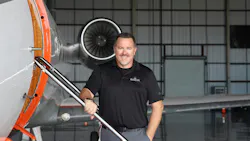
Aircraft Maintenance Technology is proud to recognize Eddie Osborne of Banyan Air Service as one of AMT’s Most Influential in Maintenance with the 2026 Excellence in Safety Management Award.
The Excellence in Safety Management Award honors a professional who shows outstanding dedication to safety in an MRO facility or repair shop, helping to manage safety protocol and discover new processes to keep technicians safe on the job.
At Banyan Air Service, Osborne serves as Safety and Training Manager, where he oversees safety compliance programs and activities like:
- SMS reporting processes
- OSHA requirements
- IS-BAH standards
- Recurring industry training
According to Osborne’s colleague at Banyan Air Service Linda Li, “Osborne’s impact in aviation maintenance comes from his ability to connect frontline operational experience with structured safety and training systems.”
Li elaborates, “Having started his career as a line service technician, he understands the challenges technicians face in the field and uses that perspective to develop realistic procedures and training programs that improve safety and operational consistency.”
How has Osborne made a difference in safety management at Banyan Air Service?

Noting how Osborne has played a central part in strengthening and formalizing the Safety Management System (SMS) at Banyan Air Service, Li says, “He has helped design practical reporting pathways that encourage employees to submit hazard identification reports, near-miss reports and safety observations without fear of blame.”
She explains, “By reinforcing the importance of reporting and ensuring follow-up communication with staff, he has created a transparent system that allows the organization to identify operational risks before they become incidents.”
“Over the past three years, Banyan has fully transitioned their SMS program to a digital platform accessible to all teammates, providing management with real-time compliance and safety data across our entire operation,” shares Li.
Li also talks about the structured safety training framework that Osborne has built for the company, which combines:
- Computer-based coursework
- Hands-on instruction
- Ongoing evaluation
Li notes, “New line service technicians complete extensive onboarding that includes OSHA safety training and operational coursework coordinated with real-world training on the ramp.”
She mentions, “This program strengthens workforce development while ensuring safety standards are passed on consistently to new employees entering the industry.”
“Recurring safety education is reinforced through annual industry training programs and quarterly Safety Stand Down meetings where employees review incidents, discuss hazards and participate in safety-focused workshops,” adds Li.
Osborne highlights the accomplishments he’s most proud of in his career, stating, “For the team, reaching IS-BAH Stage 2 and maintaining it over the past 8 years has been a huge accomplishment.”
He says, “For me, I find the most enjoyment in seeing my teammates take on new roles and build on their careers within aviation. Being in a role that allows me to give back to what I am most passionate about is a real gift, and it's what I am most proud of.”
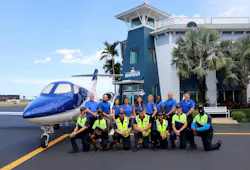
Touching on Osborne’s impact on the aviation industry beyond Banyan Air Service, Li states, “He also promotes safety collaboration beyond his own organization by participating in monthly industry safety meetings where aviation professionals discuss safety management systems, regulatory developments and operational challenges.”
She continues, “By staying engaged with the broader aviation safety community and bringing those insights back to his organization, Osborne contributes to the advancement of safety culture within both maintenance operations and ground support services.”
What led Osborne to a career in aviation maintenance?
Reflecting on how he began his aircraft maintenance career, Osborne shares, “Flying with my father at a young age really inspired me to look towards aviation as a career.”
Osborne continues, “I have always been a hands-on person, but I also have a desire to share and teach others. A&P school and flight training felt like a natural fit.”
“After working on Learjets for a while, I found my way to Banyan Air Service and was working in the line service department while earning my private instrument rating,” says Osborne.
He adds, “During this time, I found a passion for safety, training and teamwork. These experiences led me to the safety and training side of the business.”
What does Osborne see for the future of aircraft maintenance?
“Safety Management Systems (SMS) help bring things to light, but they rely on a good reporting culture and are kept internally,” explains Osborne.
He continues, “I would like to see SMS platforms grow to the point of openly sharing with the whole industry without any fear of recourse. The more we can share our experiences with the industry, the better we will all be.”
Osborne shares, “I want to continue to build on the safety efforts that we have here but also unite our departments through safety.”
“We tend to measure results by damage or no damage, and—let's face it—billions of dollars a year are spent in the industry on damage that is 100% avoidable, so it’s a real concern,” says Osborne.
He notes, “The challenge for safety professionals is to quantify their team’s safety efforts and celebrate what is being done for safety every day.”
To the next generation of AMTs newly entering the aviation industry, Osborne advises, “With the demand for qualified professionals in our industry, opportunities will come knocking. “
Osborne concludes, “Don’t be afraid to put yourself out there because, win or lose, you will learn valuable information that will make you that much more prepared for the next opportunity.”
About the Author
 Emily Gorski