How planeKrafty Advances Digitalization and Improves Efficiency in Aircraft Maintenance
Key Highlights
- planeKrafty structures aircraft records digitally in a way that mirrors how paper records function in the real world, making data navigation intuitive for technicians.
- The application automates compliance checks, flags documentation gaps and supports predictive maintenance, enhancing safety and efficiency.
- Digitizing records helps maintenance teams focus on aircraft upkeep rather than paperwork, enabling quicker responses to issues and better resource management.
- Dyehouse recommends starting small with digitalization efforts, piloting solutions on limited aircraft or workflows to ensure success and safety.
Instead of spending hours or even days sifting through aircraft maintenance records, technicians could review all the data and documentation they need in minutes, thanks to a new AI application designed for maintenance technicians and mechanics.
Nicole Dyehouse, founder and CEO of planeKrafty, spoke with Aviation Pros about the importance of digitalization in aircraft maintenance operations and her one-of-a-kind application that could make it all easier.
“The industry has been left behind in so many ways with the tech that’s come to market, and I’m here to change that if I can,” said Dyehouse.
What is planeKrafty?
After more than 20 years of working as an aircraft mechanic, Dyehouse developed the idea for planeKrafty.
On a recent episode of the Aviation Pros Podcast, Dyehouse explained, “Plane Crafty transforms physical aircraft records into a fully structured, searchable and secure digital system. But it's not just scanning the records and having Windows File Explorer for aircraft records.”
“It actually mirrors the way that the aircraft lives operationally and regulatorily,” she noted, “It's the first—to my knowledge—application that really structures the documents in the same format or way that they are formatted in our physical world.”
Dyehouse continued, “I built plain crafty to replicate the physical world as much as possible and to have the hierarchy of relationships established so that a user can easily move through it.”
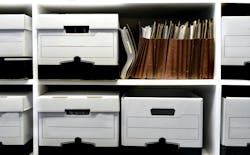
“And the beauty of structuring the data that way means that now you can leverage all that data. You can use these new AI agents that are available and that we at planeKrafty are building to interrogate those records at a much more efficient and effective way without spending hours of human resources digging through boxes anymore,” she said.
Discussing the rationale for creating planeKrafty, Dyehouse shared, “I watched owners pay for pre-buys only to get burned on the back end as they try to go to the operator. They would lose millions in the assets value. The operators would lose a lot of money just onboarding the aircraft and making sure all of that documentation was up to speed.”
She continued, “I've personally spent hundreds of hours chasing signatures and 8130s and compliance entries, and at some point, I decided this wasn't really an aircraft problem, it was an industry-wide problem and, more specifically, it was a data problem.”
“If I could find a way to get all of that unstructured data into a structured data environment, we would really be off to the races from there. And that's pretty much how planeKrafty was born,” added Dyehouse.

How can MROs and repair shops use digital solutions like planeKrafty?
Building on how using apps like planeKrafty can help MROs embrace digitalization, Dyehouse said, “The other thing that an application like planeKrafty unlocks is the workflow process because we can analyze the record not only historically for conformity, but also every time a new maintenance event is coming through the system, it can automatically interrogate that documentation to ensure that there aren't any gaps in that documentation.”
She continued, “It's a lot easier to close the gap on a missing piece of paperwork during maintenance or within a few days of closing maintenance than it is to do it five years down the road.”
“To have the guardrails built into an application like planeKrafty—which could be white labeled by an MRO now—instead of your task or your team of QA or maintenance release folks spending hours and hours—days sometimes, possibly even weeks for a large event—reconciling that you have every piece of paperwork for every task that was done,” stated Dyehouse.
She added, “With the intelligence built into an application like planeKrafty, it's doing that audit for you and showing you those gaps automatically—or automagically, as my dev guy likes to say.”
Dyehouse also outlined some practical applications of planeKrafty and tasks it can make easier and quicker for aircraft maintenance technicians, such as:
- Flagging compliance gaps from audits and conformity reviews
- Prediting parts failures
- Optimizing manpower and planning
- Reconciling logbooks to ensure all documents are present
Dyehouse noted, “When you upload records into planeKrafty, you don't have to rename them. We have all of the intelligence built into it, so you just sort of drag and drop, and it's not a bunch of fiddly renaming, tweaking, so it's a lot more efficient there.”
How does digitalization help maintenance departments save time and money?
To illustrate the significance of digital solutions for improving maintenance workforce efficiency, Dyehouse explained, “Instead of mechanics chasing paperwork, they can focus on what they do best, which is actually maintaining the aircraft.”
She elaborated, “Aviation still runs on paper. In a world that runs on data, if your records aren't structured digitally, you can't scale, you can't really automate, and you definitely can't apply that AI.”
“AI works because there is a digital piece to launch off of, and so until they're digital, you can't unlock that box. The digital record takes maintenance from a reactive position into a more proactive or even predictive position,” added Dyehouse.
Providing specific examples of the benefits of digitalization, Dyehouse noted, “It means that you can know the full pedigree of a plane in moments instead of having to spend a week trying to figure out its history of gremlins or corrosion or accidents.”
Dyehouse proceeded, “And in the event of a critical issue or unfortunate accident, the records can be immediately quarantined and interrogated, which means you can more quickly find and identify the root cause, address that with an AED or an adjustment in the inspection schedule, and even to that adjustment in the inspection schedule because we can aggregate the data.”
“In a digital world,” she stated, “I think you will start to see the rise of trend and connecting dots and non-routine inspections that can give us insight into getting out ahead of what might be a problem before it becomes a catastrophic problem.”
How can maintenance departments with resource constraints start digitizing processes?
After noting how some maintenance departments have already implemented internal maintenance tracking programs and digital solutions to improve their workflows, Dyehouse gave advice to smaller maintenance providers who may not know where to start.
She shared a borrowed quote to begin, stating, “You can’t boil the ocean. Don’t even try. Start small, pilot one aircraft or one customer or one workflow.”
Dyehouse continued, “Identify something that is manageable, something that will set you up for success but will bring an actual value to the table at the same time, and then you build from there.”
Highlighting the importance of taking time and care in the aviation sector, Dyehouse asserted, “You can't do that much that fast. And in aviation, we are all very safety conscious. If you move fast, you break things. So, you have to move with a lot of intention and a lot of thoughtfulness.”
Echoing sentiments shared in her presentation at NBAA BACE 2025, Dyehouse added, “You have to make sure that everybody who's a touchpoint to whatever system you're changing or tweaking or adjusting is at the table and you've listened to all of their concerns so that you have the best chance to not miss an obvious thing to somebody else that might not be obvious to you.”
“We all have our perspectives,” Dyehouse said, “…and we come with a very specific set of knowledge based on that. Bring all those people in, listen to them and then make your best choice going forward.”
How to learn more about planeKrafty
To ensure future users can see the full benefits and capabilities of planeKrafty, Dyehouse explained that her team provides demonstrations for interested parties. When signing up for a demo, interested users can expect:
- Zoom meeting or call
- Walkthrough of a real set of aircraft records
- Demonstration of how documents are indexed, searched, cross-referenced and audit ready
Dyehouse shared, “Most people at some point during that are pretty excited because they realize they don't have to dig through banker's boxes again. They can use the intelligence built into the back end of planeKrafty to bring all the information and knowledge that they are looking for to life more quickly and effectively determine the status of those records and keep them pretty simply.”
Dyehouse shared that planeKrafty currently has around a dozen users with aircraft on the application, both Part 91 and Part 135, with interest from MROs growing. Readers interested in learning more about planeKrafty can contact the team online or by emailing Nicole directly at [email protected].
About the Author
 Emily Gorski