AMT’s Most Influential in Maintenance 2026: SMSgt Asia M. Cook Honored with Mechanic Mentorship Award
Key Highlights
- SMSgt Cook has led significant projects, including relocating a $25M tool facility and revitalizing supply programs, saving millions and reducing maintenance downtime.
- She founded a mentorship group for women in the Air Force, earning recognition and promoting diversity and inclusion within the maintenance community.
- SMSgt Cook emphasizes continuous learning, curiosity and involving technicians early in system design to foster innovation and improve safety and efficiency.
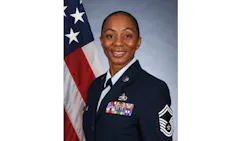
Aircraft Maintenance Technology is proud to recognize Senior Master Sergeant (SMSgt) Asia M. Cook of the United States Air Force (USAF) as one of AMT’s Most Influential in Maintenance with the 2026 Mechanic Mentorship Award.
The Mechanic Mentorship Award honors an individual who shows supreme dedication to mentoring new technicians, displaying excellence in maintenance education and training through tribal knowledge.
SMSgt Cook currently serves as KC-135 Flight Chief at MacDill AFB, FL, where she leads new mechanics to success through training and mentorship.
USAF Chief Master Sergeant Gary Chappell says, “With a career founded on tactical excellence in maintenance operations, she has distinguished herself not just as a master of her craft, but as a dedicated mentor who translates her extensive tribal knowledge into actionable, impactful training for new Airmen.”
Chappell adds, “Her leadership philosophy, sharpened by 15 years of balancing dual-military family life, provides her with a holistic perspective on aircraft maintenance, allowing her to connect with and develop technicians on both a professional and personal level.”
How does SMSgt Cook embody the values and mission of the Mechanic Mentorship award?
Chappell shares, “Her certifications as a Master Resilience Trainer and Emotional Intelligence Facilitator are tools she actively uses to conduct stress management and financial literacy sessions, ensuring her technicians are not only technically proficient but also mentally prepared for the high-stakes pressure of the flight line.”
He continues, “This comprehensive approach to mentorship is directly responsible for her teams earning multiple individual and team awards, a testament to her ability to develop subordinates into high-achieving leaders themselves.”
Chappell notes, “Recognizing declining morale among female service members at Travis Air Force Base, she founded a chapter of Women Inspiring the Next Generation for Success (WINGS), a mentorship group that earned her the Federally Enlisted Woman Meritorious Service Award.”
Chappell also highlights SMSgt Cook’s recent accomplishments, stating, “Currently stationed at MacDill Air Force Base, her impact continues to be profound. She managed a $25M tool facility relocation. She trained 20 airmen and inspired them to complete the project within five months which is 7 months ahead of schedule.”

“Additionally, she reclaimed $2.8M through supply program revitalization, reducing weekly maintenance downtime by 20 hours,” says Chappell.
He explains, “Responsible for the development of 409 aircraft mechanics, she led the charge on professional education & restructured the training program, boosting qualifications by 60% to support global KC-135 deployments.”
When asked which accomplishments she’s most proud of, SMSgt Cook answers, “I am an active-duty mother of two boys.”
She continues, “Seeing them learn and grow while maintaining a career has been tough, but they get to see me do what I love, like when I was an instructor for three years teaching foundations of aircraft maintenance.”
“Seeing some of my past students becoming respected aviation managers and trainers makes me feel like a 2x proud mom,” adds SMSgt Cook.
What does SMSgt Cook’s aviation career path look like?
SMSgt Cook identifies Hurricane Katrina as a key driving factor in her aircraft maintenance career. She says, “I was in basic training and the hurricane hit and I was supposed to go to Kessler AFB in Mississippi.”
She explains, “I was supposed to be a ground radio technician, and the technical training school was destroyed, so I was offered a job as a communication navigation specialist instead…Little did I know I was signing up to become an aircraft maintenance technician.”
“I was good with my hands, but I knew so little about airplanes,” shares SMSgt Cook.
She reflects, “On the first day of training as a very young 17-year-old with a lot to learn, I was asked if I was going to be learning heavies or fighters. I replied: all planes weight a lot.”
SMSgt Cook notes, “That was a very humbling experience, where I soon learned what a heavy aircraft maintainer was, and I was blessed to be trained by so many talented maintainers who became mentors and family.”
When asked what she enjoys most about working in aviation maintenance, SMSgt Cook points out the new challenges that every day brings.
She says, “Troubleshooting and repairing aircraft is like solving a complex puzzle, and there's a real sense of satisfaction in finding the solution and getting an aircraft safely back into service.”
“Aviation maintenance professionals are often the unsung heroes behind every flight—we work behind the scenes to make sure everything operates safely and reliably,” stresses SMSgt Cook.
She adds, “As the saying goes, a pilot without a working airplane is just a well-dressed pedestrian, so it's rewarding to know that our work helps make every flight possible.”
What are SMSgt Cook’s goals for the future of aircraft maintenance?
SMSgt Cook shares, “I would like to see maintenance professionals have a greater voice in innovation and system design.”
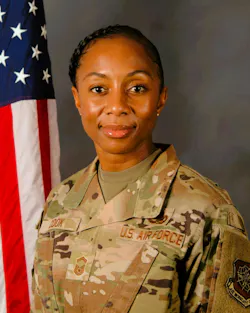
She continues, “Too often, equipment, procedures and repairs are developed without enough input from the technicians who are responsible for maintaining them. As a result, some repairs become unnecessarily complex, time-consuming and costly.”
“Aircraft maintenance technicians possess a tremendous amount of practical knowledge and problem-solving ability, and involving them earlier in the process could lead to more efficient designs, improved maintainability and safer operations,” notes SMSgt Cook.
She stresses, “The best solutions often come from the people who work with the systems every day.”
SMSgt Cook states, “I hope to have an impact by cultivating leaders who foster trust and accountability within their teams.”
“When mechanics feel empowered and have a sense of autonomy, they take greater pride in their work, think more critically and contribute to a stronger, safer and more innovative organization,” explains SMSgt Cook.
She adds, “I believe that happy, engaged mechanics drive continuous improvement, elevate safety standards and help shape a more fulfilling and sustainable career path for everyone in the maintenance sector.”
SMSgt Cook also offers advice to up-and-coming AMTs, stating, “Show up every day ready to learn, and never be afraid to ask questions until you fully understand.”
She outlines the questions AMTs can ask, such as:
- Why does this system work this way?
- Why is this procedure done like this?
- When is the best time to perform this task?
- How was this process developed?
“Be curious, absorb knowledge one step at a time, and once you understand how things work, look for ways to make them better,” says SMSgt Cook, “Continuous learning and thoughtful improvement are what turn good mechanics into great ones.”
About the Author
 Emily Gorski