Before the First Flight: Why the Aircraft Registry Is Crucial for Entry Into Service
Key Highlights
- Aircraft entry into service is a process involving multiple stakeholders, including manufacturers, regulators, operators and registries, requiring careful coordination.
- Delays often stem from documentation issues, ownership complexities or late registry engagement, especially when aircraft are registered across multiple countries.
- Educating new or inexperienced aircraft owners is crucial to managing expectations and ensuring they understand the registration and entry process.
When we talk about aircraft ownership, we refer to the moment the aircraft is delivered. The aircraft is accepted, and the keys are handed over to the new owner. We might expect the aircraft to be ready to operate almost immediately. The reality is quite different.
From the point of view of aircraft registries, an aircraft’s entry into service begins much earlier than at delivery.
The entry into service depends on a series of elements that must be properly in place before the first flight. When this is done correctly from the outset, entry into service can be smooth. Otherwise, delays are almost inevitable.
Why entry into service is a process, not a milestone
The entry into service of an aircraft is a process that involves several stakeholders, such as:
- Manufacturers
- Regulators
- Operators
- Management companies
- Financiers
The role of the registry in the aircraft’s entry into service cannot be considered in isolation. It requires the successful completion of all stages, including:
- Registering the aircraft
- Reviewing the aircraft’s documentation
- Confirming the documentation is accepted
- Clarifying the operational framework
How the aircraft registry functions as a coordination hub
The role of the registry might seem straightforward, but the process requires extensive coordination.
The registry works with various entities, like:
- Manufacturers during the delivery stage
- Operators and management companies during the operational stage
- Aviation authorities when validation or approval is required
- Legal and finance teams to confirm ownership and leasing arrangements
It’s crucial to remember that no single party has control over the entry-into-service process. The process is a shared responsibility, in which:
- Manufacturers deliver the aircraft and provide technical documentation.
- Operators and management companies prepare the crew.
- Financial and legal teams structure ownership and leasing contracts.
- Registries ensure that the aircraft is registered appropriately.
If these roles are synchronized, then the process is efficient. However, if they are not, any delays are often attributed to individual components, even though, in essence, they stem from a lack of coordination.
In terms of registries, success is determined not only by compliance but also by how well the overall process is managed.
However, the process also has several dependencies. For instance, a delay in documentation by one party will affect the entire process.
There might also be complexities if the stakeholders are not in sync, especially when the aircraft must be registered in multiple countries.
This is where the registry serves a coordination role, determining how efficiently the aircraft can enter service.
Where timelines are won or lost
Delays in an aircraft’s entry into service rarely stem from a single factor.
One might be documentation. For instance, when the ownership structure spans more than one country or involves a leasing company, these complexities can delay the process.
Timing can also be a factor. For instance, when the registry begins engaging in the process late, there may not be enough time to correct it without affecting delivery timelines.
Expectations, such as the standardization of processes within registries, can cause delays as well by being misleading. While international guidelines provide some standardization, there are also variances. Understanding this at an early stage is critical to preventing delays.
Why it’s key to balance flexibility and structure in registry models
By design, not all registries function in the same way.
Different aircraft registries are structured to accommodate various operations, meaning there are different registries for:
- Large-scale commercial operations
- Private aviation
- Corporate aviation
It is critical to consider which is most relevant to each aircraft’s intended purpose.
One example is the San Marino Aircraft Registry (SMAR), which was founded in 2012 under an exclusive Public-Private Partnership between the Government of San Marino and Aviation Registry Group (ARG).
The San Marino Aircraft Registry has positioned itself to offer a flexible, accommodating approach to registration, particularly for international operators. This is critical to providing an efficient service without compromising oversight.
As other registries offer different advantages in specific circumstances, it’s key not to compare registries as if they are one-to-one alternatives. Instead, consider how selecting the most relevant registry can actually reflect the aircraft’s intended purpose.
Why early engagement is important
If registries are brought on board at an early stage, they can advise on processes like documentation and ownership considerations.
Early involvement also helps with better coordination among the parties involved. This way, the registry’s requirements can stay aligned across:
- Manufacturers
- Operators
- Management companies
If the registry gets involved too late in the process, it becomes a reactive approach, often requiring teams to revisit decisions made earlier in the process.
How to educate a changing ownership base
Entry into service is a multifaceted process, and its success depends on how well each component is understood and managed.
The base of aircraft owners continues to evolve. Some owners have extensive experience in aviation, while others are completely new to the process.
These scenarios pose different challenges. In the first case, owners might have set expectations based on past experiences or prior involvement in similar processes or different registries.
This information can be very useful, but it can also cause complications if it differs from the current situation.
The second case is even more challenging because first-time owners might need a better understanding of the entry-into-service process. For registries, this has increased the need for education.
Educating owners is about providing information as well as managing expectations.
Why aircraft registration is more than an administrative process
Aircraft registration remains an essential component of entry into service.
The process at this stage has significant implications for how efficiently an aircraft can transition from delivery to its operational phase. For the owner/operator, it is essential to understand the role the registry plays.
For the registries, it is fundamental to provide clarity, coordination and consistency.
About the Author
 David Colindres
David Colindres
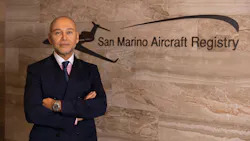
David Colindres is President of the San Marino Aircraft Registry.