Middle East Flight Disruptions Expected to Extend Into 2027
Airlines continue to adjust their Middle East operations following renewed missile and drone attacks in Saudi Arabia, Bahrain and Kuwait, with several international carriers extending flight suspensions into 2027.
On Nov. 16, the European Union Aviation Safety Agency (EASA) extended six conflict zone advisories covering portions of the Middle East through Jan. 31, 2027.
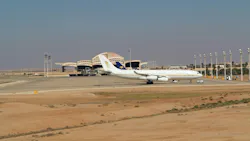
The agency cited repeated attacks targeting aviation infrastructure in Saudi Arabia, including Riyadh’s King Khalid International Airport, highlighting risks to aircraft on the ground as well as during takeoff and landing.
The airport remains subject to operational restrictions following its partial reopening in October.
Etihad Airways has extended the suspension of passenger and cargo services from Abu Dhabi to Riyadh and Dammam through Nov. 30, while maintaining service to other Saudi destinations.
British Airways, Air France and Lufthansa Group have postponed their return to Riyadh until January 2027.
Meanwhile, some regional carriers have resumed service to affected destinations, albeit with reduced frequencies and the potential for short-notice schedule changes.
For ground service providers operating across the region, the prolonged disruptions present ongoing challenges related to workforce scheduling, equipment utilization, cargo handling capacity and employee safety.
The uneven restoration of airline services across the Middle East also complicates resource allocation as ground handlers prepare for an eventual recovery in flight volumes.