AMT’s Most Influential in Maintenance 2026: Nicholas Amunategui Honored with Digital Pioneer Award
Key Highlights
- Nicholas Amunategui employs AI-powered smart glasses to document procedures, assist troubleshooting and create instructional videos, enhancing team efficiency and safety.
- Amunategui advocates for integrating technology as an aid, not a replacement, emphasizing the importance of human judgment and professionalism in maintenance.
- His efforts include building systems to pass on experience, using drones for inspections and fostering a culture of continuous learning among new technicians.
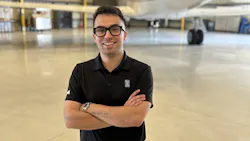
Aircraft Maintenance Technology is proud to recognize Nicholas Amunategui of Journey Aviation as one of AMT’s Most Influential in Maintenance with the 2026 Digital Pioneer Award.
The Digital Pioneer Award celebrates innovation in aviation maintenance by recognizing an individual who strives to find practical applications for new technologies and tools.
As Maintenance Controller / Maintenance Technician at Journey Aviation, Amunategui goes above and beyond to help implement innovative digital solutions that improve operations for his team.
How Amunategui encourages digitalization at Journey Aviation
Journey Aviation Director of Maintenance Toni Huddleston says, “Nick represents the future of aviation maintenance, and his influence is already being felt.”
Huddleston continues, “He actively embraces emerging technology and is helping modernize our maintenance environment by integrating digital tools into everyday workflows.”
“Notably, he uses AI-powered smart glasses to document procedures and create step-by-step instructional videos, which he then shares with the team to improve efficiency, accuracy and safety,” shares Huddleston.
She notes, “His ability to turn hands-on work into accessible learning resources has made a measurable impact on our operations.”
Amunategui talks about using AI-assisted tools for a variety of maintenance tasks, such as:
- Tracking maintenance trends
- Helping with budget planning and forecasting
- Building out maintenance schedules
- Finding qualified vendors
- Pulling data from past troubleshooting events
Discussing how aviation maintenance technicians can prevent repeated errors by implementing technology in real-world scenarios to record and share past findings, Amunategui says, “I've been building systems that pass on my experience to others in my organization without requiring me to be there in person to walk them through a situation.”
He elaborates, “An example of this is my use of smart glasses to record basic troubleshooting steps that flight crews and maintenance teams can use to diagnose faults.”
Amunategui explains, “Using smart glasses, I can provide someone across the world with a live feed of exactly what I am seeing in real time.”
He notes how this process enables technicians, inspectors and support personnel to:
- Visually guide troubleshooting
- Verify procedures
- Improve communication efficiency
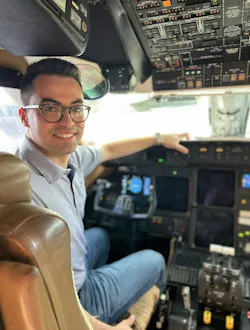
“I also use the glasses to help document procedures and support compliance preparation by creating a clearer visual record of maintenance actions and workflows, which I can share with team members,” adds Amunategui.
“Aviation maintenance depends heavily on teamwork, planning and attention to detail, and I believe technology can play a major role in supporting those areas when implemented correctly, says Amunategui.
He continues, “We should be embracing these new technologies, not as a replacement of the maintenance personnel currently in the field, but as an assistant that can improve safety and efficiency.
Amunategui’s journey in aviation maintenance
Like many who fall in love with aircraft maintenance, Amunategui did not initially plan to work in aviation.
He shares, “My interest in aviation really began after backseating a family member’s training flight. After that experience, I was instantly hooked. Shortly after, I packed up my belongings in Chicago and relocated to South Florida to pursue the opportunity.”
He adds, “I eventually earned an apprenticeship maintaining a mix of corporate and GA aircraft, which gave me hands-on exposure to a wide variety of maintenance operations and helped shape the career path I’m on today.”
When asked what he enjoys most about working in aircraft maintenance, Amunategui answers, “What I enjoy most about aviation maintenance is knowing the work actually matters. Every task ties back to keeping the aircraft and the people onboard safe, and that sense of responsibility is something I take seriously.”
He also highlights problem-solving as a highlight of his career, stating, “No two days look the same. There is always a new issue to work through or something new to learn, and that keeps it interesting.”
Amunategui continues, “The coordination piece is another part I've grown to enjoy, especially on the maintenance control side.”
He explains, “Working with technicians, vendors, flight crews and operations to keep aircraft safe, compliant and available takes a lot of moving pieces, and I get a lot of satisfaction out of being at the center of it all.”
Discussing which career accomplishments he’s most proud of, Amunategui says, “I never imagined being able to take care of 10 planes, all with their own unique issues, at once.”
“Some weeks involve coming in early and staying late, and I’ve found I do whatever it takes to get the planes flying. I am genuinely proud of my motivation and dedication in this field,” reflects Amunategui.
Another key accomplishment Amunategui celebrates is his position as a mentor at work, a role he never expected to find himself in.
He shares, “Not a day in the office goes by without being asked to help someone else. The way I can manage all of my own tasks while assisting coworkers, pilots, ground techs and leadership is something that I am proud of.”
What Amunategui sees for the future of aircraft maintenance and new AMTs
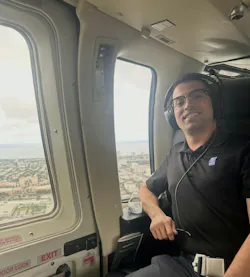
Amunategui comments, “Overall, I believe the future of aircraft maintenance will combine traditional technical expertise with smarter digital tools that help technicians work more efficiently while still keeping human experience, judgment and professionalism at the center of maintenance operations.”
He adds, “As aircraft systems become more advanced, the industry will need highly skilled technicians who are comfortable adapting to evolving maintenance practices and digital systems.”
Amunategui uses the example of drone applications for aircraft inspections, noting, “I believe drone technology has the potential to improve inspection efficiency, accessibility, documentation quality and safety.”
Emphasizing the importance of workforce development for AMTs, Amunategui says, “Most importantly, I would like to see the industry continue attracting younger generations into aviation maintenance by showing them how innovative and technologically advanced the field has become.”
To these younger and perhaps aspiring AMTs, Amunategui advises, “Stay curious and never stop learning. Ask questions, listen to experienced maintenance personnel, and take pride in even the small details of your work.”
He continues, “As the next generation of aviation maintenance personnel, we should ask how and why we do the things we do, not as a challenge against the people who came before us, but as an opportunity to explore paths which may not have been considered yet.”
“I would also encourage new technicians entering the field to use technology as a support to good maintenance practices, not as a replacement for sound judgement, experience, accountability and professionalism,” concludes Amunategui.