Modern Equipment Needs Modern Skills
Key Highlights
- Electrification efforts, like Swissport's goal to electrify 55% of its fleet by 2032, require infrastructure, maintenance capabilities, and technician training to be aligned with technological upgrades.
- Digital tools such as real-time dashboards and predictive maintenance improve safety and efficiency, but their effectiveness depends on employee training and data quality.
- AI offers benefits in demand forecasting and maintenance, yet widespread adoption faces challenges like connectivity issues, legacy systems, and cybersecurity concerns.
- Workforce development is crucial, with employees needing digital literacy and technical skills to operate connected equipment and diagnostics effectively.
- Industry collaboration and standardization are essential to avoid siloed systems, improve data sharing, and ensure technology serves operational needs rather than becoming an end in itself.
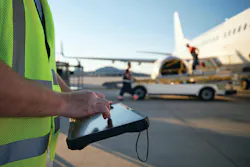
Electrification, digitalization and artificial intelligence are reshaping ground handling operations around the world. But while much of the industry's attention has focused on new equipment and software, the success of these technologies ultimately depends on the people who operate, maintain and manage them. As ground handlers modernize their fleets and adopt increasingly connected systems, workforce training and technical expertise are becoming just as important as capital investment.
Airports and ground handlers are increasingly adopting electrified equipment, digital operating platforms and AI-powered tools, but implementation remains uneven. Infrastructure, workforce readiness, data quality and common industry standards continue to shape how quickly operators can modernize. This article examines how leading organizations are balancing technological ambition with operational realities, and why developing the workforce might be just as important as deploying the technology itself.
Technology is only part of the equation
Dirk Goovaerts, CEO Continental Europe, the Middle East, Africa, India and Global Cargo Chair at Swissport, says sustainability is advancing through a pragmatic, phased approach focused on operational value.
"Ground handling companies are investing where it offers the greatest operational and environmental benefits," he says. "At Swissport, we are leading the electrification of our industry, aiming to electrify 55% of our global motorized fleet by 2032. In South Africa, for example, the recent introduction of 72 new electric cargo handling units has brought our domestic freighter fleet to 82% electric."
Swissport continues to invest in more energy-efficient ground support equipment, renewable energy, modern facilities and operational improvements that reduce emissions while maintaining safe, reliable service. But Goovaerts emphasizes that successful electrification requires far more than replacing diesel-powered equipment with electric alternatives.
"It also depends on charging infrastructure, local maintenance capabilities, technician training and access to spare parts, all of which must evolve in tandem," he says.
Digital technologies are also reshaping ground handling operations. Mobile ramp applications, digital inspections, real-time operational dashboards, load management platforms and predictive maintenance tools are helping improve safety, equipment availability and operational efficiency.
"As airport digital capabilities continue to mature, more robust operational data will help unlock greater value from technologies such as artificial intelligence," Goovaerts says. "We are investing in next-generation digital load systems, AI-based security and fleet management technologies, and pioneering autonomous ground handling solutions through Swissport Labs."
Yet digital tools only create value when employees are trained to use them effectively and organizations invest in developing the technical skills needed to support increasingly connected operations.
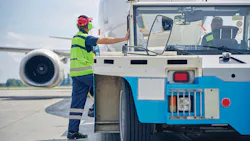
AI's promise meets operational reality
Artificial intelligence has the potential to improve demand forecasting, allocate personnel and equipment more efficiently, identify emerging maintenance needs and predict operational disruptions before they occur, according to Monika Mejstrikova, director of ground operations at IATA.
"However, much of the current implementation is more accurately described as automation, data analytics or optimization rather than fully autonomous AI," she says.
Mejstrikova says one of the industry's biggest challenges is no longer the availability of technology itself, but the operational environment needed to support it. Among the largest obstacles are the cost of implementation, demonstrating a return on investment at smaller stations, unreliable electricity and connectivity, fragmented operational data, legacy airline and airport systems that do not communicate effectively, cybersecurity concerns, limited digital and engineering skills, and uncertainty over who should fund shared airport infrastructure.
Today, AI is already creating value in workforce planning, equipment allocation, predictive maintenance and turnaround optimization, helping operators make faster and more informed decisions, Goovaerts says.
"While these innovations are gaining traction, greater adoption will depend on continued investment in airport infrastructure, reliable energy and digital connectivity, as well as closer collaboration between airports, airlines and ground handling operators."
As automation expands, the role of the ground handling workforce is evolving rather than disappearing. Employees increasingly need digital literacy alongside traditional ramp skills, while technicians must understand battery systems, connected equipment and software-driven diagnostics. For many organizations, workforce development is becoming inseparable from technology investment.
Collaboration drives progress
Technology alone will not transform ground handling. Industry leaders say collaboration is equally important.
"The greatest benefits will come from collaboration," Mejstrikova says. "Airlines, airports and ground-handling operators should avoid developing siloed systems that simply create new layers of complexity. Common standards for operational data, equipment messages and digital ground processes are also essential."
IATA supports that effort through initiatives focused on load control, ramp digitalization, ground support equipment management and the GOXML data exchange framework.
Mejstrikova says technology should always serve operational needs rather than become an objective in itself.
"Some airports may be able to overcome outdated processes by combining mobile technology, cloud-based systems, renewable energy and modern equipment. But the technology must be adapted to the operational context. The immediate priority should be to find solutions that demonstrably improve safety, reliability and operational efficiency, rather than implementing technology for its own sake."
Collaboration must also extend to workforce development. As equipment becomes more connected and operations increasingly data-driven, airlines, airports, manufacturers and ground handlers all have a role to play in developing common standards, sharing best practices and preparing employees for a more digital operating environment.
Practical progress
Ground handling's digital transformation is no longer defined solely by electric vehicles or artificial intelligence. Increasingly, success depends on whether organizations can prepare their people to work alongside these technologies.
Electrification, connected equipment and AI will continue to reshape ramp operations, but technology alone will not deliver safer or more efficient operations. Long-term progress will depend on investments in workforce skills, standardized digital processes and the collaborative infrastructure needed to support them. As those foundations mature, developing the workforce may prove just as important as deploying the technology itself.
About the Author

Mario Pierobon
Dr. Mario Pierobon provides solutions in the areas of documentation, training and consulting to organizations operating in safety-sensitive industries. He has conducted a doctoral research project investigating aircraft ground handling safety. He may be reached at [email protected].