Asia Pacific Ground Operations Expand Amid Growth, Weather, and Digital Transformation
Key Highlights
- Asia Pacific is expected to remain the world's fastest-growing aviation market, with significant expansion in China, Southeast Asia, and other key subregions.
- Ground handlers are investing heavily in automation, digitalization, and electric GSE to improve efficiency, safety, and environmental performance across the region.
- Advanced technologies like predictive analytics, real-time operational visibility, and autonomous vehicles are enhancing turnaround times and operational resilience.
- Weather volatility remains a challenge, prompting the adoption of predictive forecasting, scalable staffing, and contingency planning to ensure continuity.
- Sustainability initiatives include electrifying ground support equipment, waste management, and regional resource-sharing, with companies like Swissport leading industry-wide eco-friendly efforts.
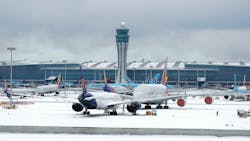
The Asia Pacific region continues to strengthen its position as one of the world’s fastest-growing aviation markets, with expansion reshaping ground handling operations across the continent. Alongside rising traffic, airports and service providers are accelerating investments in automation, digitalization, and sustainability, creating both opportunity and operational complexity.
As demand climbs, ground service providers are balancing rapid growth with persistent challenges, including extreme weather, safety performance, workforce flexibility, and infrastructure strain. At the same time, operators across the region are deploying new technologies and operational models that are redefining standards for efficiency, resilience, and environmental performance.
This regional report examines the trends, innovations, and strategic initiatives shaping the future of ground handling across Asia Pacific, drawing on insights from industry stakeholders.
Traffic Growth Across Key Markets
Brad Moore, head of Asia Pacific at Swissport International, expects the region to remain the world’s fastest-growing aviation market over the next five to 10 years, with several subregions forecast to achieve double-digit growth.
Swissport is expanding across multiple Asia Pacific markets, including cargo and ground handling operations in Australia and New Zealand, a growing footprint in Japan and South Korea, continued growth across Southeast Asia, and its first entry into mainland China.
“Our investment presence reflects our confidence in the region,” Moore says. “Our historic entry into China positions Swissport in the largest aviation market in Asia Pacific.”
Growth at major Chinese hubs, including Beijing, Shanghai, and Guangzhou, has accelerated following post-pandemic traffic recovery, rising cargo demand, and expanded domestic networks, according to Nishara Preena, VIP supervisor for Asia at UAS.
Swissport recently signed an agreement with Smargo to operate the Digital and Intelligent International Cargo Terminal at Shanghai Pudong International Airport, a facility designed to support high-volume cross-border e-commerce.
“Shanghai places Swissport at the center of global e-commerce flows,” Moore says. “The facility strengthens trans-Pacific and transcontinental trade routes while connecting our network of nearly 300 stations worldwide.”
Safety Performance and Operational Discipline
Safety performance across Asia Pacific is improving as ground handlers strengthen safety management systems, expand ramp audits, and increase recurring training programs, Preena says.
Moore says Swissport is investing in predictive analytics, real-time operational visibility tools, and expanded training programs to support proactive, safety-focused decision-making.
“Technology enables our teams to work more safely and efficiently,” he says. “By combining advanced analytics with operational visibility, we are creating safer, more resilient ground operations.”
Weather Resilience and Disruption Planning
Monsoons, typhoons, and seasonal weather volatility continue to present operational challenges across Asia Pacific, requiring flexible staffing models, contingency planning, and rapid schedule adjustments, Preena says.
Swissport has implemented weather resilience protocols built on predictive forecasting, scalable operating models, and pre-positioned equipment to support rapid recovery during disruptions.
“Advanced forecasting allows proactive resource planning, while dynamic staffing and resilient infrastructure help maintain continuity,” Moore says. “Real-time alerts, slot management tools, and coordinated recovery procedures allow us to protect our teams while sustaining safe, consistent service.”
Automation, Digitalization, and Connected GSE
Digital turnaround management systems, electronic load control platforms, and real-time ground support equipment monitoring tools are increasingly shaping ramp operations across the region, according to Preena. Data-driven coordination systems are delivering measurable improvements in turnaround times and operational consistency.
Swissport is expanding investments in automation, artificial intelligence, telematics, and connected systems to improve performance and efficiency across Asia Pacific operations.
“We are integrating electric GSE with advanced telematics and AI-powered fleet management,” Moore says. “Our electric pushback tractors in Melbourne and expanded eGSE deployments across Australia and New Zealand show how sustainability and operational performance can advance together.”
Swissport is also deploying autonomous systems, intelligent cargo handling solutions, automated ULD storage, and digital platforms such as Cargospot Neo to streamline cargo and ramp workflows.
Autonomous Vehicles at Singapore Changi Airport
Singapore Changi Airport has launched live operations of fully driverless autonomous baggage tractors on the airside, with two vehicles currently transferring passenger bags between Terminal 1 and Terminal 4.
Each autonomous tractor is equipped with multiple sensors and cameras to safely navigate complex airside environments in day, night, and adverse weather conditions, according to the Changi Airport team. The vehicles are monitored in a control center, where remote operators can intervene if needed.
Changi plans to deploy an additional six autonomous tractors on a second route serving Terminal 2 and aircraft stands later this year. The airport expects to expand the autonomous fleet to 24 vehicles by 2027, with future deployments planned for cargo and equipment towing.
“Autonomous tractors allow airside staff to shift focus to last-mile operations that are more difficult to automate,” the Changi team says. To support safe integration, the airport has introduced designated autonomous vehicle zones and clearly labeled vehicles.
Predictive Analytics and Operational Intelligence
Predictive analytics and machine learning are increasingly supporting proactive resource allocation, equipment availability monitoring, and energy optimization, Moore says.
“These technologies are delivering more consistent turnarounds, reduced docking and layover times, and improved safety outcomes,” he says. “Through Swissport Labs, we continue testing and scaling emerging digital innovations to strengthen operational excellence.”
Sustainability and Electrification Momentum
Ground handlers across Asia Pacific are accelerating sustainability programs, including electric utility services, fuel reduction initiatives, waste management efforts, and regional resource-sharing partnerships, according to Preena.
Swissport has set a global goal to electrify 55 percent of its powered GSE fleet by 2032. The company has surpassed 26 percent electrification globally and reached 23.7 percent electrification in the Asia Pacific region. In 2025, more than half of Swissport’s newly ordered powered equipment in the region was electric, Moore says.
“Beyond fleet transition, we are investing in energy-efficient cargo facilities and circular economy programs,” he adds. “Swissport has earned the EcoVadis Platinum Medal for the second consecutive year, alongside ISO 14001 and CEIV certifications.”
Swissport continues to collaborate with airports, OEMs, and industry associations through Swissport Labs to accelerate sustainability innovation and industrywide progress.
Looking Ahead
As Asia Pacific maintains its trajectory as a high-growth aviation market, ground handlers are responding with expanded investment in automation, digitalization, electrification, and safety systems. The adoption of autonomous vehicles, connected GSE, and predictive operational tools signals a shift in how ramp and cargo operations are designed and executed.
At the same time, operators must continue managing weather volatility, safety performance, and workforce demands amid rapid expansion. Through strategic partnerships, emerging technologies, and sustained environmental commitments, the Asia Pacific ground handling sector is positioning itself to support the next phase of regional aviation growth.
About the Author
 Mario Pierobon
Mario Pierobon
Dr. Mario Pierobon provides solutions in the areas of documentation, training and consulting to organizations operating in safety-sensitive industries. He has conducted a doctoral research project investigating aircraft ground handling safety. He may be reached at [email protected].