Mount Etna Closure Puts Pressure on Sicily’s Airport Network
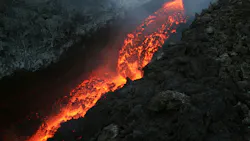
Flights at Catania-Fontanarossa Airport in Sicily will remain suspended until Thursday afternoon as continued volcanic activity from Mount Etna sends ash into the region's airspace, creating operational challenges across Sicily's airport network during the peak summer travel season.
Airport operator SAC said air traffic at Catania will remain suspended until 4 p.m. local time Thursday, Aug. 13, after aviation authorities extended restrictions on the affected sector of airspace over eastern Sicily. Passengers have been advised to check flight status directly with their airlines.
The closure extends several days of disruptions caused by renewed activity at Mount Etna, Europe's highest and most active volcano. Catania, Sicily's primary air gateway and Italy's fifth-busiest airport by passenger traffic, according to Reuters, has experienced repeated cancellations, diversions and operating restrictions as volcanic activity and shifting winds have affected the region.
The prolonged disruption is creating operational and passenger management challenges across Sicily's airport network.
Palermo Airport has handled 190 flights originally scheduled to arrive at or depart from Catania in recent days, Palermo Mayor Roberto Lagalla said. The additional traffic has contributed to delays while increasing demand for buses, taxis and other ground transportation as diverted passengers attempt to reach destinations elsewhere on the island.
Comiso Airport, south of Catania, has also been used to accommodate diverted traffic. The airport temporarily suspended operations because of volcanic ash before returning to full service Wednesday, according to reports. Flights have also been diverted to Trapani.
The disruptions illustrate the broader operational challenges that can emerge when a major airport becomes unavailable during a peak travel period, with diverted flights increasing pressure on alternate airports as well as ground transportation and passenger services.
The effects have extended beyond Sicily. Reuters reported that volcanic ash drifting south across the Mediterranean caused flight cancellations and significant delays in Malta. The Volcanic Ash Advisory Centre in Toulouse reported the ash cloud continuing to move south and southwest, with lower concentrations reaching from eastern Malta toward northern Libya, according to Euronews.
The repeated shutdowns have also renewed debate over Catania Airport's long-term vulnerability to volcanic activity.
Italian Minister for Civil Protection and Maritime Policies Nello Musumeci, a former president of the Province of Catania and former president of Sicily, said the latest disruptions underscore concerns he has raised for decades about the airport's proximity to Mount Etna.
"The events of recent days show just one thing: it is not the volcano that is in the wrong place, but the airport," Musumeci said.
Musumeci said he first raised concerns about the airport's location in 1999 and backed a proposal for a new airport between Catania and Enna that would serve much of the island. The proposal did not gain sufficient support.