AMT’s Most Influential in Maintenance 2026: Blake Bennett Honored with Top Trainer Award
Key Highlights
- Blake Bennett has mentored over 50 technicians, increasing qualification rates by 72% and improving training program effectiveness.
- His innovative training methods, including engine run and APU instruction, have saved over 5,000 labor hours annually without compromising safety.
- Bennett emphasizes hands-on learning to ensure technicians perform tasks accurately and confidently on real aircraft systems.
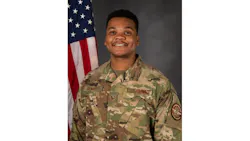
Aircraft Maintenance Technology is proud to recognize Blake Bennett of the United States Air Force (USAF) as one of AMT’s Most Influential in Maintenance with the 2026 Top Trainer Award.
The Top Trainer Award honors an AMT educator who specializes in hands-on training and practical learning.
USAF Chief Master Sergeant Gary Chappell says, “Blake Bennett stands out as an exceptional hands-on aviation maintenance trainer who has consistently improved how technicians are developed, qualified and prepared for real-world operations.”
“His performance and contributions have been formally recognized through multiple U.S. Air Force awards, including the two Air Force Achievement Medals and the Air and Space Commendation Medal,” notes Chappell.
He adds, “These honors reflect sustained excellence in technical performance, leadership, and his ability to develop high-performing teams.”
What makes Bennett a Top Trainer?
As an Aerospace Propulsion Craftsman with the USAF, Blake Bennett has also spent a huge portion of his time training and mentoring new AMTs.
Chappell shares, “Blake has led and mentored over 50 technicians, designing and delivering practical, skills-based training that directly translates to real-world performance.”
Chappell continues, “His efforts increased qualification rates by 72% while also correcting deficiencies in training programs and certifying technicians on critical maintenance tasks.”
“His ability to break down complex engine systems into hands-on instruction has enabled maintainers to perform with greater confidence, accuracy and consistency,” adds Chappell.
Chappell also praises Bennett for his use of innovative training methods, such as:
- Engine run instruction
- Auxiliary power unit (APU) training
- Hands-on inspection tools
Chappell stresses, “These initiatives saved thousands of labor hours annually while maintaining high safety and quality standards, improving efficiency and reducing task completion times.”
Chappell mentions that these time savings amount to more than 5,000 man-hours annually, without compromising on safety or compliance and adhering to rigorous standards.
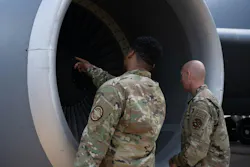
Aside from saving time, Chappell emphasizes how Bennett’s hands-on training approach also ensures that technicians learn and retain the skills they need, so every job is completed correctly the first time.
“His efforts have supported high-tempo operations involving hundreds of inspections, repairs and system troubleshooting actions, ultimately improving aircraft availability for combat and reliability,” notes Chappell.
Showcasing Bennett’s dedication to supporting new technicians even after training is complete, Chappell explains, “In addition to technical training, he actively mentors developing technicians and junior leaders, helping them progress in their careers and strengthening the overall workforce.”
What makes Bennett proud of his aviation maintenance career?
Reflecting on how he built a career in aircraft maintenance and which accomplishments mean the most to him, Bennett notes that rather than having a specific experience that led him to the field, a collection of different events shaped his career path.
Bennett says, “Being open to new experiences has gotten me to where I am today.”
He continues, “I grew up always working with my hands. Once I knew I wanted to join the Air Force, I knew I wanted to continue building that skill I already possessed.”
Bennett’s journey highlights how careers in aircraft maintenance can be built in countless different ways, from a variety of backgrounds and pathways.
Discussing his proudest accomplishments, Bennett shares, “The career accomplishment I was most proud of was achieving my A&P license while on Active Duty.”
He adds, “In my personal life, being a dad to my two sons is the accomplishment I’m most proud of.”
Bennett also talks about what he enjoys most about working in aviation maintenance. He explains, “Aviation is something that can sometimes be a thankless job.”
Bennett elaborates, “You put long hours and a lot of sweat to get a job accomplished. But the satisfaction you feel when you see that aircraft take off—and you know you did that—is unmatched.
What does Bennett hope for the future of aircraft maintenance and new AMTs?
When asked about what he hopes to see in the aviation maintenance industry in the future, Bennett points to new maintenance technologies designed to increase efficiency in repair shops.
He answers, “I would like to see AI be able to help with troubleshooting to help save on aircraft downtime.”
Bennett continues, “I hope to build work environments that are safe, hardworking and encouraging about learning.”

Highlighting how Bennett has already made these impacts in his workplace, Chappell says, “Blake Bennett has made a measurable and lasting impact on aviation maintenance by improving both operational performance and the way technicians are trained and developed.”
He continues, “Beyond daily operations, he has helped shape a culture of professionalism and continuous improvement.”
“By mentoring technicians, refining training programs and emphasizing hands-on proficiency, he is not only improving current performance but also developing the next generation of skilled aviation maintenance professionals,” adds Chappell.
To this next generation of AMTs entering the maintenance sector, Bennett advises, “Be open, be flexible. The more experience you have the better off you will be.”
About the Author
 Emily Gorski