Africa's Aviation Growth Meets Ground-Level Challenges
Key Highlights
- Africa's aviation sector is experiencing rapid growth driven by economic expansion, urbanization, and regional trade initiatives like the African Continental Free Trade Area.
- Ground handling infrastructure faces challenges such as aging equipment, limited connectivity, and regulatory fragmentation, which hinder operational efficiency and safety.
- Efforts are underway to harmonize safety standards through global frameworks like IATA's manuals and initiatives such as ISAGO and IGOM, fostering regional cooperation.
- Sustainability is gaining momentum with investments in electric ground support equipment, solar power, and digital solutions, though infrastructure limitations require a gradual approach.
- A pragmatic strategy focusing on equipment lifecycle management, digitalization, workforce development, and regional collaboration is essential for Africa's aviation future.
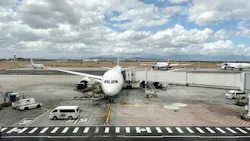
With passenger traffic climbing at nearly five times the global growth rate and cargo volumes rising, Africa's aviation sector is fast becoming one of aviation's most compelling growth stories. Yet behind the optimistic forecasts lies a more complicated reality: aging ground support equipment, uneven infrastructure and regulatory fragmentation that together constrain how quickly that demand can be met.
In this report, the state of African ground handling today is examined, from safety harmonization and fleet modernization to the gradual rollout of electrification and digitalization. The report offers a grounded picture of a continent balancing rapid opportunity against structural constraints.
Aviation demand across African markets
Dirk Goovaerts, CEO for Continental Europe, the Middle East, Africa, India and Global Cargo Chair at Swissport, affirms that Africa is becoming an increasingly important market for aviation and logistics.
"According to IATA, the aviation sector already contributes $75 billion to Africa's GDP and supports more than 8 million jobs, while the continent's aviation market is expected to double by 2044. Passenger demand is expected to continue growing at a faster rate than the global average, driven by economic growth, urbanization, a growing middle class and initiatives such as the African Continental Free Trade Area, which are strengthening trade and regional connectivity," he says.
"In this context, we continue to invest in infrastructure, technology and operational capabilities across the continent. Today, we operate in six African countries and continue to expand our presence on the continent."
Monika Mejstrikova, director of ground operations at IATA, affirms that air travel demand in Africa is growing strongly, although performance varies considerably from market to market.
"We forecast a 10% increase in African airline passenger traffic in 2026, following an estimated 9.8% growth in 2025. This is significantly higher than the global passenger traffic growth rate of 2.1% in 2026," she says.
"Growth is supported by demographic and economic expansion, increased tourism, strengthened ties with the Middle East and Asia, and gradually improving intra-African connectivity. Ethiopia, for example, reported a 15% increase in international air connectivity in 2025."
The African aviation market continues to benefit from solid long-term growth drivers, particularly in the air cargo sector. Exports of perishable products such as flowers, fresh fruit and vegetables, and meat remain vital, while the growth of e-commerce, pharmaceutical shipments, expanding intra-African trade and the evolution of global supply chains are creating new opportunities across the continent.
To support that growth, investments are increasingly focused on modern cargo infrastructure, digitalization and more sustainable operations, balancing operational needs with the commercial realities of each market, according to Goovaerts.
"We have expanded temperature-controlled facilities across our African network, including our 10,400 m² cargo warehouse in Nairobi. We have strengthened our CEIV-certified pharmaceutical transport capabilities in locations such as Dar es Salaam, and we continue to invest in digital cargo solutions that improve shipment efficiency and visibility."
While growth prospects are strong, the industry's ability to capitalize on that demand depends largely on how quickly ground infrastructure and operational capabilities can keep pace.
The growth of air transport in Africa, however, continues to be constrained by structural challenges, including high operating costs, limited connectivity, regulatory barriers and infrastructure bottlenecks, observes Mejstrikova.
"We note that only 19% of intra-African routes are served by direct flights, limiting the region's ability to fully capture demand. These constraints are placing increasing pressure on airport and ground handling infrastructure," she says. "As traffic increases, airports and service providers must invest not only in new terminals and infrastructure, but also in modern ramp equipment, baggage handling systems, cargo loading facilities, training and digital tools to ensure safe and efficient operations."
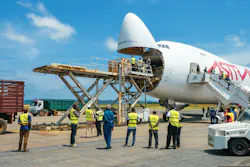
Ground handling capabilities remain uneven across Africa. While major hubs often have modern equipment and established international processes, other airports face shortages of aircraft-compatible loading, towing and ground power equipment; limited maintenance capacity, spare parts availability; congested ramp and baggage handling areas; unreliable power and communications infrastructure; and gaps in training and regulatory oversight, Mejstrikova observes.
"The age of ground support equipment is a particular concern. IATA data shows that Africa and the Middle East operate some of the oldest GSE fleets in the world, with an average age of 29 years," she says. "Although operators are increasingly modernizing existing equipment with safety technologies, fleet modernization remains essential to improve resilience, reduce ground damage and support sustainability goals.
"These weaknesses are most evident during traffic peaks and when new aircraft types are introduced. Infrastructure investments must therefore go beyond the simple purchase of new equipment and include maintenance capacity, workforce development, data sharing and more uniform operating standards."
Safety compliance and standardization
Specifically for ground handling, the most effective path to harmonization is the widespread adoption of global industry standards, Mejstrikova affirms.
"The IATA Ground Operations Manual provides standard operating procedures, while the Airport Handling Manual (AHM) provides a broader framework for policies, management, training and technical aspects. The IATA Safety Audit for Ground Operations (ISAGO) independently assesses ground handling service providers against these requirements and is aligned with ICAO's Manual on Ground Handling (IGOM)," she says.
"The goal is simple: An aircraft should be operated according to the same fundamental safety procedures, regardless of the airport or service provider involved."
This reduces unnecessary operational variations, improves training consistency and makes airline oversight more efficient, she adds.
Regional harmonization is making steady progress thanks to initiatives such as IATA's Focus Africa Program, the Single African Air Transport Market (SAATM) and the broader adoption of global standards, according to Goovaerts.
"These initiatives contribute to improving safety, standardizing operating procedures and creating greater consistency among airports, airlines and ground handling operators," he says. "At Swissport, we support this process by implementing globally standardized operating procedures across our network, investing in ongoing training through the Swissport Academy, developing local operational talent and maintaining internationally recognized certifications, including ISO, ISAGO and CEIV, where applicable."
"We also continue to invest in digital solutions that strengthen incident reporting, operational visibility and service consistency."
Although significant progress has been made, harmonization is still a work in progress, Goovaerts observes.
"Differences in national regulations, infrastructure development and the pace of adoption of global standards mean there is still work to be done. The challenge today is often not so much defining international standards as ensuring they can be consistently implemented across airports with diverse operating environments," he says.
"Continued collaboration between regulators, airports, airlines and ground handling operators will therefore remain essential. Aviation authorities are increasingly playing a key role in aligning local oversight with internationally recognized safety and operational practices."
In 2024, ISAGO achieved a record 400 station accreditations, with more than 50 regulators and airports integrating ISAGO into their oversight frameworks, affirms Mejstrikova.
"At the same time, the adoption of IGOM and AHM continues to expand, helping to reduce operational variation between stations and strengthen safety performance," she says.
"IATA and other organizations have consistently emphasized that more rigorous implementation of global standards remains one of the three most important opportunities to improve the safety and efficiency of ground operations, along with the modernization of GSE fleets and increased digitalization. Ground operations are also part of the broader safety agenda under IATA's Focus Africa Program and the Collaborative Aviation Safety Improvement Program (CASIP) for Africa."
Sustainable ground operations
That same balancing act is shaping the industry's approach to sustainability, where ambitious goals often meet practical infrastructure constraints.
The transition to more sustainable ground operations is underway, but it is developing at different speeds at African airports, Mejstrikova observes.
"Electric ground support equipment can offer clear benefits, including lower emissions, reduced fuel consumption, less runway noise and potentially lower maintenance costs. Solar power generation is also particularly relevant for African airports because it can help provide low-carbon electricity while reducing dependence on often unreliable national power grids. However, electrification cannot be approached simply as a matter of purchasing equipment," she says.
"An airport requires sufficient and reliable power generation, charging infrastructure, grid connections, battery maintenance capabilities and operational procedures. At airports where electricity supply is limited or intermittent, replacing an entire diesel fleet with electric equipment may not yet be feasible."
For many African handling operators, the most realistic approach will therefore be a gradual one, Mejstrikova explains.
"Specifically, this means replacing equipment at the end of its life cycle rather than converting entire fleets immediately. It also includes initially electrifying equipment with predictable duty cycles, such as baggage tractors or passenger ladders; installing fixed ground power at suitable stands; using solar generation and battery storage where commercially viable; improving fuel efficiency and equipment utilization across the existing fleet; and collecting accurate emissions and energy consumption data before prioritizing investment," she says.
"Digitalization will likely progress more rapidly than full electrification, as some applications require less physical infrastructure. Technology is already making strides in areas such as digital passenger management, self-service check-in, baggage reconciliation, staff and shift scheduling, electronic load control, equipment tracking and maintenance scheduling."
Ultimately, one of Africa's greatest strengths lies in the resilience of its aviation ecosystem, Goovaerts affirms.
"Across the continent, airports, airlines, ground handling operators and aviation authorities continue to adapt to evolving operational, economic and infrastructural challenges while maintaining safe, reliable and increasingly efficient services," he says. "As investment, digitalization and standardization advance, this collective resilience provides a solid foundation for the next phase of African aviation growth and strengthens the continent's long-term potential in this sector."
Pragmatism prevails
What emerges from these conversations is a sector defined by the steady accumulation of incremental progress. Regional harmonization efforts are gaining traction, while operators are electrifying fleets and digitalizing processes where conditions allow.
The path forward is a pragmatic one: prioritizing equipment replacement at the end of its life cycle, targeting electrification toward predictable duty cycles, building common data standards before layering on more advanced technology, and ensuring that investment in new systems is matched by investment in training, maintenance capacity and local talent.
About the Author
 Mario Pierobon
Mario Pierobon
Dr. Mario Pierobon provides solutions in the areas of documentation, training and consulting to organizations operating in safety-sensitive industries. He has conducted a doctoral research project investigating aircraft ground handling safety. He may be reached at [email protected].