How AI-Powered Data Analysis Helps Technicians Fix Recurring Aircraft Defects
Key Highlights
- Reviewing logbooks, fault messages and component histories together reveals how maintenance actions relate to later outcomes.
- Field-tested maintenance outcomes can help teams assess corrective actions while following applicable procedures.
- Adaptive clustering incorporates engineer feedback, with operator review keeping people in control of updates.
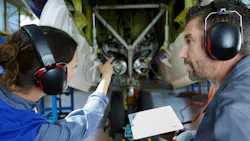
Three technicians encounter what appears to be the same aircraft problem.
One records an overheat message that clears on recheck. Another documents repeated warnings and performs a reset. A third describes an “OVHT nuisance warning” and records no fault found.
Each entry accurately captures the information available at that time. Weeks later, the defect returns.
The question is not whether any technician made the right decision but whether each had enough visibility of the aircraft’s wider history to recognize a recurring pattern and then investigate it accordingly.
This scenario illustrates a visibility gap in aviation maintenance. Operators accumulate significant evidence across resources like:
- Logbooks
- Aircraft fault messages
- Component histories
Yet, the connections between these records can remain difficult to see at the point of decision.
Every investigation should strengthen the next one. Too often, however, the relevant knowledge remains scattered across systems, where it’s hidden behind inconsistent terminology or dependent on someone remembering a similar event.
AI can help close that gap by making accumulated maintenance evidence easier to retrieve, interpret and apply, while keeping engineers in control of the decision making.
For example, Veryon recently released a next-generation Defect Analysis solution that brings aircraft faults and part failures into recurring-defect investigations.
Why it’s key to analyze and clarify technician findings
Recurring defects rarely present themselves in identical language.
The same underlying issue may appear under various labels, including:
- Descriptions
- Abbreviations
- ATA codes
Searches based on exact wording may miss the relationship between “overheat message” and “OVHT nuisance warning.” Reviewing records individually can obscure a recurring failure pattern that becomes clearer when related entries are considered together.
Engineers need time to complete steps that can compete with immediate operational priorities, such as:
- Retrieving the history
- Comparing previous actions
- Establishing whether separate reports have common strands.
Natural language processing and clustering can help by grouping maintenance and pilot reports according to their meaning, rather than by exact wording alone. Potential repeats can then surface earlier, often by the second occurrence, so an engineer can review that pattern before it becomes a longer-running operational problem.
The value lies in giving the team a better starting point and a chance to save time with modern solutions. Engineers can examine a possible pattern with its supporting history already assembled, enabling them to more easily and quickly determine what further investigation is warranted.
Today, in effective documentation, an entry concludes a task but also becomes evidence for engineers in future. Its usefulness depends on how clearly it records the observation, action and finding.
How to connect symptoms with outcomes
Recognizing a possible repeat is the first step, while the next question is whether previous maintenance action resolved the issue.
Engineers can evaluate what happened before and after an intervention by reviewing records aligned on a common timeline. For example:
- Logbook entries explain what people observed and did.
- Aircraft fault messages provide system evidence.
- Component histories reveal what was removed, installed or sent for assessment.
This context matters. A reset followed by another occurrence tells a different story from an intervention followed by sustained operation without the same fault. Having this distinction becomes easier to investigate when maintenance actions and subsequent fault data can be reviewed together.
Part history can be especially revealing. A component may return from the shop with no fault found, be reinstalled and later become associated with another recurrence. Examining its history across aircraft may expose a pattern that an individual aircraft’s records do not show.
A statistical association provides a lead for engineers to assess. Its significance depends on the surrounding evidence and the circumstances of each occurrence. The objective is to make that evidence accessible while preserving enough technical detail to enable sound judgement.
How to make engineering feedback count
For years, traditional machine learning and natural language processing have helped maintenance systems interpret inconsistent descriptions. Engineers’ reviews of suggested defect groupings have also captured valuable decisions about which reports belong together.
However, while incorporating new feedback used to require a manual model rebuild, a more adaptive approach makes those decisions part of an ongoing learning process.
Generative AI can help interpret language and context, combining with established models which provide consistent, repeatable clustering. An AI agent can incorporate engineers’ feedback into proposed refinements to that logic, creating the new generation of AI-enhanced analysis known as adaptive clustering.
Engineers help improve future analysis through decisions like:
- Approving a grouping
- Splitting unrelated reports
- Merging connected issues
Veryon’s Adaptive Clustering approach is set up to ensure that an operator’s maintenance desk reviews any updates before they take effect.
Engineering oversight then shapes the immediate investigation and the system’s development, with the knowledge gained from reviewing one issue improving how engineers investigate similar issues in the future.
A suitable benchmark is equally important. Veryon’s Verified Data Set contains hundreds of thousands of chronic defects independently reviewed by maintenance experts, providing a reference to evaluate model changes against.
To ensure they get the best from this new generation approach to defect analysis, operators should understand:
- How performance is measured
- How corrections are captured
- Who controls changes
How technicians can learn from fixes that hold
Previous outcomes can help technicians distinguish an action that was frequently attempted from one associated with a sustained resolution. Making those findings accessible gives maintenance mechanics a stronger basis for deciding what to investigate next.
Tools such as Veryon’s Fix Agent powered by Fleetwide Data Intelligence draw on field-tested maintenance outcomes to support that assessment, while its recommendations remain subject to engineering judgement and the operator’s applicable maintenance procedures.
First-time-fix performance is therefore an important measure alongside detection accuracy. Teams should examine:
- Whether they can identify the recurring issue
- Whether the corrective actions taken has resolved those issues
- Whether subsequent operation supports that conclusion
How AI-powered defect analysis improves future maintenance work
A completed investigation should improve the evidence available for future work. That means:
- Documenting findings clearly
- Evaluating what happened after corrective action
- Making the results accessible when related issues appear again
AI’s contribution should be judged by how well it supports that process. This includes questions like:
- Does it help engineers recognize a repeat earlier?
- Can they understand what previous work achieved?
- Does their feedback improve subsequent analysis?
When three technicians encounter a familiar warning, each should be able to draw on the evidence and judgement accumulated before them. Giving them that shared context improves an organization’s ability to investigate consistently and resolve problems with lasting results.
A key test for AI in maintenance is whether better decisions translate into greater aircraft availability and lower costs.
Veryon’s results demonstrate that potential, showing approximately:
- 12% greater aircraft availability
- 23% lower downtime-related costs
- 5% reduction in unnecessary component replacement and parts expense
These outcomes can guide operator investments by pursuing fewer recurring problems that disrupt schedules and enabling easy access to maintenance resources and data.
About the Author
 Vinay Kumar
Vinay Kumar is Chief Technology Officer (CTO) at Veryon
Related

 A man wearing a high-visibility vest and hard hat looking at aircraft maintenance data on a desktop computer, with two other maintenance technicians looking at a tablet in the background