Why Transitioning Military Servicemembers are Ideal for Aircraft Maintenance Careers
Key Highlights
- Aviation careers offer diverse pathways, including work on aircraft, engines, propellers and components, requiring qualities like attention to detail and integrity.
- Industry efforts should expand beyond mechanic certification to include broader technician roles, utilizing programs like DoD SkillBridge to tap into military talent.
- Repair stations have the authority to employ and train personnel with alternative credentials, enabling quicker integration of military veterans into the workforce.
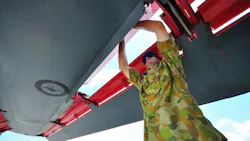
While a master mechanic’s 50 years of experience are rightly celebrated, modern careers are far more likely to be defined by change.
For many, the appeal of an aerospace maintenance career lies in its many pathways.
For repair stations, the limited number of certificated positions and the flexibility of training requirements support recruiting from a broad and diverse talent pool. These training requirements also ensure that all maintenance technicians are capable of and approved to fulfill their responsibilities.
In particular, military personnel qualify for a wide variety of opportunities in civil aviation and act as a great resource for the aviation industry to build a robust talent pipeline.
When military veterans can transition easily into a civilian career path, they help to fill desperate personnel needs in the aviation industry, closing talent gaps with soft and hard skills suited to technical work.
In 2019, ARSA and its association partners helped define the profession of aviation maintenance. The definition was developed to support the FAA's revised guidance explaining how technicians work within the U.S. regulatory framework.
While useful for the entire industry, it also highlights why military personnel are particularly well suited for aviation maintenance careers.
Civil aviation maintenance offers numerous career opportunities for individuals who thrive in technically demanding occupations. This includes work on:
- Civil aircraft
- Aircraft engines
- Propellers
- Components
- Appliances
This type of work requires qualities often held by military servicemembers, such as:
- Personal integrity: Aviation maintenance is safety-sensitive work. Individuals must perform every task correctly regardless of supervision or other human factors.
- Attention to detail: Maintenance must be completed according to approved instructions without skipping steps or leaving anything behind. Comprehensive documentation is essential to demonstrating regulatory compliance and ensuring safety.
- Technical knowledge and skills: Success in the profession requires the knowledge and ability to perform work correctly within the aviation regulatory framework.
- Regulatory compliance: Understanding the rules governing maintenance and alteration activities is essential to professional growth and advancement.
- Physical capability: Maintenance work often requires significant physical effort and the ability to perform a variety of hands-on tasks.
The challenge is not whether transitioning servicemembers are qualified for this type of work, but whether the industry fully understands how to integrate their experience.
While numerous transition programs and government initiatives focus on helping military technicians obtain FAA mechanic certificates, this emphasis is overly narrow.
Repair stations have broad authority to employ and train competent personnel regardless of certification status, allowing many separated servicemembers to enter the workforce almost immediately.
Even individuals whose military occupational specialty was not aviation-related often bring transferable technical skills, proven professionalism and experience operating in highly regulated environments.
Those attributes can quickly translate into non-certificated technical positions or qualification as repairmen.
However, too many available resources focus exclusively on mechanic certification at the expense of the broader technician workforce.
From the Defense Department’s transition program to the FAA's own discussion of maintenance career pathways, government efforts often overlook the fact that certificate holders represent only one segment of the industry's workforce.
Aviation businesses cannot afford such a narrow perspective.
Instead, they should pursue broader opportunities, including DoD SkillBridge programs, to convert a wide range of military experience into rewarding civilian aerospace careers.