From Aircraft Mechanics to Aviation Leadership: Finding a Long-Term Career in Aerospace
Key Highlights
- Aviation touches countless aspects of daily life, and exploring different roles can lead to fulfilling and long-term career growth.
- Mentorship and teamwork are vital in aviation, ensuring safety, trust and high performance among crew members and maintenance staff.
- The aviation industry faces a significant technician shortage, providing ample opportunities for those looking to pivot or advance within aviation.

When thinking about what an aviation career entails, many people default to considering pilots, flight attendants and the familiar faces they see each time they pass through an airport.
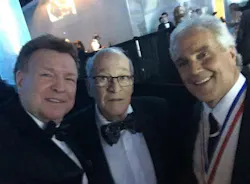
However, a recent episode of the Aviation Pros Podcast showed just how many options are out there for aviation career paths, from aircraft mechanics to engineers to Air Force pilots. This included insight from:
- Paul T. Glessner – Founder and CEO of Executive Jet Support Services (EJSS)
- John Goglia – Aircraft Mechanic, Former NTSB Board Member, Aviation Safety Advocate
- General Lloyd “Fig” Newton – Retired United States Air Force (USAF) General and Thunderbirds Pilot
- Izzy Lozada – Head of Sales, Marketing and Business Development at EJSS
Whether someone is hoping to get their hands dirty fixing planes or help aviation companies manage the financial side of operations, this panel made it clear that there’s a place in the aviation industry for everyone.
What job opportunities are available in aviation?
Goglia commented, “When I started, was working on little airplanes as a mechanic, and then I grew up to turn wrenches all the way up to 747s, and then my career took a turn.”
Goglia continued, “Troubleshooting was something I was good at, and I ended up traveling all around the world chasing broken airplanes. I never thought I would do that when I started the business.”
“I became a supervisor, running a bunch of guys,” said Goglia, “And then I got into the paperwork side because the paperwork was a mess…Then I get working with the FAA on revisiting the FARs, not only for mechanics but across the board.”
“All of those jobs were in aviation, and they were all diverse,” he noted.
Highlighting aviation finance careers, Izzy Lozada shared:
To that individual who may be well versed in the sales process, which is just really understanding people and having great people skills…If you're able to usher in a jet for somebody that thought it would cost 10s of millions of dollars, and they can get a relatively nice used jet for $1 million maybe $2 million, and then help them understand the finance around that planning for the maintenance the way EJSS can do with forecasting, our AI modeling, machine learning…That new person that's out there right now, if you're proficient in technology, you can help bolster a great company.
Which habits and standards help aviation professionals set themselves apart in the workforce?
Focusing on priorities for aircraft mechanics, John Goglia said, “Paying attention to details, following procedures…There are all those personal things that you have to tend to.”
He continued, “But when you're in the workplace, you need to make sure you pay attention to what's going on around you. You are your brother's keeper on the shop floor, so if you see something unsafe, you need to say something about it.”
Goglia added, “And you need to follow the procedures. If you can't follow the procedures, you stop. Many people don't stop and just work through them.”
Goglia also highlighted The Competition presented by Snap-on, sharing, “We bring together 450 mechanics from around the world, heavily focused on students, but we bring industry people in as well. They compete in 27 different areas of testing.”
Goglia noted, ““When SpaceX launched the first manned vehicle they had up to the space station, the person who closed the hatch—the last person to touch that capsule—was a mechanic who competed at my competition.”
He elaborated, “We have a couple of engines there, and they get dinged if they don't follow procedures, they don't use safety glasses where it's appropriate. We’re trying to instill in these young people the work habits that make a good maintainer.”
“It’s also been very heartwarming for me to see how many of the industry people mentor the young people now,” said Goglia.
EJSS Founder and CEO Paul T. Glessner echoed Goglia’s sentiments on the importance of mentorship, stating, “You need to have a can-do attitude and learn from your mentors, try to find a product that maybe is missing and can fill that hole, and EJSS, I hope, is that.”
When asked about transitioning from his extensive engineering career to founding and running his own aviation business, Paul T. Glessner answered, “I found that it's always best to align yourself with those that play tennis better than you, right?”
Glessner continued, “Bottom line, think positive and proceed all-hands-on-deck or full-court press to your goals.”
How do teamwork and trust factor into aviation careers and maintenance roles?
Throughout his career with the USAF—from piloting fighter aircraft in Vietnam to performing demonstrations with the Thunderbirds—General Lloyd Newton has seen the value of teamwork at play.
General Newton shared, “If I'm a mechanic and I'm working on the line, I'm only working on one part of that aircraft while someone else is working on all of the other parts of the aircraft. Each one of us is depending on each other to do our job to the utmost of our ability and to get it absolutely perfect or as perfect as we possibly can.”
He elaborated, “The public is depending on and trusting us to do our jobs well because this is really a matter of life and death when you get right down to it. So, each one of us carries a very critical role.”
General Newton added, “When I spent time with the United States Air Force Thunderbirds, that was all about teamwork and trust…The whole time I served with the team, I never pre-flighted my aircraft once.”
He explained, “My crew chief was responsible for pre-flighting my aircraft, and I trusted that individual and knew that he was an absolute professional. And then I had an assistant crew chief, a young lady, and between the two of them, they took care of my airplane.”
General Newton said, “When I walked out to the airplane, the only question I asked them is the aircraft ready to fly? And they would either tell me yes or no. If the answer was yes, I got in the aircraft and flew, and they got me back down safely every time.”
How to transition to a new aviation career instead of leaving the industry
Touching on aviation maintenance, Glessner commented, “Boeing's 2025 technician outlook projects a massive need for 123,000 new maintenance technicians in North America over the next two decades through 2044 to support the growing fleets that the OEMs are building…20% of the current technicians are nearing retirement, so there are big openings.”
As some of the technician shortages result from skilled workers leaving the aviation sector to work in different industries, it’s key to remember how many different options for pivoting there are in aviation.
“You don't have to leave; you just need to pick a different area and use your already built expertise to go explore different areas of this industry that are so broad. It is so broad,” stressed Goglia.
Using the example of private aviation, Lozada stated, “That's going to continue to grow, and we desperately need those people to make sure that people understand what it takes to put them up in this and get them down to the ground safely.”
Lozada added, “Instead of walking away from this all, you can mentor people the way these gentlemen are. There's just so much to give into the aviation community, and I'm absolutely honored to be a part of it.”
General Newton said, “This is an exciting community of employment, and if you think about it, aviation/aerospace touches practically every aspect of our lives on a daily basis, whether that's down on the ground or up in the air or up in space.”
“I would encourage anyone who's looking for a career opportunity to take a look at aviation and aerospace, and I think you’ll find a niche there that you can be really, really happy about,” concluded General Newton.
About the Author
 Emily Gorski