Dr. Viral Shah on How Dyad Enables Predictive Maintenance and Optimizes Aircraft Design
Key Highlights
- Dyad offers AI-native systems modeling that enables digital twin creation for aircraft, improving predictive maintenance and operational efficiency.
- JuliaHub provides accessible modeling and simulation tools that accelerate aircraft design processes from weeks to days, reducing time-to-market.
- Digital twins help airlines and manufacturers optimize fuel consumption, lower costs and enhance safety by proactively addressing maintenance needs.
- The platform supports aerospace innovation by replacing repetitive manual tasks with agentic, automated tools, streamlining engineering workflows.

As technology innovations keep emerging in the aviation space, maintenance providers and aircraft manufacturers can benefit from using solutions Dyad 3.0 and JuliaHub to optimize planning, predictive maintenance and more.
In a recent Aviation Pros Podcast episode, JuliaHub Co-Founder and CEO Dr. Viral Shah explained how these next-gen technologies help save time and money, sharing key aerospace applications of Dyad 3.0 and its digital-twin technology.
What is Julia and JuliaHub?
With a PhD in Computer Science from UC Santa Barbara and extensive experience in technical projects, Shah noted that he and colleagues founded the Julia project in 2009.

Working on India’s Aadhaar Project by day and on Julia by night, Shah eventually helped to produce the programming language Julia along with the JuliaHub platform that enables users to make their own solutions.
Shah said, “We wanted people who were trained in mathematics but not programmers to be equipped with tools that were easy to work with so they could design their algorithms in a high-level, easy-to-use framework with the right abstractions and then deploy that code into production with minimum hassle.”
While Julia is free and open source, with JuliaHub hosting more than a million users, many early customers still were looking for modeling and tools that were already built.
Shah explained, “We transformed ourselves from a company that builds out open-source tools for the Julia language to a company that builds modeling and simulation tools that leverage the wonderful Julia ecosystem.”
One of JuliaHub’s key solutions in this vein is Dyad, which helps to streamline engineering processes with complex modeling requirements.
What is Dyad and how does it work?
Shah shared, “Dyad itself is a systems modeling tool that is fully AI native. It's agentic, so think Cloud Code but for hardware.”
He continued, “Cloud Code helps you write software. You can describe what you want to Cloud Code in English, and as long as you give detailed enough instructions, you're going to get a good software program out of it.”
“While tools like Cloud Code have revolutionized the way we build software, the question is, how do we do that for hardware? And the answer is by doing modeling and simulation,” noted Shah.
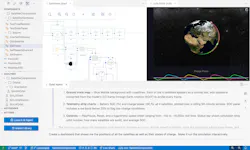
Shah elaborated, “When you use the Dyad agent, you can describe what you want to build—with enough detail for the subsystems and the components and so on—to the high-level system, and it will come up with detailed Dyad models that will tell you what this design is going to accomplish.”
He added, “It can then simulate it so that before you even cut the first piece of metal to build out a prototype in the physical world, you can have a digital twin of your physical product ready to go, verified and validated in the computer.”
How Dyad enables better predictive maintenance
Shah discussed how digital twins can transform aircraft operations and enable predictive maintenance, sharing, “We also work with our customers on building digital twins for their operations in order to do predictive maintenance, optimizing their performance and saving money either through reduced emissions or reduced fuel usage.”
“Once your planes are in the air and in operation, there’s this whole business of keeping them going and doing predictive maintenance,” said Shah, “You don't want to find out your asset got grounded because an issue was found when the mechanic was looking at it.”
He explained, “You ideally want to be proactive about it, and you want to have your digital twin tell you, hey, that plane and its engines flew through a desert storm in very high temperatures and during takeoff.”
“Those engines are probably going to need to be overhauled sooner than some of the engines that are flying through more temperate conditions,” Shah pointed out.
Shah outlined the benefits of digitally informed predictive maintenance, such as:
- Keeping costs low
- Making flight safer for crew and passengers
- Optimizing fuel consumption
- Ensuring optimal aircraft condition
- Reducing carbon emissions
How aerospace companies use Dyad 3.0 in aircraft design
“In the world of aerospace, everything about aircraft design is all about testing, testing, testing and verification, verification, verification,” said Shah, “Dyad is a systems-modeling tool that accelerates the time to build models and test them and verify them against the team’s requirements.”
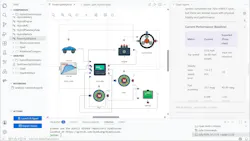
Shah elaborated, “We've seen teams accelerate their designs by going from weeks to days—especially the modeling part of it—to make products easy to design and bring them to market.”
“When a new aircraft design kicks off, thousands of engineers are put into this new organization to figure out every little thing about the plane,” added Shah.
He listed some examples, such as:
- Flight controls
- Aerodynamic design
- Air conditioning
- Lavatory
- Attendant call button
“Everything has to be modeled and code has to be generated that runs on the plane in order to, you know, have your flight be successful,” noted Shah, “In order to do that, thousands of engineers are building models, often painstakingly in a graphical user interface (GUI).”
He continued, “They're clicking around, they're drawing boxes, connecting wires, diagrams. And then they have to build these test cases from the requirements documents where the models have to show that they are verified and are producing the correct answers that are expected.”
“Once you get your physics right, then the question is your software. You can now write all the control software that you need in order to control your aircraft,” said Shah.
Shah lists these elements, including:
- Flight controls
- Flight management system
- Flight planning
Highlighting Dyad’s benefits, Shah emphasized, “This is really all about reducing that time that the engineers spend doing repetitive work—building these things in GUIs and testing them and so on—and replacing them with agentic tools that will do it automatically.”
“Boeing has been very, very keen to work with us and replace some of their older tools with new AI native tools, and that's what we're working with them on,” added Shah.
Shah also used the example of Dyad’s applications in the UK water sector to illustrate its benefits, explaining, "The same models that you use for design can now be used as your models for the digital twins, which means that you can leverage the investment that you made in the design space and now improve the revenue generated per asset by giving more value to your customers and hopefully sharing some of that value back to yourself.”
“I think that's a tremendous opportunity that digital products can enable in a physical world,” concluded Shah.
About the Author
 Emily Gorski