Engine Stand Utilization Report: How the Engine Maintenance Cycle Impacts Commercial Aviation
Key Highlights
- Engine stand utilization hit record levels in 2026, with leasing activity surpassing previous years, highlighting the importance of support infrastructure in a constrained engine ecosystem.
- Demand for engine stands is concentrated around legacy engines such as CFM56-7B, CFM56-5A/B, and V2500, driven by aging fleets and complex maintenance requirements.
- Engine manufacturers like CFM International and Pratt & Whitney are increasing engine output, but overall engine availability remains under pressure due to rising shop visit volumes forecasted through 2040.
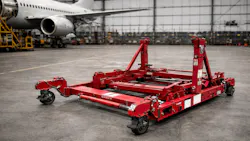
As the second half of 2026 is underway, pressures in the aircraft engine market remain significant, even with progress made in aircraft deliveries.
This includes a variety of key challenges, such as:
- Slow and uneven recovery in geared turbofan maintenance capacity
- Legacy narrowbody fleet carrying the majority of global short-haul flying
- Widebody segment establishing its own maintenance rhythm
Reports from EngineStands.com explain, “Throughout first half of 2026 engine stand utilization has climbed to record levels across several core engine families, while leasing activity is running well ahead of last year’s pace, highlighting how critical support infrastructure has become as airlines, MROs and lessors manage a constrained engine ecosystem.”
Who's leasing engine stands and why it’s important
EngineStands.com reports exploring engine stand leasing data from the first half of the year identify the areas where aftermarket pressure is developing most intensely.
The broadest base of demand the reports find sit with the airlines, with activity pointing to demand for maintaining aging narrowbody fleets while also balancing durability-driven maintenance for modern engines. Stands leased most frequently across this segment include:
- CFM56-7B
- CFM56-5A/B
- V2500
- LEAP-1A
- LEAP-1B
- PW1100
However, the data shows aircraft traders as a surprisingly large segment of engine stand leases. EngineStands.com experts note, “During the first half of 2026, trader-driven leasing exceeded every other customer segment…This pattern reflects engine transitions, teardown activity and short-term holding requirements.”
Engine leasing activity from traders is concentrated around:
- CFM56-7B
- PW1100
- V2500
For MROs, the most in-demand engine stands for the first half of 2026 were for Trent 700 and narrowbody programs like CFM56-7B and CFM56-5A/B.
According to EngineStands.com experts, “This aligns with recovering maintenance backlogs and increasingly complex shop visit requirements. This is consistent with backlog recovery work and increasingly complex shop visit scopes.”
Aircraft lessors stand out in the report as another active customer base, showcasing how protecting engine asset value remains a high priority in the constrained market environment.
This is shown as demand for engine stands remains elevated for platforms like:
- LEAP-1A
- PW1100
- V2500
- Trent 700
Which trends are putting pressure on engine maintenance?
Several aviation industry trends are continuously impacting engine availability and, therefore, engine stand utilization. These include:
Constrained engine availability despite higher production output
EngineStands.com experts identify several manufacturers that are increasing output, such as:
- GE Aerospace delivering 520 LEAP engines in Q1 2026 (63% increase)
- Pratt & Whitney expanding structural casting and turbine airfoil availability
Reports from EngineStands.com note, “Despite improving engine output, overall engine availability remains under pressure.”
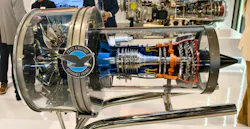
They continue, “The pressure is expected to intensify over time. Annual shop visits are forecast to rise from approximately 600–800 in 2025 to more than 5,000 by 2040 for LEAP engines, while GTF shop visits are expected to increase from around 1,000 to more than 2,000 over the same period.”
“As shop visits increase, spare engine supply remains constrained and turnaround times become harder to predict, engine stands move beyond a logistics requirement and become part of the industry’s operational capacity equation,” explain the reports.
GTF engine stand recovery
Pratt & Whitney's PW1100G engines account for much of engine stand demand in the first half of 2026, with stand utilization at 95% for the time period. This is the highest level for all engine types being tracked, while leasing activity also already surpasses 2025 numbers for the whole year.
As stated by EngineStands.com experts, “Industry data has shown the PW1000G fleet's ground-day percentage remaining near 35% for months, roughly double the rate of CFM56 and V2500-powered aircraft and more than triple that of the competing LEAP family.”
The reports add, “Average project duration for PW1100 stands also improved significantly, declining from 245 days in 2024 to 123 days in the first half of 2026, even as project volumes continued to rise.”
“Increasing activity combined with shorter turnaround times aligns with Pratt & Whitney’s reported double-digit growth in MRO output and the shop-level recovery is starting to show up in how long engines occupy support equipment,” said the reports.
Legacy engines and aging fleets
Many operators are keeping older planes in the air longer, which means steady utilization for legacy engines and stands.
According to EngineStands.com reports, “CFM56-5A/B stand utilization at EngineStands.com reached 92% in the first half of 2026, up from 77% in 2025 and its highest level on record, while turnaround times held broadly steady.”
Reports show similar resilience for CFM56-7B engines, with stands reaching 77% utilization and project timelines reducing by approximately 17% compared to 2025.
V2500 engine stands show 76% utilization, with project timelines growing 9% longer compared to 2025, highlighting the intense maintenance scopes on aging fleets.
EngineStands.com experts explain, “These engine families power the Airbus A320ceo and Boeing 737NG fleets that airlines have increasingly relied upon as new aircraft deliveries continue to lag demand.”
LEAP engine progress
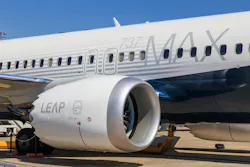
As GE Aerospace has introduced new durability upgrades for LEAP engines throughout the past year, LEAP-1A stand utilization for the first half of 2026 sits at 71%, also showing project times being cut by 8% for the in-service fleet.
Touching on the LEAP-1B engine’s trajectory, EngineStands.com reports state, “The exclusive powerplant for the Boeing 737 MAX recorded project durations extending by around 5%, reflecting the steadily increasing shop visit volumes expected for the program over the coming decade.”
How can MROs and operators prepare for the second half of 2026?
Experts anticipate that these pressures from the first six months of the year will continue through the second half of 2026, with the engine maintenance cycle remaining in a high-demand stage.
While many aviation OEMs are making progress on deliveries, challenges are likely to persist, such as:
- High aftermarket demand for LEAP engine support
- Increased shop visits for PW1100-powered aircraft
- Ongoing backlog for next-generation aircraft production
- Delayed retirement of CFM56 and V2500-powred aircraft
Keeping these trends in mind, EngineStands.com experts advise, “In this environment, the challenge extends beyond engine production and MRO capacity alone.”
They continue, “The efficiency of the wider maintenance ecosystem will determine how quickly engines return to service and how effectively airlines can manage fleets that will depend on both new-generation and legacy engines for years to come.”
This highlights how MROs and repair shops can prepare for the future by maintaining service capacity for legacy platforms as well as making room for next-gen engines that could enter service within the next 15 years.
About the Author
 Emily Gorski