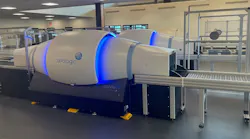
As global air travel continues its strong post pandemic recovery, airports are under growing pressure to process increasing passenger volumes while maintaining security compliance under complex regulatory frameworks. According to ACI, passenger traffic across the worldwide airports network has now surpassed 2019 levels at major hubs, with peak day congestion increasingly concentrated at security checkpoints.
At many of the largest airports in the world, security throughput and alarm resolution have become critical operational metrics. Even modest inefficiencies can propagate quickly through interconnected national and international networks, affecting connection reliability, queue stability, and operational resilience across regions.
To address these challenges, aviation authorities worldwide are promoting the adoption of advanced screening technologies that enhance security while improving checkpoint efficiency. However, although regulators may be aligned on long-term objectives, airport operators often take a more cautious approach, weighing compliance requirements against capital investments, operational disruptions, and workforce constraints.
The liquid screening bottleneck
Liquid restrictions remain one of the most visible and disruptive elements of passenger screening. Under long standing regulations originating from the 2006 transatlantic aviation plot, passengers in most airports are typically limited to containers of 100 milliliters or less, carried in a single transparent bag, with limited exemptions for medicines, baby food, and duty free items.
Despite passenger familiarity, liquid screening continues to generate friction at checkpoints:
• Large volumes of compliant liquids are still diverted to secondary inspection
• Oversized or undeclared containers trigger manual resolution and queue delays
• Confiscation or voluntary surrender of benign items remains a recurrent source of passenger complaints and checkpoint delays.
While most airports continue to operate under established liquid screening procedures, a growing number of facilities equipped with advanced CT systems and liquid explosive detection technologies are exploring more flexible screening approaches. These deployments demonstrate how improved detection capabilities can help reduce checkpoint friction, support higher throughput, and maintain security standards. As regulators evaluate future policy changes, operational experience from these airports is helping inform the future direction of passenger screening requirements.
Many established liquid screening techniques infer substance characteristics from bulk physical properties. These approaches have long supported screening operations, though their performance can vary depending on container and material diversity. With significant advances in detection technology now available, airports have an opportunity to adopt higher performing solutions that offer improved best in class consistency and greater operational predictability as regulatory frameworks mature.
For airport operators, the key challenge extends beyond threat detection to maintaining predictable and efficient checkpoint operations. Screening processes that generate frequent alarms, require extensive alarm escalation, or introduce operational variability can reduce throughput and place additional demands on staffing resources. As a result, airports increasingly value technologies that combine regulatory compliance with consistent performance and operational efficiency. Attention is therefore increasingly shifting toward technologies that can directly identify substances rather than infer their characteristics from indirect physical measurements.
The evolution of liquid explosive detection technology
Europe and the US have played a significant role in the evolution of security checkpoint technologies, particularly in the development of liquid explosive detection following the mid 2000s. The foiled 2006 transatlantic aircraft plot, uncovered in the United Kingdom, marked a turning point and led to global restrictions on liquids as well as accelerated innovation in screening technologies.
Prior to 2006, explosive detection relied largely on X ray imaging and ion mobility spectrometry (IMS), which formed part of layered screening strategies but were limited in their ability to accurately characterize liquids and certain threat materials.
The introduction of dedicated liquid explosive detection capabilities represented an important step forward. However, the resulting multi-layered screening approach—combining X ray systems, explosive trace detection (ETD), liquid explosive detection systems (LEDS), and secondary inspection—has introduced operational complexity, increased staffing requirements, and reduced throughput at checkpoints.
While subsequent advances improved detection performance, many approaches remained constrained by factors such as container type, opacity, and material composition. These issues highlight the importance of solutions that clearly identify what’s in a container, instead of systems that trigger alarms based on indirect measures.
Spatially Offset Raman Spectroscopy (SORS)
A major breakthrough emerged with the development of spatially offset Raman spectroscopy (SORS), a UK developed technology originating at the Rutherford Appleton Laboratory. It was first published in 2005 and quickly gained recognition for its ability to probe beneath opaque surfaces—such as plastic, glass, and even skin—using a spatial offset between the laser excitation point and the collection point of scattered light. This innovation allowed Raman spectroscopy to move beyond surface-level analysis and opened new possibilities for non-invasive chemical identification. Initially commercialized by Cobalt Light Systems (later acquired by Agilent Technologies in 2017), SORS has since been deployed across a wide range of applications. Beyond airport security, where it is used to detect liquid explosives inside sealed containers, SORS is widely used in the pharmaceutical industry for verifying raw materials through packaging, in the first responder community for identifying narcotics and counterfeit drugs, and in art conservation for analyzing paint layers and pigments without damaging artifacts. SORS-based instruments have been deployed extensively across airports, pharmaceutical facilities, research institutions, and government agencies worldwide.
SORS is an advanced optical technique that enables the identification of chemical substances through opaque or nontransparent containers—such as plastic, glass, or other non-metal—without opening them. It builds upon traditional Raman spectroscopy, which can be used to identify molecular structures by analyzing how light scatters when it interacts with a material.
The key innovation in SORS lies in its ability to collect Raman signals from beneath the surface of a container, quickly and without any operator expertise. By measuring the scattered light at a spatial offset—at a point slightly away from where the laser beam hits the surface—SORS can distinguish between the spectral signature of the container and the contents inside. This allows for noninvasive, through-barrier chemical analysis, which is especially valuable in security applications.
Introducing Insight300M and InsightBLS
The Agilent Insight300M and InsightBLS build upon this foundation, extending the proven performance of the Insight200M to meet evolving regulatory and operational requirements.
The Insight300M is certified to ECAC Type B and Type A LEDS standards, and is designed to meet Technology Alignment Group (TAG) requirements. It supports screening of both metallic and nonmetallic containers, including volumes up to 5 liters.
The InsightBLS is certified to TSA BLS 2.3 standard and aligned with TSA CONOPS, focusing on nonmetallic containers in accordance with U.S. operational requirements.
Both systems leverage SORS to perform reliable threat detection, and subsequent confirmatory identification through a large range of transparent and opaque containers—including clear and opaque plastics, various glass types, and non-foil-lined cartons—without opening them.
For metallic containers, an integrated gravimetric methodology is applied as part of alarm resolution, ensuring regulatory compliance while maintaining operational continuity.
Performance, adaptability, and future readiness
The Insight Series systems deliver results within seconds, with a demonstrated very low false alarm rate (~0.4% for nonmetal containers and ~2.5% for metal and nonmetal containers combined), reducing the need for manual escalation and secondary inspection. Operator interaction is streamlined through intuitive interfaces, minimizing training burden and supporting consistent deployment across diverse airport environments.
Designed for the future in mind, the Insight platform can easily be updated to address emerging threats and other operational needs. As screening requirements continue to evolve, the platform's chemical identification capabilities provide a pathway to support future checkpoint needs, including emerging Bulk Resolution Technology (BRT) requirements for solid and powder screening. The InsightBLS meets the new BRT v8.1b detection standard from the TSA.
Operational and cost considerations for airports
From an operational perspective, the Insight Series helps airports lower operational burden by reducing unnecessary escalations, stabilizing staffing requirements, and minimizing disruptions caused by false alarms.
The Insight Series systems are designed for efficient deployment within existing checkpoint layouts, supporting both retrofit and new installation scenarios. Their high uptime and reduced infrastructure needs help simplify installation and minimize downtime, which is especially important in busy airport environments.
Conclusion
The global international aviation community is navigating a period of sustained growth under constrained operational conditions. Airports are focused on maintaining compliance, minimizing operational disruption, and moving passengers efficiently through security to support downstream operations.
As regulatory frameworks evolve and passenger volumes continue to grow, airports increasingly require screening solutions that emphasize predictability, analytical certainty, and operational resilience. Technologies grounded in chemical identification—not inference—offer a stable foundation for meeting today’s requirements while remaining adaptable to future policy and threat evolution.
To learn more visit www.agilent.com/chem/insight-series