The 5 Best Industrial Lifts for Aircraft MRO
Key Highlights
- Advanced lift systems improve safety, access and efficiency in aircraft MRO environments.
- The best industrial lifts for aerospace applications prioritize precision and worker safety.
- LPI Lift Systems provides specialized solutions for aerospace maintenance challenges.
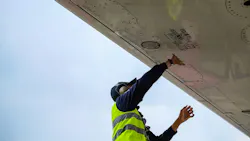
Aircraft maintenance, repair and operations (MRO) demand a high level of precision. Technicians must work at high heights, navigate tight hangar spaces, and access curved fuselages or angled wings without compromising safety and efficiency. Therefore, it’s important to choose the right industrial lifts for aerospace applications to ensure safety, productivity and long-term operational performance.
Why Industrial Lifts Are Crucial for Aircraft MRO
When people talk about aviation safety, they often discuss aircraft performance and passenger protection. However, the safety of the mechanics working on the aircraft during MRO deserves equal attention. Data shows that between January 2015 and February 2022, 110 severe injuries involving aircraft mechanics were recorded. Notably, more than 30 of these incidents were caused by falls from heights.
A well-designed industrial lift for aerospace applications can help reduce those risks. Because modern aircraft are engineered with increasingly advanced materials and tight tolerances, standard lifting equipment typically falls short in these environments.
Purpose-built lifts, on the other hand, allow technicians to move easily around aircraft surfaces and maintain stable working positions. This ability reduces the need for ladders or scaffolding, which can slow down workflows and increase safety risks. The best industrial lifts for the aerospace industry are designed to:
- Maneuver in confined spaces without damaging aircraft surfaces
- Provide ergonomic positioning for detailed inspection and finishing work
- Improve efficiency by reducing repositioning time
- Fall protection and collision avoidance features to help reduce the risk of incidents
- Pneumatic power and safe electric options so you can use the lifts in hazardous areas
Ultimately, the right industrial lift system supports both worker safety and the quality of maintenance outcomes.
What Are the Best Industrial Lifts for Aerospace Applications?
LPI Lift Systems has spent more than four decades engineering lift systems for demanding, high-risk industrial environments. It offers solutions to support safe and efficient work at height, with special attention to customization and regulatory compliance. Each lift undergoes factory testing before delivery to ensure consistent performance.
LPI offers a full range of hazard-ready personnel lifts and access platforms for painting, finishing, assembly, component handling and inspection in aerospace applications. These systems can maneuver around aircraft structures while maintaining stability and safety. For more complex projects, the company also provides custom-built lifts to help you access curved fuselages, angled wings and other critical components. It also offers installation support and operator training.
Below are some of LPI’s best industrial lifts for the aerospace industry.
1. Stationary Pneumatic Scissor Lift (SPHF Series)
The SPHF Series is a fixed, floor-mounted solution that provides stable and consistent elevation. It combines pneumatic and hydraulic power to deliver reliable performance in demanding environments. This lift is particularly effective for tasks that require repeatable positioning, such as assembly or finishing processes. Its stationary design ensures your operators can work with confidence at height without constant repositioning.
Key Features
- Stable, fixed positioning for precision work
- Pneumatic/hydraulic system ideal for hazardous environments
- Long-term reliability in high-use facilities
2. Manually Positioned Scissor Lift (SPHT Series)
The SPHT Series is a great industrial lift for aerospace applications, offering both mobility and stability. Designed for ergonomic elevation, it allows operators to position the lift while maintaining smooth and controlled manual operation. This makes it ideal for MRO environments where flexibility is required, but space is limited. Your team can easily reposition the lift to access different aircraft sections without sacrificing safety.
Key Features
- Manually positioned for adaptable workflows
- Durable construction for aerospace environments
- Ergonomic design reduces operator strain
3-Axis Extended Reach Man Lift
For wide areas where parts can vary in size and geometry, the 3-Axis Extended Reach Man Lift provides the flexibility needed for full surface access. With its extended reach of up to 14 feet from the base to the front of the platform, operators can work across a wide section without frequent repositioning. This capability makes it well-suited for large or irregular aerospace structures.
Key Features
- 3-Axis movement for precision positioning
- Configurable platform options for specific applications
- Safe to use in hazardous environments
4. Powder Coating Vestibule Lift (VL Series)
The VL Series is purpose-built for conveyor-driven finishing operations, including coating, touch-ups and inspection. It provides vertical access along production lines, so your technicians can maintain consistent quality across aircraft surfaces. You can also equip the system with integrated accessories such as tool trays and breathing air connections for respirators.
Key Features
- Optimized for surface finishing and coating applications
- Supports continuous production line operations
- Improves consistency in inspection and touch-up tasks
5. Rail Guided Custom Elevating Work Platform
The Rail Guided Custom Elevating Work Platform is a great industrial lift for aerospace applications, especially for controlled, repeatable access along the side of aircraft components. It moves into position when needed and retracts when not in use, helping optimize workspace in busy MRO facilities. Additionally, its open-front platform is contoured to align with the shape of the aircraft to allow close access without compromising safety.
Key Features
- Rail-guided movement for precise and repeatable positioning
- Built-in safety harness anchor points
- Integrated hoist system for component handling
Frequently Asked Questions
Here are commonly asked questions about industrial lifts for the aerospace industry.
What training is required to operate industrial lifts used in aerospace applications?
Operators need formal training that covers equipment handling, safety procedures and emergency protocols. Training requirements may vary depending on the lift type and local regulations.
How do industrial lifts improve efficiency in aerospace maintenance operations?
Industrial lifts reduce the time needed to access hard-to-reach areas, minimize repositioning and allow technicians to work more comfortably and accurately.
How often do you need to get your lifts inspected?
Lifts must be inspected at least once a year. However, it’s recommended to check them more often if they are used in harsh environments.
Taking MRO to New Heights
Aircraft MRO is a high-stakes environment where precision, safety and efficiency must work together. LPI Lift Systems offers the best industrial lifts for aerospace applications, featuring specialized platforms that meet industry demands.