The Next Generation of GSE: Low-Speed, Right-Sized, Electric
Key Highlights
- Low-speed electric vehicles are ideal for airport operations, offering efficiency, safety, and cost savings in short-distance, low-speed environments.
- Repowering legacy equipment with electric kits like Waev's Tiger enables quick, cost-effective electrification without replacing entire units.
- Electric drivetrains provide instant torque and reliable performance, often exceeding traditional combustion equipment in towing and maneuverability.
- Lithium-ion batteries reduce maintenance, last longer, and deliver substantial lifetime savings, lowering total cost of ownership.
- Fleet readiness assessments help airports evaluate infrastructure and equipment, facilitating a smooth transition to electric GSE with minimal disruption.
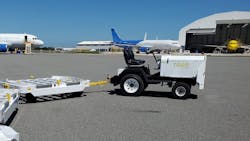
Airport operations are evolving. Sustainability mandates are tightening, operational costs continue to climb, and labor challenges are forcing fleet managers to rethink how they move people and cargo throughout airport environments. The result isn't just a shift to electric; it’s a fundamental reassessment of what ground support equipment (GSE) actually needs to do.
Most airport ground operations happen at speeds well below 25 mph, over short distances, within tightly controlled areas. This environment makes low-speed vehicles (LSVs) a more efficient option – in operations and costs – when compared to full-sized trucks and oversized tractors. By matching vehicle capability to actual operational use cases, airports will also enhance safety and reduce infrastructure demands without sacrificing performance. This isn't a future concept. In fact, many airports are making these changes today across baggage handling, maintenance operations and crew transportation.
Electric that works with today's infrastructure
Going electric is an opportunity to optimize fleets in size as well as in power. For example, an internal combustion engine (ICE) powered pick-up truck doesn’t need to be replaced with a full-sized electric pick-up truck. Lower cost, right sized electric alternatives like sustainable low-speed electric vehicles or industrial electric trucks are available and deployable today.
Because these platforms are smaller and more efficient, they require far less power to operate. Many can easily charge overnight on standard 120-volt or 240-volt outlets. This allows airports to begin electrifying operations using existing electrical infrastructure, making adoption straightforward and cost-effective.
For airports operating combustion-powered equipment that still has useful life, repowering provides another viable and easy path to electrification. Waev's Tiger Repower conversion kit, for example, enables operators to convert existing baggage tractors to lithium-ion electric drivetrains in as little as 2 days. By upcycling legacy equipment with modern electric technology, airports can achieve zero emissions, extend fleet life, and improve safety without replacing entire units or building new charging infrastructure.
Performance that matches real operations
Electric drivetrains are purpose-built for the kind of work that defines airport ground operations. Unlike ICE, which operate inefficiently at low speeds and during frequent stops, electric motors deliver instant torque from a standstill. That means smooth, controlled acceleration for towing baggage carts, shuttling crews, or moving equipment across congested operational areas.
Low-speed electric GSE delivers capabilities that meet or exceed traditional combustion equipment. Electric baggage and cargo tractors, such as lithium-ion Tiger tow tractors, can tow more than 60,000 pounds with ranges of up to 75 miles on a single charge. The familiar controls and proven top drive tractor design mean minimal training requirements for crews transitioning from combustion tractors.
Other right-sized electric platforms extend that capability across daily operations. All-electric burden carriers have proven themselves across baggage handling and maintenance operations. With load capacities of 3,000 pounds and towing capabilities up to 15,000 pounds, a burden carrier like the Taylor-Dunn Bigfoot XL can haul more than a standard pickup truck while maintaining a tight turning radius for narrow service roads and crowded operational areas.
Low-speed vehicles designed for crew and passenger transport offer similar versatility. Available in two-, four-, and six-passenger configurations, LSVs can replace golf carts, sedans, and vans with purpose-built electric alternatives that match airport speed limits while improving safety. They also include three-point seat belts, backup cameras, turn signals, and optional enclosed cabs with HVAC.
Lithium-ion electrification also enables smart vehicle technology that wasn't practical with combustion engines. Features like anti-rollover systems, programmable speed controls, brake interlock, and onboard diagnostics improve safety and simplify fleet management.

Efficiency that shows up on day one
The financial case for electric GSE shows up immediately, not years down the road. Electric powertrains eliminate oil changes, fuel filters, spark plugs, exhaust systems, and all the routine service tasks that come with internal combustion engines.
The numbers back this up. Operators using electric baggage tractors, for example, can see cost reductions of $10 to $15 per operational hour. Scale that across maintenance trucks, security vehicles, and crew shuttles, and the savings add up fast.
Lithium-ion batteries make the case even stronger. They deliver at least 3,000 charge cycles and maintain full efficiency as the charge depletes. They also last up to five times longer than flooded lead-acid or AGM batteries and need zero maintenance, which means lower total cost of ownership and fewer replacements over time. For burden carriers alone, lithium-ion options can deliver more than $10,000 in battery lifetime savings.
Using the wrong vehicle drives hidden costs. Oversized equipment means unnecessary acquisition expense, higher energy use, and more complex maintenance – all without delivering real operational benefit. Purpose-built electric GSE cuts those inefficiencies by matching capability to actual use. The result is lower total cost of ownership, better uptime, and a more reliable fleet.
Getting started: From assessment to action
The path to electrification often begins with challenging assumptions about what's possible. Fleet readiness assessments help identify immediate opportunities that might otherwise be overlooked.
For example, five airports in the mountains above Denver were initially deemed unsuitable for electric GSE due to infrastructure and climate concerns. After on-site infrastructure analysis and fleet inspections, four of the five were cleared for immediate eGSE introduction using existing infrastructure. The fifth is now incorporating eGSE charging into an upcoming expansion project.
These assessments examine which equipment can be repowered, what should be replaced, and how existing electrical infrastructure can support the transition – turning "we can't do this" into actionable deployment plans.

Smaller, smarter, electric – The future of GSE
The next generation of ground support equipment isn't about adopting the largest vehicles or the fastest charging systems. It's about selecting platforms that align with how airports actually operate – controlled speeds, short distances, tight spaces, and demanding duty cycles.
The technology is proven. The cost case is clear. And the infrastructure needed may not be as concerning as many think. What needs to change now is how airport operators are thinking about fleet composition itself, moving away from one-size-fits-all combustion fleets toward purpose-built electric platforms that match the work being done.
This shift isn't just about meeting today's sustainability mandates. It's about cutting operational costs while reducing emissions and future-proofing operations for the next decade and beyond. Right-sized electric fleets are more cost effective, easier to scale, simpler to maintain, and more adaptable as operational demands change. Airports making this transition now are building the foundation for sustained performance in an industry that's only getting more complex.
About the Author
 Gerry Hoadley
Gerry Hoadley
Gerry Hoadley is the director of ground support equipment (GSE) business at Waev Inc., an electric mobility provider founded in 2021 to manufacture, distribute, market and support the GEM, Taylor-Dunn and Tiger brands. In this position, Hoadley leads product and business development, customer sales and service for the Tiger tow tractor vehicle line.