The Communication Challenge Facing Modern Ramp Operations
Key Highlights
- The LaGuardia collision underscores the critical need for integrated communication systems and situational awareness in busy airport environments.
- Layered safety failures often involve multiple factors such as technology gaps, workload, and procedural misunderstandings, not just single errors.
- Advances in wireless communication and surveillance technology are transforming ramp safety, but human factors and training remain essential.
- Operational pressures like high aircraft utilization and workforce variability increase the risk of communication breakdowns and accidents.
- A holistic safety approach combining technology, standardized procedures, and human factors training is vital for future airport surface safety improvements.
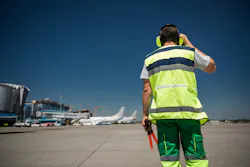
A recent surface collision at New York’s LaGuardia Airport has renewed industry attention on one of aviation’s most persistent operational vulnerabilities: communication breakdowns during ground movement.
In March, an Air Canada Express aircraft collided with a Port Authority fire rescue vehicle crossing an active runway at LaGuardia, killing both pilots and injuring dozens of passengers and emergency personnel. Preliminary details released by the National Transportation Safety Board (NTSB) highlighted a complex chain of events involving radio communications, controller workload, vehicle tracking limitations and situational awareness challenges.
According to investigators, the airport fire truck involved in the collision was not equipped with a transponder, meaning the vehicle was not fully integrated into the airport’s Airport Surface Detection Equipment, Model X (ASDE-X) system. The surveillance platform combines radar and transponder data to help controllers monitor aircraft and vehicle movement across the airfield and identify potential conflicts.
Air traffic control recordings reviewed after the accident captured a controller urgently repeating “Stop, stop, stop!” moments before impact. NTSB Chair Jennifer Homendy later emphasized that major aviation accidents rarely stem from a single mistake.
“We rarely, if ever, investigate a major accident where it was one failure,” Homendy said during a media briefing following the crash. “When something goes wrong, that means many, many things went wrong.”
While investigators continue to examine the specific causes of the LaGuardia collision, the incident has reinforced broader concerns across the industry about how communication, technology and human performance intersect in increasingly congested operational environments.
For ground handlers, the issue extends far beyond radios alone.
Communication under pressure
Modern airport ramps are among the most communication-intensive workplaces in transportation. Pushback crews coordinate with flight decks through headsets, wing walkers rely on visual signaling, dispatchers relay timing updates and multiple vehicle operators move simultaneously through congested operating areas.
At major hubs, much of that communication takes place against a backdrop of engine noise, radio congestion, compressed turnaround schedules and constant operational pressure.
Industry safety organizations continue to identify communication as a central factor in ground incidents. The International Air Transport Association has repeatedly emphasized the importance of standardized procedures, human factors awareness and clear operational coordination within its ground operations guidance and training programs.
NASA’s Aviation Safety Reporting System has also identified communication issues as a recurring contributor in ramp guidance events, underscoring how easily misunderstandings can escalate during aircraft movement and servicing operations.
The challenge is not simply whether personnel can communicate, but whether information is clearly understood, prioritized and acted upon in high-pressure conditions.
That pressure has intensified in recent years. Airlines continue pushing for faster turns and higher aircraft utilization while many operators are still managing workforce shortages, high employee turnover and the integration of newer personnel into complex operational environments.
In many stations, experienced ramp workers are now working alongside newer employees with significantly less operational familiarity. At the same time, multilingual workforces and contract handling environments can introduce additional variability in communication styles, phraseology and procedural expectations.
Fatigue and distraction further complicate the picture. Human factors specialists have long identified communication breakdowns, loss of situational awareness and task saturation as recurring precursors to operational incidents.
The problem is rarely a complete lack of procedure. More often, communication failures emerge when multiple layers of pressure begin to overlap simultaneously.
Layered failures
The recent LaGuardia collision illustrated that complexity.
According to preliminary reporting, radio transmissions indicated controllers were aware that emergency vehicles were preparing to cross the runway. However, investigators are examining whether multiple simultaneous duties, workload demands and technology limitations contributed to a breakdown in the airport’s layered safety defenses.
That concept of “layered failures” is increasingly central to how the aviation industry approaches safety analysis.
Communication errors are rarely isolated events. Instead, they often occur alongside operational distractions, visual limitations, procedural misunderstandings or incomplete situational awareness. A missed radio call alone may not create an accident, but combined with workload saturation or conflicting operational priorities, the risk profile can change rapidly.
Ground support operations face many of the same pressures.
Earlier this year, a Delta Air Lines employee was killed at Orlando International Airport after a tug vehicle collided with a passenger boarding bridge while an aircraft was parked at the gate. The incident, which remains under investigation, highlighted the continued risks associated with vehicle movement and coordination on active ramps.
While the circumstances differed significantly from the LaGuardia runway collision, both incidents underscored a broader operational reality: airport surface environments depend on constant coordination between people, vehicles, aircraft and infrastructure.
When communication degrades within those systems, the consequences can become severe very quickly.
Beyond the radio
As operational complexity has increased, communication technology has evolved alongside it.
Traditional wired headsets and analog radio systems are steadily giving way to digital wireless platforms designed specifically for high-noise ramp environments. Many operators are now evaluating communication systems not simply as accessories, but as core operational infrastructure tied directly to safety, efficiency and turnaround reliability.
Wireless headset provider dBD Communications, for example, has expanded its aviation communication systems into the North American market as airlines and handlers seek more reliable ramp communications solutions. The company’s systems are designed to reduce interference, improve clarity in noisy operating conditions and allow greater mobility for ground crews.
“Communication isn’t optional, it’s infrastructure,” dBD Communications CEO David O’Connell said in a 2025 interview with Ground Support Worldwide. “Just like a tug or a GPU, wireless comms should be part of the standard toolkit.”
O’Connell said operators are increasingly focused on communication systems that can withstand long shifts, maintain battery life throughout extended operations and perform reliably in congested signal environments.
The push toward wireless communication reflects a broader shift occurring across ramp operations.
Today’s systems are expected to do more than transmit voice instructions. Operators increasingly want communication platforms integrated with operational data, safety alerts, telematics and digital task management systems. Some emerging platforms are incorporating predictive analytics and automated notifications designed to reduce reliance on verbal coordination alone.
At the airport surface level, technology developers and regulators are also continuing to expand the use of surveillance and conflict-detection tools aimed at reducing runway incursions and vehicle conflicts.
Systems such as ASDE-X already provide controllers with detailed tracking of aircraft and authorized vehicles operating on airport movement areas. However, the recent LaGuardia investigation has also demonstrated the limitations that can emerge when not all vehicles are fully integrated into those systems.
The incident has renewed industry discussion around vehicle transponders, automated alerts and broader surface-awareness integration.
Building a smarter ramp
Despite advances in communication technology, industry experts caution that equipment alone cannot eliminate operational risk.
Even the most sophisticated systems still rely on human interpretation, timely decision-making and procedural discipline. Technology can strengthen communication, but it cannot fully replace the need for situational awareness and standardized operating practices.
For many operators, that reality is shifting attention toward a more holistic approach to ramp safety.
Training programs increasingly emphasize human factors awareness, communication discipline and operational coordination alongside technical skills. Digital systems are being paired with standardized phraseology, fatigue management initiatives and recurring safety reinforcement programs aimed at reducing ambiguity during high-pressure operations.
The broader goal is not simply to help crews talk more. It is to help them communicate more effectively in environments where distractions, time pressure and operational complexity continue to grow.
As airports become busier and turnaround expectations tighten further, the communication challenge facing ground operations is likely to become even more critical.
The recent incidents at LaGuardia and Orlando served as stark reminders that airport surface safety depends on far more than a single radio transmission or warning system. It relies on an interconnected network of people, procedures and technologies functioning together under pressure.
When those layers align, ramp operations can move with remarkable speed and efficiency.
When they do not, the margin for error can disappear in seconds.
Ramp Communication by the Numbers
- The FAA has recorded roughly 1,600–1,700 runway incursions annually over the past decade, even as overall flight activity has continued to increase.
- Most incursions are categorized as lower-risk events with sufficient time or distance to avoid a collision, though serious incidents continue to occur.
- From 2021 to 2024, LaGuardia Airport recorded approximately 15 runway incursions per 1 million flight operations, according to analysis cited by Embry-Riddle Aeronautical University professor Robert Joslin.
- Over the same 2021–2024 period, Seattle-Tacoma International Airport recorded approximately 10.4 incursions per 1 million operations.
About the Author
 Jenny Lescohier