ATL Partners Builds a Global Fueling Equipment Platform with SkyMark and Rampmaster
Key Highlights
- The acquisition maintains existing brand identities and leadership, ensuring continuity for customers and employees while expanding operational capabilities.
- Enhanced parts availability and faster service response times are key benefits for operators managing large fueling fleets and multi-station networks.
- Rampmaster's modular refueler design allows component exchanges to extend equipment life and reduce costs, though modularity is less applicable to hydrant systems due to their integrated architecture.
- ATL's platform focuses on supporting full equipment lifecycle management, from initial design to end-of-life support, aligning with evolving regulatory and operational standards.
- The strategic move positions ATL to serve multiple segments within the fueling ecosystem, emphasizing reliability, safety, and technical depth for long-term industry growth.
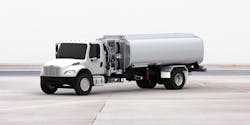
For ground support and fueling operators, reliability is often measured in minutes. A delayed part, a sidelined refueler, or a slow service response can ripple through aircraft turnarounds, schedules, and customer confidence.
Against that operational backdrop, ATL Partners’ acquisition of SkyMark Companies and Rampmaster signals a strategic effort to scale manufacturing, expand service coverage, and strengthen long-term lifecycle support across the aviation fueling and specialty vehicle sector.
ATL Partners has acquired both SkyMark and Rampmaster, combining the two companies into a global specialty vehicle equipment platform serving aviation fueling, refueling infrastructure, and ground support equipment markets. The transactions represent the first investments from ATL Fund III. Financial terms were not disclosed.
The combined platform brings together two established names in aircraft fueling. SkyMark manufactures aircraft refueling trucks, hydrant dispensers, and specialty vehicles, while Rampmaster designs and produces aircraft refueling solutions for commercial and general aviation. Rather than merging the brands into a single identity, ATL said both companies will continue operating under their existing names, with leadership teams remaining in place to maintain continuity for customers and employees.
Rampmaster Chief Executive Officer Lee Yohannan and owners Owen and Daniel Watkins will continue to lead Rampmaster. SkyMark co-founders Steven Paul, Doug Moskowitz, and Mike Ellis will remain in key leadership roles. ATL described leadership continuity as central to preserving technical knowledge, customer relationships, and brand trust while aligning the companies under a shared platform.

Building scale without losing identity
ATL Partners positioned the acquisition as a step toward building a broader aviation solutions and ground support equipment portfolio, with an emphasis on expanding product offerings, deepening customer relationships, and pursuing targeted acquisitions that complement fueling and specialty vehicle capabilities.
For operators managing large fueling fleets or multi-station networks, one of the most immediate benefits may come in the form of expanded parts availability and service support.
“By creating a more scaled, integrated platform, the combined companies bring complementary product portfolios, broader manufacturing and distribution capabilities, and expanded service networks, enabling customers to access a deeper inventory of parts and faster fulfillment across geographies,” said Caleb Clark, Senior Partner at ATL Partners.
Clark said the integration is designed to improve how quickly operators can diagnose issues, source parts, and return equipment to service.
“The platform’s engineering, field service, and aftermarket support teams will allow for quicker diagnostics, streamlined maintenance, and more responsive on-the-ground support,” he said. “Additionally, the continued operation under both brands helps ensure continuity for existing customers, while shared systems and ATL’s deep operational expertise will help drive improvements in supply chain efficiency, service coordination, and overall fleet uptime.”
For airports, fueling providers, and ground handling companies, those improvements could translate into fewer extended outages, more predictable maintenance cycles, and better alignment between service teams and original equipment design.

Rampmaster’s modular philosophy and operator-driven design
One of Rampmaster’s defining characteristics has been its long-standing focus on modular refueler design, an approach Yohannan said has evolved directly from operator feedback over more than three decades.
“For more than 30 years, our modular design philosophy has been shaped directly by operator feedback and refined through continuous use in the field,” Yohannan said.
Rather than treating refueling vehicles as fixed assets with limited upgrade paths, Rampmaster’s modular strategy allows certain components to be exchanged or replaced without retiring the entire unit. That capability can help operators extend equipment life while controlling capital and maintenance costs.
“This approach to building refuelers allows Rampmaster to perform component exchanges, such as replacing a chassis section, that can be fully reintegrated into the unit and delivered with a new warranty, at a lower cost,” Yohannan said. “These exchanges have become a key differentiator for Rampmaster and have influenced not only our product development, but also how we view long-term value and lifecycle support across the industry.”
In a market where fleet composition, aircraft mix, and regulatory requirements continue to evolve, modularity can provide flexibility. Operators may be able to adapt equipment to new operational demands without undertaking full fleet replacement cycles.
Where modularity makes sense and where it does not
While modular concepts have become a core part of Rampmaster’s refueler lineup, Yohannan said the same approach does not translate as effectively to hydrant refueling platforms.
“We have applied modular principles across much of our refueler product range where economies of scale and lifecycle value make sense,” he said. “However, those same concepts are more challenging to implement within hydrant refueling platforms.”
Hydrant trucks, Yohannan explained, typically function as highly integrated systems. Major components often depend on tightly coordinated mechanical and fuel-delivery architecture, which can make modular replacement more complex and less cost-effective.
“Hydrant trucks are typically integrated systems, and the cost and complexity of replacing or exchanging major components can outweigh the benefits,” he said. “In addition, because hydrant systems draw fuel from underground infrastructure, their operational use and configuration vary by location, which limits the practicality of a modular exchange approach.”
As a result, Rampmaster does not currently view hydrant platforms as strong candidates for modularization at the same level as mobile refuelers. Instead, hydrant product development continues to focus on reliability, system integration, and airport-specific operational requirements.
Lifecycle planning in a changing regulatory environment
Beyond manufacturing and service scale, ATL said the combined platform is intended to strengthen long-term lifecycle planning, particularly as regulatory expectations and operational standards continue to evolve.
“The combined organization will approach long-term lifecycle planning with a focus on durability, adaptability, and regulatory readiness,” Clark said.
By aligning SkyMark’s and Rampmaster’s engineering teams and drawing on their long operating histories, ATL believes the platform is well positioned to support customers throughout the full equipment lifecycle, from initial design and manufacturing through upgrades, retrofits, and end-of-life support.
“By bringing together SkyMark’s and Rampmaster’s deep engineering expertise and long operating histories, the platform is well positioned to support customers throughout the full equipment lifecycle, from initial design through upgrades, retrofits, and end-of-life support,” Clark said.
ATL also expects expanded aftermarket, service, and parts capabilities to help operators proactively manage compliance, extend asset life, and minimize downtime. That support could become increasingly valuable as environmental standards, fuel handling regulations, and airport safety requirements continue to shift.
Positioning in the fueling and GSE landscape
The acquisition reflects ATL Partners’ broader strategy to build scalable platforms in specialized industrial and aviation markets, particularly where uptime, safety, and technical depth play central roles.
By combining SkyMark and Rampmaster, ATL is positioning the platform to serve multiple segments of the fueling ecosystem, including mobile refuelers, hydrant dispensers, specialty vehicles, and aftermarket services. The firm also indicated interest in targeted acquisitions that could further expand technical capabilities or geographic reach.
From an operator’s perspective, the value proposition centers on continuity paired with scale. Customers retain access to familiar brands and leadership teams while gaining the potential benefits of shared supply chains, expanded service networks, and pooled engineering resources.
In an industry where reliability, compliance, and lifecycle cost management increasingly shape purchasing decisions, the combined platform aims to offer both stability and forward-looking support.
About the Author
 Jenny Lescohier