Using AI to Reduce Risk on the Ramp: A Q&A With Samsara’s Johan Land
Key Highlights
- Samsara uses AI-powered cameras on ground support vehicles to detect risky behaviors like distraction and speeding, alerting operators in real time to prevent incidents.
- The technology promotes a positive safety culture by providing feedback, recognition, and rewards for safe behaviors, reducing initial employee resistance.
- AI models are trained through analysis of incidents and near misses, ensuring detection aligns with real-world risks and operational constraints.
- Future applications include detecting non-accident events such as aircraft bumping or misalignments, further reducing costs and delays.
- Implementing AI safety systems leads to measurable improvements, with some customers experiencing up to 72% reduction in incidents, enhancing overall ramp safety and efficiency.
Artificial intelligence is increasingly shaping how aviation ground operations manage safety, efficiency and risk. To better understand how AI-enabled systems are being applied on the ramp today and where the technology is headed next, Ground Support Worldwide spoke with Johan Land, Senior Vice President, Safety and AI at Samsara. Land shared insight into how AI-driven cameras and telematics are helping ground teams reduce incidents, coach safer behaviors, and gain new visibility into day-to-day operations.
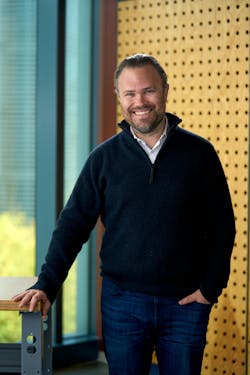
GSW: For readers who might not be familiar with Samsara, please explain what the company does and your role within it?
Johan Land: At Samsara, our focus is on helping organizations that run physical operations operate more safely and more efficiently. We do that through a combination of connected devices and artificial intelligence, particularly AI that runs on cameras installed on vehicles and equipment.
A major part of our work centers on safety. We install cameras on vehicles and use AI to identify risky behaviors and alert drivers in real time, which helps organizations significantly reduce crashes and incidents. Customers have seen reductions of up to 72%. Beyond safety, we also support telematics, asset tracking, fuel monitoring, theft prevention, and broader operational visibility.
In my role, I oversee product and engineering for safety and AI. That includes how we design the technology, how we train the AI models, and how we work with customers to ensure the systems actually drive behavior change and measurable improvement.
GSW: What originally drew Samsara to physical operations, and how did aviation become part of that focus?
Land: Our founders come from deep technology backgrounds, and early on they asked a simple question: where can technology have the biggest real-world impact? They quickly realized that physical operations represent a huge part of the economy, but historically they have not benefited from the same level of innovation as purely digital industries.
Aviation is a natural fit within that mission. The ramp environment is complex, fast-paced, and safety critical. There are many moving parts, tight timelines, and very real consequences when something goes wrong. That combination makes aviation ground operations an area where better visibility and earlier intervention can have outsized impact.
GSW: What makes the aviation ramp environment particularly suited to AI-based safety tools?
Land: When you stand on the ramp and watch operations unfold, it can look chaotic from the outside, yet everything comes together remarkably well. That complexity is exactly where AI can help.
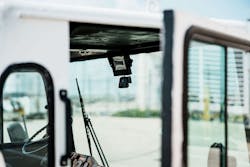
We install cameras on ground support equipment, and those cameras observe what is happening in real time. The AI looks for behaviors and conditions that historically lead to incidents. Things like distraction, mobile phone use, speeding, hard braking, or lack of attention. These are not theoretical risks. They are the precursors to aircraft contact, equipment damage, and employee injuries.
By detecting those early indicators, we can alert operators immediately and help organizations address problems before they turn into delays or costly incidents.
GSW: From an operator’s perspective, what does the technology actually feel like in daily use?
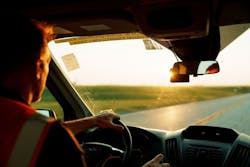
Land: The experience is intentionally simple. If an operator engages in a risky behavior, such as using a mobile phone while driving a piece of ground equipment, the system provides an audible or visual alert reminding them to stop. That real-time feedback is critical because it allows self-correction in the moment.
Depending on how the organization configures the program, those events can also be uploaded to the cloud and reviewed by supervisors. That gives leaders a clear picture of what is happening across the operation, where risks are concentrated, and how behaviors are trending over time.
Importantly, this is not just about flagging issues. Many customers use the data to recognize and reward safe performance, run incentive programs, and reinforce best practices.
GSW: Samsara is not the only company offering camera-based systems. What differentiates your approach?
Land: Cameras alone are not enough. If you simply record video, you create an overwhelming amount of data that no one has time to review. The real value comes from the AI layer that understands what matters and what does not.
We invest heavily in training AI models that can accurately detect the behaviors that actually contribute to risk. That allows supervisors to focus their attention where it will have the greatest impact.
The second differentiator is behavior change. Awareness is only the first step. We provide tools that help drivers self-coach, review events on their own devices, track improvement over time, and even engage with gamified elements like streaks and rewards. For individuals who need additional support, we also provide structured coaching workflows for supervisors. The goal is sustained improvement, not one-time correction.
GSW: Many employees initially worry about being monitored. How do organizations address that concern?
Land: Initial resistance is common. Many operators worry the technology will be used to punish them. What typically changes that perception is transparency and program design.
When an incident occurs and the footage shows that the operator handled the situation correctly, the camera becomes a form of protection rather than surveillance. It provides objective context. Over time, employees see that the system recognizes good behavior, not just mistakes.
Organizations that succeed with this technology emphasize positive reinforcement, clear communication, and fairness. When drivers are praised for safe driving and rewarded for improvement, acceptance grows quickly.
GSW: How is the AI itself trained to recognize risk in such a specialized environment?
Land: It starts with studying incidents and near misses. We analyze what crashes and equipment damage actually look like and identify the behaviors that tend to precede them. Those behaviors become the signals the AI is trained to detect.
Equally important is working closely with customers. We spend time embedded in their operations, observing workflows, understanding constraints, and aligning on goals. That collaboration ensures the system reflects real-world conditions, not assumptions.
When AI and operational knowledge come together, results can happen quickly. In some cases, customers have seen reductions of around 60% in incident-related behaviors within 18 weeks.
GSW: Looking ahead, where do you see AI making its next impact in ground handling?
Land: Collision prevention is just the beginning. There are many operational events on the ramp that are not classified as accidents but still drive cost, delays, and wear on aircraft and equipment.
Examples include bumping aircraft during loading, applying too much force during pushback, or misalignments that lead to damage over time. Cameras and AI can be trained to detect these patterns as well, giving supervisors visibility into issues that were previously difficult to quantify.
The long-term vision is an environment where most human-error-related incidents are preventable. AI will continue to get better at identifying risk early and guiding both operators and leaders toward safer, more consistent performance.
GSW: Any final thoughts you would like to share with ground operations leaders?
Land: AI-based safety systems are no longer experimental. The results are measurable and significant. When implemented thoughtfully, they improve safety, reduce costs, and support the people doing the work every day.
For aviation ground operations, the opportunity is not just to reduce incidents, but to raise the overall standard of performance across the ramp.