Why Early Resource Planning is Key for FBOs, Especially at Smaller Regional Airports
Key Highlights
- Coordinating ground services and understanding airport limitations are essential for managing FBO operations.
- Santiago International Airport acts as a crucial staging point, requiring operators to coordinate fuel, parking and ground handling to support long-distance and multi-leg flights.
- Fuel infrastructure, such as Aerocardal’s private fuel farm, plays a vital role in supporting quick turnarounds and ensuring fuel availability for subsequent flight legs.

Even when an airport has the capacity to accept a private aircraft, there are limitations that can impact private jet operations, especially in smaller hubs like South America.
Where distances are vast and larger airports are often used as a staging point for flights to more remote locations on the continent and beyond, South America experiences a variety of ground limitations that affect private aviation operations, such as:
- Fueling
- Overnight parking
- Ramp space
This is why it’s key for FBO managers and operators to plan not only for the landing at the airport but also for everything that will happen after.
When Santiago becomes a staging point
In South America, private aviation faces enormous distances and very different operational environments. Major international airports co-exist with smaller regional ones and remote destinations with more limited infrastructure and support services.
That’s why the choice of the airport and the support services provided there should become an important part of flight planning.
A suitable runway means that an operator can land there, but other questions should also be considered, such as:
- Is there enough parking?
- Can we get the required fuel uplift?
- What if we need to stay overnight?
- What support services will be available if the next leg doesn’t go according to plan?
Sometimes, these questions become as important as the suitability of the runway.
For instance, Santiago International Airport often operates as the staging point for a much longer journey.
Private jet operators may choose to continue on to Patagonia or towards the southernmost areas of Chile or even Rapa Nui, and specialized operations may fly to the Falkland Islands, as is the case with various ambulance flights.
Before continuing a journey to one of these farther-away destinations, operators need to prepare aircraft in a major aviation center before transitioning to a more remote location.
This involves planning and organizing:
- Catering
- Drinking water
- Oxygen
- Ground power
- Aircraft cleaning
FBO managers and aircraft operators should also stay on top of unexpected delays, as these can change a trip’s requirements dramatically.
For instance, if weather or other factors prevent the aircraft from departing on its originally scheduled date, a quick refueling may suddenly turn into an overnight stay, requiring additional resources like:
- Extra hangar parking
- Passenger ground transportation
- Crew accommodation
This kind of flexibility is an important part of FBO services.
How to plan effectively for fuel availability
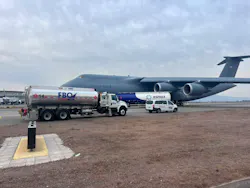
A key area of planning for private jet flights is fuel, as operators need to ensure an airport can provide the quantity of fuel they need and on their schedule.
For example, FBO Aerocardal at Santiago International Airport operates its own fuel farm. Aerocardal is tthe only private jet handling provider at the airport with this infrastructure, and this is the only fuel farm located within the airport’s security zone.
With a capacity of 31,701 US gallons (120,000 liters), the facility allows Aerocardal’s FBO to replenish its three refueling trucks significantly faster, helping maintain fuel availability and support efficient aircraft turnarounds.
This becomes especially important in cases when Santiago is not the final destination of the flight.
When an aircraft flies from North America, Europe, or elsewhere in South America and lands in Santiago, it often immediately starts preparing for a second leg of travel to destinations like:
- Chile
- Rapa Nui
- Robinson Crusoe Island
In these cases, the second leg of the flight takes place under much less favorable conditions with regard to the choice of airports and the level of infrastructure.
For an FBO, understanding that wider mission is important because they’re supporting an aircraft that may be preparing for a much more demanding stage of travel.
What if the runway is available but the ramp isn’t?
Private jet parking is another key element to consider during early stages of the planning process, as landing permission and parking availability are not the same thing.
An aircraft may need to stay for a few hours, overnight or even for several days. The amount of parking space required also differs depending on the size of the aircraft.
During peak travel seasons, aircraft arriving within a short period of time can change the situation on the ground completely.
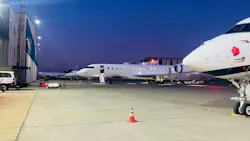
This is especially true for Santiago International Airport, where, according to the official AIP of Chile, non-scheduled international operations should coordinate a handling company before arrival, and some non-scheduled passenger aircraft should also coordinate parking before commencing the flight.
That’s why it’s important that the operator coordinates details like:
- Time of arrival
- Duration of stay
- Possibility of schedule changes
Why hangar space is a crucial need, not a convenience
A quick technical stop in Santiago may not require a large amount of hangar space, but there’s always potential for requirements to change.
For example, hangar parking becomes invaluable when aircraft need to stay at an FBO longer than initially planned, for reasons such as:
- Maintenance needs
- Weather changes
- Schedule delays
This is why operators should evaluate the whole spectrum of services available in a particular FBO rather than considering each one in isolation.
Fuel, parking, hangar space, ground handling and maintenance are all interconnected, and the more an FBO can coordinate them in one place, the easier it becomes to cope with a changing schedule.
About the Author
 Marco Núñez
Marco Núñez, FBO Manager, Aerocardal