Why Aircraft Detailing is Crucial for Effective Maintenance and How Franchising Makes It Easier
Key Highlights
- Aircraft detailing is essential for early detection of issues such as corrosion, leaks and paint deterioration, which can prevent costly repairs.
- Specialized services like paint revitalization and leather restoration help extend aircraft asset life and reduce the need for expensive replacements.
- The franchise model enables localized ownership, ensuring high-quality, consistent service across all locations and fostering strong ties within the aviation community.
- Mobile detailing services allow for quick turnaround times, often within a day, minimizing aircraft downtime during maintenance or inspections.
- Partnerships with MROs and FBOs create additional revenue streams and add value by providing comprehensive cleaning and restoration during maintenance periods.
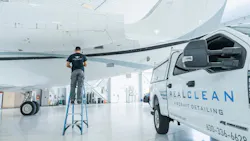
While people commonly understand aircraft maintenance to involve inspecting and fixing mechanical components of aircraft, aircraft detailing is another key step that operators can take to make maintenance simpler and more manageable.
In an Aviation Pros Podcast episode, co-owner of RealClean Aircraft Detailing Dustin Zeitler shared his insights on the importance of effective aircraft detailing and the ways franchising helps make the process simple for providers and customers alike.
Why is aircraft detailing important for aviation maintenance?
Zeitler said, “Aircraft detailing is more than appearance. It's about early detection, asset protection. When you properly clean and inspect an aircraft, you catch things that that get missed when it's dirty.”
He listed common issues that can be found during aircraft detailing, such as:
- Corrosion
- Paint breakdown
- Fluid leaks
- Worn seals
Zeitler noted, “Clean aircraft are absolutely a key part of aircraft maintenance, especially when it comes to your aircraft paint. Your aircraft paint is your first line of defense against corrosion, and nobody likes corrosion. It creates downtime and a lot of expense.”
Focusing on paint revitalization—one of RealClean’s specialized services—Zeitler used the example to showcase how taking care in aircraft detailing and opting for restorative services contributes to lower costs and maintenance needs.
He said, “We've been doing it for a very long time. The idea behind that is to avoid the aircraft owner or operator having to repaint the aircraft.”
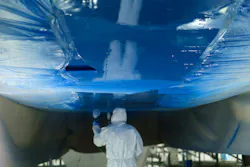
Zeitler added, “We can take old paint, bring it back to look like new. We can put very long-lasting coatings on that, so we can really extend that paint life almost indefinitely.”
What does RealClean Aircraft Detailing do differently with specialized services?
To introduce the solutions RealClean Aircraft Detailing has developed, Zeitler outlined the basic services that the company provides, which included:
- Washing
- Waxing
- Vacuuming
- Polishing
- Brightwork
- Interior cleaning
Zeitler also clarified that the company works on all types of aircraft platforms, from large business jets to single-engine aircraft and helicopters.
Zeitler went on to highlight RealClean’s specialized services, which enable aircraft owners and operators to contract the team for specific detailing treatments that may not be as common as simple cleanings.
“We like to think revitalize versus replacement,” said Zeitler.
Highlighting how these services reduce aircraft downtime, he explained, “We do some leather restorative services like leather repair and re-dye. [Typically,] they would have to take those aircraft to those facilities.”
Zeitler continued, “Those services can take weeks, sometimes months, but our process is typically done at their hangar.”
“We're a fully mobile service, noted Zeitler, “And it's done—depending on the size of the aircraft—within a day, sometimes up to three or four days when we're doing very large aircraft.”
How franchising makes a difference for providers, customers and MROs
One of the reasons why RealClean is able to provide such mobile service is its franchise model, which allows individuals to own and run their own RealClean locations across the United States.
Zeitler explained, “Other models have a centralized management structure. They might be in a state far, far away, and they're trying to manage crews and quality from afar, and that's just tough to do in our business.”
He elaborated, “When you have an owner there in their local aviation community that people work with and know are an expert, I think it’s a better model. It allows us to have very tight quality control and provide a much higher level of service to our clients around the nation.”
Zeitler said, “In the industry, we've seen a lot of consolidation where a lot of the specialized services in the past were done by smaller, privately owned aircraft detailing companies.”
“A lot of those folks sold to large corporate entities, and a lot of those specialized services went away or have been reduced,” added Zeitler.
He elaborated, “Our franchise system allows us to have owners in their local aviation communities and their markets, and our clients get to deal with the owner of a company versus maybe an employee that is being managed from a more centralized structure.”
Zeitler said, “I find that with aviation being such a small industry, the folks at each one of our locations are involved in their local aviation communities. They are owners of their businesses, and they take that seriously.”
“When we go into FBOs, MROs or any other aviation facility, we like to think that we bring value to those their clients,” stressed Zeitler.
He continued, “For example, when an aircraft is down for maintenance or maybe a phase inspection, we can provide our services, not only cleaning, but also some of the specialized services. It's all done during that very important bit of downtime, and they want to take advantage of every minute of that.”
Zeitler also showcased how the model benefits MROs and maintenance organizations, noting, “There's also a shared revenue platform that we work from where an FBO or an MRO can offer these services and bring additional revenue streams into their existing business while we're doing the work.”
He also emphasized the significance of the consistency RealClean is able to achieve, despite operating locations in various areas, run by different owners. Zeitler shared, “No matter where you go, if there's a RealClean location, you are going to get consistent service and quality.”
Zeitler continued, “All of our franchise partners work with the same exact equipment, the same exact products, even down to the vehicles that they drive…There’s consistency across the brand and across what we're doing no matter where you're at.”
“By working with real clean, no matter where you're at, you're going to get the same thing everywhere you go. The only thing that changes are the faces of the people,” noted Zeitler.
How to become an owner of an aircraft detailing company
When asked about what it was like to transition from working in aviation maintenance to running an aircraft detailing company, Zeitler answered, “For me, they went hand-in-hand. That's what allowed me to see the opportunity really, working on aircraft as an aircraft mechanic.”
He elaborated, “I saw a lot of things from the aesthetic side. I always saw people spending a lot of money on their aircraft where they might not have needed to, replacing things or repainting things.”
Zeitler said, “When the light bulb went off, I was involved with switching out a window in a jet, and I realized that they were only replacing these windows because there was some haze, some very fine scratches from improper cleaning.”
He continued, “We developed a window polishing process that can do it in a matter of a day, take that out, bring the aircraft windows to look brand new versus the extreme expense and downtime of replacing those windows.”
“There's not only opportunity to keep the aircraft clean, well maintained, but also to save our clients a lot of money and downtime,” concluded Zeitler.
About the Author
 Emily Gorski