Why NDT Solutions Like the NORTEC 700 Make Modern Aircraft Inspections Simpler and Faster
Key Highlights
- The NORTEC 700 allows effortless switching between ECT and ECA modes using a unified interface, saving setup time and reducing operational complexity.
- Intelligent, application-based presets automate key parameters, ensuring consistency, compliance and quick deployment for field inspections.
- The platform supports multiple models tailored for different inspection needs: N700 (ECT), N700D (dual-frequency and bolt-hole) and N700i (advanced ECA), offering scalable solutions.
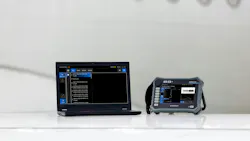
MROs and repair shops can save time and money by using NDT for aircraft inspections, with new tools for advanced metrology.
One example is the NORTEC 700 from Evident, which aims to make NDT inspections faster and simpler.
In this article, Evident Senior Product Manager, Eddy Current and Bond Testing Michaël Barbeyrol gives insider details about the NORTEC 700 and its applications in aircraft maintenance.
What is the NORTEC 700?
The Nortec 700 Eddy Current Array Flaw Detector allows technicians to transition between conventional eddy current (ECT) and advanced eddy current array (ECA) using a singular platform.
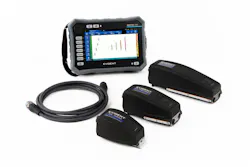
Barbeyrol explains, “Users can transition effortlessly between conventional ECT and advanced ECA modes using the same intuitive interface, preserving setup continuity and eliminating the need for separate instruments.”
He elaborates, “This integrated approach gives technicians and supervisors a unified, high-performance tool for all eddy current inspections. One instrument covers all inspections without the need for platform changes that can cost valuable time and money.”
Barbeyrol also discusses how the NORTEC 700 introduces a new generation of eddy current array probes, highlighting the platform’s features like:
- Redesigned body for improved ergonomics
- Embedded encoder for legacy compatibility
- Configurable remote switch
- Innovative wedge concept that reduces sensitivity while increasing application flexibility
Barbeyrol says, “[The NORTEC 700 is an] entirely new generation of affordable PCB technology delivering superior repeatability, uniform signal quality from probe to probe and simple calibration. Advanced users can design custom wedges to enable adaptation to virtually any geometry.”
“The NORTEC 700 supports a wide range of accessories and probes—both legacy NORTEC 600 components and new-generation arrays—ensuring compatibility with the existing procedures and future toolsets as technology advances,” adds Barbeyrol.
How does the NORTEC 700 benefit aircraft maintenance shops?
Barbeyrol comments, “Created from direct user input, the NORTEC 700 simplifies day-to-day usability and streamlines data trails.”
He continues, “An evolution of the proven and familiar NORTEC 600 interface, the NORTEC 700’s refined, technician-centered navigation system minimizes the steps needed for successful inspection.”
Barbeyrol explains, “Common tasks such as loading presets, adjusting gain or reviewing signals can be completed with fewer key presses and clearer visual cues, accelerating setup and reducing the potential for error.”
“The NORTEC 700’s simplified navigation design also helps lower operator fatigue, improving accuracy and productivity,” he adds.

When asked how the NORTEC 700 can save MROs and repair shops time and money, Barbeyrol answers, “The NORTEC 700 is designed for real-world procurement processes, allowing it to easily fit within existing budget brackets and help you avoid additional approval layers.”
He notes, “This reduces financial and administrative constraints and supports both easy adoption and deployment on a scale.”
Touching on the platform’s specific aerospace applications, Barbeyrol says, “ECT (single or dual-frequency), conductivity and bolt-hole inspections can be easily deployed on an aircraft skin.”
Barbeyrol elaborates, “ The NORTEC 700 adapts instantly to the application at hand, providing consistent signal quality and repeatable results. Technicians can transition seamlessly between all applications without changing hardware or reconfiguring setups, reducing downtime and simplifying workflow management.”
Focusing on reporting, Barbeyrol adds, “The NORTEC 700 simplifies the entire reporting process with fast, reliable tools that document inspection results directly from the detector—no extra hardware, software or complex data handling required.”
He explains that the platform’s onboard storage ensures every result is recorded accurately and made ready for review in real time, enabling technicians to capture and save data like:
- Inspection snapshots
- Setup parameters
- Signal data
How to choose the right NORTEC 700 model for your repair shop
The NORTEC 700 is available in three models with varying capabilities:
- N700: ECT
- N700D: Dual-frequency and bolt-hole inspections
- N700i: ECA, ECT and layer detection
Barbeyrol explains, “The NORTEC 700 turns complex inspection setup into a guided, intuitive process with intelligent, application-based presets.”
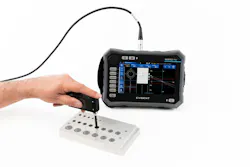
He continues, “Each preset automatically configures key parameters for selected probes and inspection types—bolt hole, rivet line, or surface crack—eliminating guesswork and reducing setup time to seconds.”
“With preconfigured setups, field crews can start inspections with minimal training, knowing that parameters are already optimized for accuracy and compliance,” adds Barbeyrol.
Barbeyrol lists key benefits of the built-in intelligence features, such as:
- Ensured consistency across operators and shifts
- Maintained compliance
- Reduced risk of operator error
Barbeyrol also advises aviation maintenance organizations on which model to opt for, saying, “The base N700 provides all essential functionality for standard ECT applications at a substantially lower price than competing systems.”
These standard ECT applications for aerospace include:
- Conductivity testing
- Surface crack detection
- Small-component evaluation
Barbeyrol explains, “The N700D adds dual-frequency operation and enhanced bolt-hole capability, offering a powerful upgrade without a significant increase in investment.”
He notes, “The N700i brings high-end ECA imaging to an entirely new level of affordability, at dramatically less than the cost of comparable ECA systems.”
Barbeyrol outlines the imaging-graded capabilities of the N700i, such as:
- Flaw visualization
- Layer detection
- Traceable data capture
“With a minimal price gap between the N700D and the N700i, this breakthrough in ECA accessibility allows aerospace customers, MROs, ISPs and OEMs to standardize advanced inspection technology once reserved for premium inspection systems,” emphasizes Barbeyrol.
About the Author
 Emily Gorski