MTU Aero Engines Pursuing Engine Technology Innovations by Developing Flying Fuel Cell
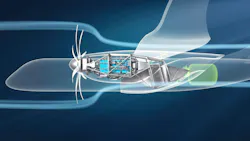
MTU Aero Engines has shared that the Flying Fuel Cell (FFC) currently in development is still on track, with EASA approval in progress.
MTU Aero Engines is also collaborating with Airbus on the project, with Airbus helping to industrialize the engine technology.
MTU SVP Engineering and Technology Dr. Stefan Weber said, “Our ambitious goal is to pave the way for a newly developed, safe, reliable and economical propulsion system that will contribute to climate-neutral aviation.”
The Flying Fuel Cell’s air supply and central hydrogen systems have already passed testing, meaning the first integrated demonstrators can start the next phase of development.
The next phase involves integrated testing, with a full-system demonstrator and a 350-kW fuel cell stack being built at MTU in Munich. The demonstrator will house testing for interactions between:
- Components
- Subsystems
- Regulation functions
In addition to Airbus, the HEROPS (Hydrogen-Electric Zero Emission Propulsion System) project is also contributing to the FFC’s development.
MTU and these partners aim to achieve a hydrogen-driven powertrain for regional airplanes by 2035, currently moving on to validation after completing the design stage.
The project involves creating a 1.8-megawatt system at MTU Munich, which will demonstrate scalability of the new engine technology based on a modular architecture.