Engine Stand Utilization Report: Three Key Shifts in July 2026 Engine Stand Demand
Key Highlights
- Spirit Airlines' bankruptcy has resulted in a large influx of aircraft and engines returning to lessors, increasing demand for engine transitions, storage and aftermarket support.
- Record-breaking summer flight activity has led to earlier-than-expected engine maintenance, stressing existing stand capacity and prompting strategic resource planning.
- Industry experts warn that the upcoming heavy maintenance season may face capacity shortages, requiring proactive planning to meet increased engine shop visit demands.

Throughout July 2026, aviation industry changes and shifts in engine maintenance activity highlight three key drivers of engine stand utilization trends.
According to report from EngineStands.com, “July’s numbers were steady, but the activity underneath them points to a busier period ahead.”
The reports identify three key shifts that are adding pressure on aircraft engine maintenance activity:
- Transition toward ownership of legacy programs
- Continuous flow of Spirit-related engine movements
- Impact of record summer flying numbers
Why ownership of legacy programs vs. leasing impacts engine maintenance trends
EngineStands.com reports show an increase in inquiries for purchasing engine stands rather than leasing them, with most interest concentrated on CFM56-5A/B stands and a smaller portion for CFM56-3 stands.
Discussing the significance of interest in buying the CFM56-3 stands, the reports say, “Recent fleet-tracking coverage describes the Boeing 737 Classic family, the aircraft this engine powers, as entering its final years of mainstream passenger service.”
They continue, “Only a small number of niche and regional operators, including Jet2 and Air Algerie, still operate the aircraft in meaningful numbers.”
The reports also contextualize CFM56-A/B purchasing interest, explaining, “Spirit Airlines’ bankruptcy has put a large number of older A320ceo engines and airframes on the market.”
“For traders and MROs dealing with more teardowns and transitions, this makes it more attractive to own equipment rather than lease it for each project,” note the reports.
How is the Spirit Airlines liquidation impacting engine stand demand?
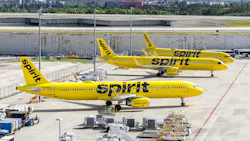
As Spirit Airlines declared bankruptcy and ceased operations May 2, 2026, the airline got approval to liquidate 114 Airbus aircraft along with engines, parts inventories and airport slots.
Reports from EngineStands.com share, “Of that fleet, roughly 58% was A320neo and A321neo family aircraft powered by Pratt & Whitney's PW1100G, and the remaining 42% were legacy A320ceo-family aircraft powered by CFM56-5A/B. Both engine types are already part of a tight narrowbody engine market.”
Instead of being sold through an auction, these aircraft are going directly back to lessors, such as:
- AerCap
- Air Lease Corporation
- Carlyle
- SMBC Aviation Capital
“That means a large number of engine transitions, inspections and repositioning events are happening at the same time and on a relatively compressed timeline,” note EngineStands.com reports.
These trends align with observations from May reports, which highlight increased demand pressure in areas like:
- Engine transitions
- Storage
- Aftermarket support
This month’s reports also emphasize PW1100G engine stand purchasing inquiries, often coming from North American lessors contacting European-based providers rather than local ones.
EngineStand.com experts explain, “The fact that lessors were willing to look outside their own region is a data point in itself. It suggests that North American stand capacity may be tight enough that, at least for time sensitive PW1100G work, availability is taking priority over proximity.”
Why record summer flying frequency causes more engine shop visits
Reports from EngineStands.com state, “On July 23, 2026, global commercial aviation recorded its busiest day on record, with 153,359 commercial flights tracked in a single 24-hour period, according to Flightradar24, beating the previous record, set in 2023, by more than 16,000 flights.”
The reports illustrate how an increase in the number of flying aircraft impacts engine demand, saying, “Aircraft flying more sectors each day accumulate cycles faster, and for narrowbody fleets already operating at or near record utilization levels through the first half of 2026, an intense summer schedule can bring scheduled shop visits forward.”
Key reasoning for this pattern is the fact that leasing demand is running ahead of internal planning.
EngineStands.com reports elaborate, “When engines reach maintenance thresholds earlier than expected, operators can find themselves needing stands on top of capacity that has already been committed.”
“Rather than reflecting a broad increase in monthly demand, these requests are a sign that individual maintenance events are being pulled forward by the pace of summer flying,” they add.
What maintenance providers can prepare for in the heavy engine maintenance season
Experts from EngineStands.com advise, “As the industry moves into the heavier maintenance season, more engines will be coming to shop visits at the same time that MROs and lessors are already dealing with higher transition and teardown volumes.”
They continue, “If the trends seen in July continue, the main issue may not only be a sudden jump in overall demand, but also whether there is enough engine stand capacity in the right locations when operators need it.”
About the Author
 Emily Gorski