Lockheed Martin Controls UAS Drone From Cockpit of Airborne F-22 Raptor
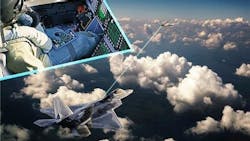
Lockheed Martin Skunk Works has successfully controlled an uncrewed aerial system (UAS) from the cockpit while flying an F-22 fifth-generation fighter. The flight was completed in collaboration with the U.S. Air Force and industry partners, departing from Nellis Air Force Base in Nevada.
The pilot of the F-22 Raptor used an open interface in the cockpit to send control directions to another airborne UAS.
"This effort represents Skunk Works driving a breakthrough in air combat capability, where single-seat aircraft command and control drones with simple and intuitive interfaces in the cockpit," said OJ Sanchez, vice president and general manager, Lockheed Martin Skunk Works.
Using a pilot vehicle interface (PVI), the F-22 pilot commanded the drone to execute a specific mission profile. The PVI is a flexible system that helps current and future aircraft platforms prepare for integration of new technologies.
Lockheed Martin has been pursuing automation and AI-powered operations for years, both in crewed and uncrewed systems. This includes a close focus on integrating autonomous drones with the F-35 and F-22 aircraft.
As the U.S. Air Force pursues a Family of Systems approach, this flight and other evaluations contribute to advancements in partnering humans with machines. Some key benefits to human-machine teaming that the Air Force hopes to take advantage of include:
- Improved situational awareness
- Enhanced interoperability
- Increased survivability and flexibility