Kalmar Motor Relaunches FB150 Electric Tow Tractor With More Competitive Pricing
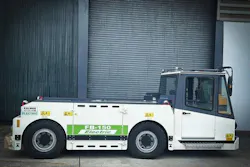
Kalmar Motor has relaunched its FB150 electric tow tractor, offering a more competitively priced option for aircraft pushback and towing operations as ground handlers and airlines look to expand their electric ground support equipment fleets.
The Swedish manufacturer, part of Vestergaard Company, announced the relaunch during GSE Expo Europe 2026 in Lisbon, Portugal, in September.
Designed for aircraft pushback, inter-gate towing and short-distance maintenance towing, the FB150 can handle aircraft up to and including the full narrow-body segment. The tractor is also suitable for cargo and industrial applications.
The FB150 is available with either lead-acid or lithium-ion batteries, allowing operators to select a power source based on their operational requirements, charging infrastructure and budget.
"We are re-launching the FB150 because the market is asking for a cost-effective electric pushback solution that does not compromise on flexibility," said Carsten Schimkat, vice president of sales. "With the choice of lead-acid or lithium-ion batteries, a highly competitive purchase price, and a very low cost per pushback, the FB150 is built to help customers electrify their fleets on their own terms."
The tractor features a centrally positioned operator console that swivels 180 degrees, eliminating the need to reposition the towbar from front to rear during operations. According to Kalmar Motor, the design helps improve safety and turnaround efficiency.
The FB150 delivers 100 kN of tractive effort and has an operating weight ranging from 12,000 to 15,000 kilograms, depending on ballast configuration. Its maximum speed is 25 km/h when traveling independently and 20 km/h when towing.
Kalmar Motor said the relaunch builds on its experience in electric towing equipment while addressing demand for lower acquisition costs and reduced operating expenses.
The FB150 joins the manufacturer's portfolio of electric and conventional aircraft towing equipment, providing another option for operators transitioning toward lower-emission ground handling operations.