Waev Launches All-Electric Bigfoot XL Liftgate Truck for Ground-Level Cargo Handling
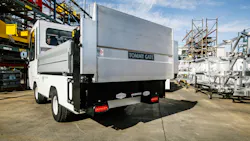
Waev Inc. has introduced a new all-electric cargo solution, combining its Bigfoot XL utility vehicle with a factory-integrated liftgate from Tommy Gate to streamline ground-to-deck material handling for fleet operators.
The Bigfoot XL Industrial Liftgate Truck pairs the established Bigfoot XL platform with a G2 Series hydraulic liftgate, creating a self-contained vehicle designed to reduce reliance on additional ground support equipment. The configuration allows a single operator to load and unload cargo more efficiently while minimizing manual lifting.
Targeted at airports, ports, municipalities and industrial sites, the vehicle offers up to 2,500 pounds of payload capacity in a compact, highly maneuverable footprint. The platform includes a reinforced frame, integrated ballast and factory-engineered systems designed to function as a single unit, positioning it as an alternative to larger trucks for certain applications.
An optional lithium-ion battery system provides maintenance-free operation, with performance down to minus 20 degrees Fahrenheit and a maximum range of up to 78 miles, supporting use across varied operating environments.
According to the company, the new configuration responds to fleet demand for more integrated, all-electric solutions that simplify operations while maintaining performance and reliability.
The liftgate system features dual hydraulic cylinders for balanced operation, up to 42 inches of vertical travel and a 500-pound lift capacity. A fully enclosed hydraulic design and maintenance-free components are intended to reduce service requirements over time.
The Bigfoot XL Industrial Liftgate Truck is now available through authorized dealers.
For ground support operations, the combined vehicle and liftgate design could help reduce equipment congestion on the ramp or in cargo areas, while enabling smaller crews to handle light-duty freight, baggage or service equipment more efficiently.