SATS Tests Autonomous Cargo Vehicles at Changi Airport
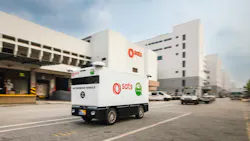
SATS is testing autonomous cargo vehicles at Singapore Changi Airport as part of a new integrated transport service designed to improve the speed, reliability and flexibility of cargo movements.
The service uses autonomous cargo vehicles, or ACVs, to transport freight between SATS airfreight terminals and freight forwarders’ warehouses within Changi Airfreight Centre’s Free Trade Zone. The vehicles are currently being validated under live operating conditions as SATS works toward full deployment.
The ACV being used in the pilot can transport up to 800 kilograms of cargo and automate routine point-to-point movements. As demand grows, SATS said the service could be expanded with higher-capacity vehicles capable of carrying up to 1,500 kilograms and potentially supporting round-the-clock operations.
By providing cargo transportation on demand, SATS aims to reduce freight forwarders’ reliance on conventional truck and driver schedules, allowing shipments to move between terminals and warehouses more quickly.
“Autonomous transportation allows us to rethink how cargo moves through the airport ecosystem, shifting routine movements towards an on-demand, scalable model,” said Henry Low, CEO of SATS SG Hub. “By integrating it into our operations, we can unlock capacity, strengthen resilience and augment the capabilities of our people, while delivering greater speed and reliability for our customers.”
SATS worked with Changi Airport Group to deploy and validate the vehicles within the airport’s autonomous vehicle operational and safety framework. The approach allows the technology to be tested and progressively integrated into live cargo operations while meeting airport safety and operational requirements.
The ACVs are fully electric, supporting SATS’ efforts to reduce the environmental impact of cargo transportation within the airport.
The initiative is part of SATS Singapore Hub’s Hub Handler of the Future program, launched in October 2025. The broader program combines automation, digitalization, operational innovation and workforce development to increase capacity and strengthen resilience at major aviation hubs.
SATS said technologies and operating models developed through the program in Singapore could eventually be scaled across its global network.