Smarter Electric Machines Transform Aircraft Movement on the Ramp
Key Highlights
- Electrification is becoming mainstream, with electric and hybrid models designed for various aircraft sizes, reducing emissions and maintenance costs.
- Towbarless systems like Goldhofer ATLAS 2 and LEKTRO 88 improve operational safety and efficiency by eliminating traditional towbar connections.
- Compact, remote-controlled tugs such as Mototok Spacer models enable precise maneuvering in hangars and tight spaces, enhancing safety and space utilization.
- Digital fleet management tools like Oshkosh AeroTech’s iOPS provide real-time data, remote diagnostics, and operational insights to optimize fleet performance.
- Smaller electric tugs, like Amigo Mobility’s AeroTow T2, expand options for light aircraft, offering cost-effective solutions for general and business aviation operators.
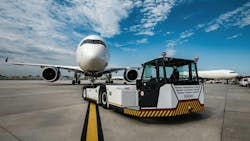
Pushback tractors, towing vehicles and compact aircraft tugs are evolving quickly as airports and ground handlers modernize ramp operations. Electrification, digital fleet management tools, and more compact equipment designs are reshaping how aircraft are positioned at gates, maneuvered in hangars, and moved across increasingly busy airfields.
At the same time, manufacturers are prioritizing safety, maneuverability, and ease of operation. Towbarless systems, remote-controlled tugs, and connected equipment platforms are helping operators reduce operational complexity, improve precision during aircraft movements, and gain greater visibility into equipment performance across their fleets.
Electrification moves to the forefront
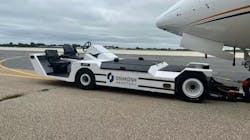
Electrification continues to reshape the ground support landscape, and pushback and towing equipment are no exception. Many manufacturers now design electric models as the primary platform rather than a niche alternative.
Oshkosh AeroTech’s redesigned LEKTRO 88i towbarless electric tow vehicle reflects this shift. Built to move aircraft with a maximum takeoff weight up to 120,000 pounds, the tractor is designed for pushback and towing operations involving regional jets, turboprops, and business aircraft.
Electric LEKTRO models provide zero-emission operation and reduced maintenance requirements, while hybrid diesel-electric charging options are also available for operators with limited charging infrastructure. The latest generation also integrates digital monitoring and connectivity tools designed to support more intelligent fleet management.
Textron GSE is also expanding its electric equipment lineup, with a focus on helping operators transition to electrification at their own pace. The company’s Endurance high-voltage tractor is designed for baggage and light cargo towing applications, offering the performance benefits of high-voltage electric power while remaining adaptable to different charging environments.
To address infrastructure challenges that many airports still face, Textron introduced an adapter that allows the Endurance tractor to charge through standard 80-volt charging systems. The approach allows operators to deploy electric equipment even if high-voltage charging infrastructure is not yet fully available on the ramp, easing the transition toward more sustainable ground support fleets.
Towbarless systems improve efficiency and safety
Towbarless technology continues to gain traction as operators seek ways to reduce equipment complexity and minimize the potential for operational errors.
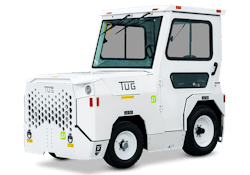
The Goldhofer ATLAS 2 towbarless tractor is designed specifically for modern gate operations, eliminating the need for a towbar while allowing aircraft to be moved directly between gates or repositioned across the apron.
Removing the towbar simplifies operations and reduces the risk of misalignment or improper connection, which can lead to aircraft damage. The ATLAS 2 also operates as a fully electric platform, supporting both operational efficiency and environmental goals.
Similarly, the LEKTRO 88 platform uses a patented strap-and-cradle system to secure an aircraft’s nose gear without the need for traditional towbar equipment. The design reduces wear on landing gear while simplifying the capture process compared with some towbarless systems.
These types of systems are increasingly attractive for ground handlers seeking to improve operational consistency and reduce ramp incidents.
Precision maneuverability for hangars and tight ramps
As airports and maintenance facilities work to maximize limited space, maneuverability has become a defining design priority for many towing solutions.
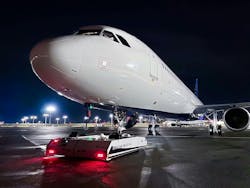
Mototok’s Spacer 8600 NG remote-controlled electric pushback tug exemplifies this trend. Designed for multi-aircraft compatibility, the unit allows operators to maneuver aircraft precisely using a handheld remote control, enabling safe single-person operation in both ramp and maintenance environments.
The compact design makes it particularly useful in hangars and maintenance facilities where precise positioning is essential. Mototok’s Spacer 200 model is also gaining traction among MRO operators because its small footprint allows widebody aircraft to be moved in and out of hangars while maximizing available space.
Remote-controlled tugs can also help address workforce challenges by allowing a single operator to perform tasks that previously required larger teams.
Intelligent equipment and connected fleets
Beyond powertrains and mechanical design, manufacturers are increasingly incorporating digital connectivity and fleet intelligence into pushback equipment.
Oshkosh AeroTech’s LEKTRO 88i integrates the company’s iOPS intelligent monitoring system, allowing operators to collect real-time operational data from ground support equipment fleets.
The platform enables remote diagnostics, telematics monitoring, and geofencing capabilities while providing insights that help reduce downtime and improve fleet utilization. Enhanced control features, including slowed turning modes and accelerated winch-out capabilities, are enabled through modern PLC control systems integrated into the vehicle.
These technologies reflect a broader push toward connected ground support fleets that provide actionable operational data for airport operators and ground handlers.
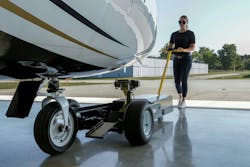
Smaller electric tugs expand options for light aircraft
At the smaller end of the towing spectrum, electric tugs designed for general aviation and business aviation operators continue to expand the range of available solutions.
Amigo Mobility’s AeroTow T2 electric aircraft tug is designed for towing aircraft up to 15,000 pounds, including taildraggers and medium twin-engine aircraft.
The unit uses a universal cradle and lift system to simplify aircraft capture while offering adjustable speed control and ergonomic operator handling. With a price point below $6,000, the tug is aimed at smaller operators seeking a simple and cost-effective towing solution.
A new generation of ramp equipment
Across the industry, pushback tractors and aircraft tugs are evolving beyond their traditional role as purely mechanical equipment.
Electrification, intelligent monitoring systems, and precision maneuverability are becoming defining features of the next generation of towing solutions. At the same time, manufacturers are prioritizing designs that simplify operation, reduce maintenance demands, and improve safety on increasingly busy airport ramps.
As airports continue investing in sustainability and operational efficiency, pushback tractors and towing vehicles are likely to remain a key focus for innovation in ground support equipment.