Lödige Industries Launches Cargo Direct to Improve Efficiency in Air Cargo Terminals
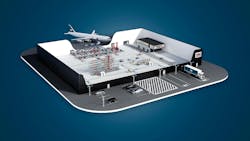
Air cargo terminals are under increasing pressure to manage rising shipment volumes, labor constraints and more complex operations at high-intensity hubs, making digital tools that coordinate handling resources and workflows in real time an increasingly important part of cargo ground operations. Against this backdrop, Lödige Industries has introduced Cargo Direct, a new software platform designed to optimize terminal workflows and improve capacity utilization.
Unveiled during the IATA World Cargo Symposium 2026, the system links air waybill (AWB) data with terminal equipment, personnel and facility resources in real time to create a continuously updated operational plan. By synchronizing shipment priorities with available handling capacity, the platform aims to reduce unnecessary movements, shorten handling times and improve asset utilization without requiring additional infrastructure.
Cargo Direct integrates shipment data, special handling codes, terminal layout, equipment availability and workforce resources into a single orchestration layer that determines the next operational step for each cargo unit. Instead of simply recording handling activity, the system actively directs cargo through the terminal based on optimized workflow logic.
Cargo units including unit load devices (ULDs), pallets and individual packages are identified using handheld scanners connected through WLAN or 5G networks. Once scanned, the system automatically routes cargo to its next destination, such as storage locations, inspection areas, X-ray screening or build-up stations. Operators follow a simplified “scan-and-confirm” workflow while the system manages exceptions such as damaged cargo or partial shipments.
Dynamic put-away and retrieval strategies help minimize travel distances for equipment and personnel while reducing waiting times at workstations. Landside processes can also benefit from early door and gate assignments based on shipment content, facility layout and operational priorities.
Additional data inputs, including volume and weight information captured through smart gates equipped with 3D scanning, can be integrated to improve ULD build-up density and increase overall terminal capacity.
According to Philippe De Backer, the platform is designed to close the gap between equipment automation and process automation within cargo facilities.
“Digitalization in air cargo must go beyond data visibility,” De Backer said. “The real opportunity lies in intelligent, real-time operational orchestration where shipment data, equipment and resources are managed as one coordinated system.”
Cargo Direct is compatible with existing cargo management systems and integrates through standard interfaces using messaging formats from the International Air Transport Association. Operational status and cargo location data are fed back into the cargo management system in real time to create a unified operational record.
Offered as a subscription service priced per air waybill, the platform will receive regular updates and enhancements designed to support future AI-assisted operational optimization.