Cyngn Expands Autonomous Tug Operations Across Large Industrial Sites With Potential Lessons for Airports
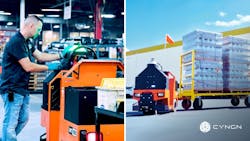
Cyngn Inc. reports growing adoption of its DriveMod Tugger platform as customers deploy autonomous vehicles across multiple buildings and outdoor transit routes, a model that mirrors many of the transport challenges found in airport and air cargo environments.
The company said DriveMod is increasingly being used to move materials between warehouses, production areas, and distribution zones within large campuses that often exceed 200,000 square feet. Those point-to-point movements are similar to the tug and tractor routes used daily on the ramp to connect cargo terminals, hangars, and ground service facilities.
As airport operators and ground handlers explore automation to address labor shortages and safety concerns, the industrial deployments offer a preview of how autonomous towing could function in aviation settings. Cyngn said the system is designed to reduce bottlenecks, create more predictable workflows, and allow organizations to redeploy staff to higher value tasks.
Customers are increasingly looking for autonomy that fits into their entire operation, not just a single aisle or point solution, said Marty Petraitis, Cyngn vice president of sales. He noted that as sites grow larger and more interconnected, reliable vehicle movement across a full facility becomes a meaningful lever for efficiency and scale.
Those same pressures are familiar to ground support teams managing baggage trains, unit load device transfers, and maintenance logistics across sprawling airport footprints. Industry trials of autonomous baggage tugs and cargo tractors have shown potential to improve safety by reducing manual driving hours and limiting congestion in high traffic zones.
Petraitis said DriveMod is built to perform in real production environments and to support automation as a long-term capability. The broader deployment scope, he added, strengthens the foundation for expansion as organizations scale autonomy across multiple workflows and facilities.
While Cyngn’s current deployments focus on manufacturing and logistics, the use case aligns with emerging efforts to automate non-aircraft movements on the ramp and in cargo terminals. For ground support professionals evaluating next-generation GSE strategies, the industrial sector continues to provide a proving ground for technologies likely to shape future airport operations.