Swissport’s David Fernandez on the Next Evolution of GSE Fleet Management
Key Highlights
- Electrification has been the most disruptive change in ground support equipment, with Swissport aiming for a 55% electric fleet by 2032.
- Usage-based preventive maintenance, driven by telematics and operational data, is replacing traditional calendar-based schedules, allowing for more tailored upkeep.
- AI and automation are enhancing safety and operational efficiency by providing real-time visibility, detecting potential issues, and supporting autonomous vehicle testing.
- The industry is approaching an inflection point where automation will significantly transform airport ground operations, improving safety and reducing manual errors.
- Smaller ground handlers can adopt electrification, IoT, and AI by establishing the right processes, systems, and training, regardless of fleet size.
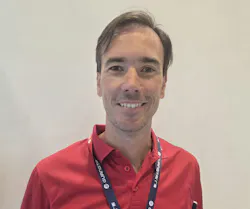
Electrification may have been the biggest disruption to ground support equipment fleets in recent years, backed by Swissport’s commitment to reach a 55% electric motorized fleet by 2032, alongside mandatory electric procurement policies. But David Fernandez, global head of fleet at Swissport, believes the industry is now entering a new phase: using connectivity, operational data and artificial intelligence to get more out of that equipment.
Fernandez, an aeronautical engineer whose background includes roles with Airbus and Iberia/IAG, has been with Swissport for three years. Ground Support Worldwide spoke with him at GSE Expo Europe in Lisbon about how fleet management is evolving, why Swissport is moving toward usage-based preventive maintenance and where AI and automation could take ground operations next.
Listen to the podcast here.
GSW: How do you see the future of GSE and fleet management?
Fernandez: Things are maturing more than changing. I think electrification has been the most disruptive thing that has happened to GSE over the last several years, but now that disruption is starting to move onto a much clearer path.
With electric GSE and the Internet of Things, fleet management is showing us as ground handlers, and also our airline customers, how GSE can be operated and maintained based more closely on what the equipment is actually delivering and the mission it is performing.
What we are moving toward is a fleet management approach in which maintenance teams are told what to do depending on how the units are being used. I’m not talking yet about predictive maintenance. I’m talking more about usage-based preventive maintenance.
GSW: What is the difference between predictive maintenance and usage-based preventive maintenance?
Fernandez: For the moment, I don’t see manufacturers putting enough sensors into the units to tell you the actual condition of every particular unit.
What we do see a need for is using information from telematics providers, OEMs and the data already available from the units to adapt preventive maintenance schedules to the level of utilization of that equipment.
For example, we are starting to see towbarless pushbacks with 600 power-on hours per year. Out of those 600 hours, perhaps only 200 hours are spent driving. And out of those 200 hours, perhaps only 70 are spent moving with an aircraft.
If in the past I only knew about those 600 hours, that was what I had to rely on. Now, if I have those other figures, I have much more information about how we are actually using the unit and under what conditions.
It still isn’t telling me the health of the unit. I still have to inspect the equipment to determine that. But by understanding how much we use it and under what conditions, I can determine the right time to perform maintenance on each unit.
GSW: Is Swissport using its own technology to manage that information?
Fernandez: We use a commercial off-the-shelf asset management software platform configured to support our specific operational requirements. While the underlying technology is not something we have developed ourselves, we have developed our own processes, policies and ways of working around how we configure and use this tool. This allows us to apply the technology in a way that reflects Swissport’s operational expertise and the requirements of our business.
The manufacturers already have their maintenance manuals, and that is an important starting point because different technologies require different types of care. Electric equipment, for example, requires less maintenance than conventional equipment. You don’t have to change the oil and perform some of the other maintenance associated with an internal combustion engine.
When you combine those manufacturer requirements with information about how much a unit is actually being used, you can remain compliant with the requirements of the technology while tailoring the maintenance schedule to each particular unit.
Until now, we haven’t had all of that visibility, so we relied on something that was always clear: the calendar. If the manual said to perform something every six months, we did it every six months.
Now, if we know how many hours a unit is being used and the level of heavy-duty or light-duty operation, we can tailor that maintenance to the individual unit while still working within the OEM’s requirements.
GSW: Does that change the way your maintenance teams work?
Fernandez: Yes. It’s a constant transformation. Our people have to understand that it is no longer necessarily the same schedule for every unit. Every unit requires the same attention, but perhaps at a different pace.
It also means using more connected devices and relying more and more on the system. Transforming the culture of our teams is a never-ending journey.
GSW: How far along is Swissport in making that transition?
Fernandez: Over the last year, we have moved over 75% of our motorized assets to preventive maintenance based not only on the calendar but also on usage.
We are still taking the conservative approach. Whichever comes first, usage or the calendar, drives the next preventive maintenance work that needs to be performed.I envision, however, a close future where the calendar could eventually come out of the equation.
GSW: AI and automation are major topics throughout the industry. How are they changing fleet management?
Fernandez: They are changing not only fleet management but also the operation itself. There are two sides of the same coin for a ground handler. My function is to make sure the units are ready when and where they are needed. The operations side has to deliver the service to the airline efficiently and, first of all, safely.
At the moment, AI functionality can provide even more benefits on the operational side when people are using those assets.
When you are operating GSE around an aircraft, there are many events that you have to get right. Aviation requires you to be very strict about following the correct processes.
AI technology allows us to use cameras, radar and other systems not only to give people greater visibility and awareness of what they are doing, but potentially to help prevent a problem before it happens.
We are already seeing loaders with rearview cameras that detect pedestrians. But we want to go a step further. Can we detect whether the bypass pin is installed or not before starting an aircraft pushback? Whether a door has been closed properly? When we are docking with an aircraft, are we moving at the right speed and the right slope?
AI gives our operators additional eyes and additional sensors. It expands the capabilities of our people and can make the operation safer.
GSW: Is the industry approaching an inflection point in fleet management?
Fernandez: The revolution is going to come with automation. We are already testing autonomous vehicles, as has been publicly disclosed.
The real inflection point will be how much automation can be introduced into airport operations.
Until then, what we are doing is making GSE operations around aircraft safer and making maintenance much more tailored and efficient. I wouldn’t define that as disruptive as the
automation step that is getting closer in front of us, but it is allowing us to take a significant step forward in safety and maintenance efficiency compared with where we were.
GSW: Swissport operates at tremendous scale. What can smaller ground handlers learn from what you are doing?
Fernandez: I think you have to be convinced about embracing the electrification of ground support equipment. There are still barriers involving charging infrastructure, and there is a transformation journey required with operations teams.
But electric GSE has demonstrated that it is safer, smoother to operate, cheaper to operate, simpler to operate and simpler to maintain. For us, there is no longer a question about that.
From there, it is a matter of what you put around it: having the right processes, setting the right parameters, having the right systems and transforming your people. Then technologies such as the Internet of Things and AI can complement that and help close the remaining gaps in safety.
The scale doesn’t matter. What matters is having those key ingredients in place: electrification, the right maintenance policies and intervals, and additional technologies such as AI. That gives you a pretty good package of ingredients to cook a good pizza, I would say.
GSW: What else should GSW readers be thinking about as fleet management evolves?
Fernandez: It is no longer only about which equipment you buy or which unit is better than another. OEMs have developed their areas of expertise, and we understand very well how an aircraft needs to be turned around and what equipment is needed.
But when you add how fleets need to be programmed, the Internet of Things, AI, cameras and now automation, you have to manage all of it in a much more holistic way. It is much broader than looking at every unit simply as an individual vehicle.
You can see that evolution at the expo. The GSE environment is becoming much more than simply selecting the right vehicle.