Scaling Ground Handling to Meet Saudi Arabia's Aviation Boom
Key Highlights
- Saudi Arabia aims to handle 330 million passengers annually by 2030, driving significant investments in airport infrastructure and airline networks.
- Swissport expanded from 6 to 20 airports within two years, exemplifying the rapid network growth driven by airline partnerships and regional demand.
- Developing local talent through structured training and leadership programs is crucial for sustainable operational capacity and aligns with Vision 2030’s employment objectives.
- Maintaining safety standards across diverse and expanding airport environments relies on international frameworks, ongoing training, and a strong safety culture.
- Advanced digital tools, AI, and automation are increasingly used to enhance operational visibility, safety, and efficiency in ground handling activities.
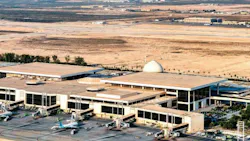
Saudi Arabia's ambitious aviation expansion is creating new opportunities and operational challenges for the ground handling industry. Driven by Vision 2030 and its target of 330 million annual passengers by the end of the decade, the Kingdom is investing heavily in airport infrastructure, airline capacity and connectivity.
Growth is extending beyond major hubs such as Riyadh and Jeddah to regional airports and emerging destinations, requiring ground handling providers to expand their networks while maintaining consistent standards of safety, efficiency and service.
Swissport's growth illustrates the scale of the transformation. The company expanded from six Saudi airports in 2024 to 16 in 2025, with its network reaching 20 airports in 2026.
Ground Support Worldwide spoke with Dirk Goovaerts, Swissport CEO for Continental Europe, Middle East, Africa and India (CEMAI) and the company's global cargo chair, about the forces driving regional growth and the investments in people, equipment and technology needed to support it.
Expanding beyond major hubs
The Middle East continues to experience substantial aviation growth, with Saudi Arabia's national aviation strategy driving investment in airport infrastructure, airline fleets and new destinations.
"The main drivers are ambitious national aviation strategies, significant investments in airport infrastructure, the expansion of existing airlines and the emergence of new ones, as well as growing demand for both business and leisure travel," Goovaerts says.
Saudi airports handled 140.9 million passengers in 2025, an increase of 9.6% over the previous year, according to the Kingdom's General Authority for Statistics.
Saudi statistics
As airlines expand their fleets and networks, ground handling requirements are changing. Providers must establish operations across increasingly diverse airport environments rather than concentrating their resources exclusively at major international hubs.
Swissport's expansion reflects this trend. Its June 2025 launch of Air Arabia services included seven additional airports, extending its network to 13 locations at that time.
"This expansion reflects both the pace of market growth and the growing demand from airlines for a ground handling partner capable of scaling across an expanding airport network," Goovaerts says.
Swissport's subsequent partnership with flynas has extended its reach further. Under a five-year agreement, the company will serve as flynas' exclusive ground handling provider throughout Saudi Arabia.
The expansion demonstrates how airline growth is reshaping the requirements placed on ground handling organizations. Providers must be capable of launching operations at multiple airports, often within compressed implementation periods, while maintaining consistent service standards.
Goovaerts says meeting these demands requires more than additional personnel and equipment. Ground handlers must develop smarter, more flexible capacity through modern GSE fleets, digital operational visibility, automation and training.
Long-term coordination among airlines, airports, ground handlers, regulators and infrastructure providers will also be essential to ensuring that operational capacity keeps pace with traffic growth.
Building the workforce
Rapid expansion creates a corresponding demand for skilled ground handling personnel.
As Saudi Arabia develops its aviation sector, recruiting local talent, transferring operational expertise and creating long-term aviation careers are becoming increasingly important.
Swissport recruited and trained more than 400 employees to support its seven-airport expansion in 2025. Its Saudi workforce has since grown to more than 6,000 aviation professionals, according to the company's September 2026 announcement.
"Building this capacity in a short period required a combination of structured training, digital learning, simulation-based programmes, and practical field coaching," Goovaerts says.
The Swissport Training Academy supports this effort by providing instruction in operational procedures, safety, dangerous goods, customer service and other specialized areas.
Goovaerts emphasizes that developing local leadership and recruiting locally are essential to establishing sustainable operational capacity. Global expertise and standardized training can support these efforts while helping ensure that newly established stations maintain consistent operational practices.
Workforce development also aligns with the broader human capital objectives of Saudi Arabia's Vision 2030, which seeks to expand employment opportunities and develop national capabilities across the aviation industry.
Maintaining safety during rapid growth
Expanding into new airports and introducing additional services creates challenges for maintaining consistent safety standards.
Goovaerts says international frameworks, including the IATA Safety Audit for Ground Operations (ISAGO) and the IATA Ground Operations Manual (IGOM), provide an important foundation for safe and consistent ground handling.
Structured management systems addressing occupational health and safety, quality and environmental performance also remain central to operational oversight.
In specialized cargo operations, certifications such as CEIV Pharma, Good Distribution Practice (GDP) and CEIV Fresh are becoming increasingly relevant as demand grows for pharmaceutical and temperature-sensitive cargo handling.
However, Goovaerts emphasizes that certification alone cannot establish an effective safety culture.
"At Swissport, we believe that stronger safety cultures are built on the front lines, through leadership, training, accountability, and the confidence to report any anomalies," he says.
Across its regional operations, Swissport continues to reinforce this approach through its iCare program and Zero Harm vision.
Maintaining consistent standards across a growing network requires organizations to establish clear expectations, provide ongoing training and encourage employees to identify and report potential hazards.
This becomes particularly important when launching operations at multiple airports within a short period, where differences in infrastructure, operating conditions and local requirements can introduce additional complexity.
Using technology to support operations
Technology and artificial intelligence are playing an increasingly important role in helping ground handlers manage this complexity.
Goovaerts identifies several applications that can improve operational visibility, safety and resource allocation.
AI-based tools can provide greater insight into aircraft turnaround activities, help anticipate potential delays and improve the deployment of personnel and equipment. Computer vision, telematics and proximity sensing systems can also provide real-time information to support ramp safety.
Predictive maintenance represents another opportunity. By analyzing equipment data, ground handlers can identify potential technical problems before they result in operational disruptions.
Meanwhile, autonomous and semi-autonomous technologies are being tested in baggage handling to improve efficiency and reduce occupational safety risks.
Digitalization is also changing passenger handling.
Swissport uses its Matchbox digital passenger documentation platform in Saudi Arabia to validate travel documents and entry requirements. According to Goovaerts, the platform has completed more than 4.26 million document validations globally without an error.
For Swissport, the objective is to adopt technologies that deliver measurable operational improvements rather than pursue innovation for its own sake.
"We invest in digital solutions that solve real operational problems, improve safety and efficiency, and provide our teams with better information to make faster, more informed decisions," Goovaerts says.
He stresses that technology should complement the expertise of ground handling personnel rather than replace the human judgment required in aviation operations.
Electrifying ground support equipment
Sustainability is another consideration as Saudi Arabia and the wider Middle East expand their aviation infrastructure.
Ground handlers are increasingly investing in electric GSE to reduce local emissions, noise and maintenance requirements.
Swissport has committed to electrifying 55% of its global GSE fleet by 2032. By the end of 2025, more than 26% of its fleet had already been electrified, according to Goovaerts.
However, the transition depends on more than purchasing electric equipment.
Airport charging infrastructure, electrical grid capacity and reliable energy availability are essential to supporting electric fleets, particularly as ground handling operations expand across multiple airports.
Goovaerts emphasizes that electrification requires coordination among airports, ground handling organizations, regulators and energy suppliers.
These considerations are especially relevant in rapidly developing aviation markets, where new infrastructure presents opportunities to incorporate charging capacity into airport planning rather than retrofitting it after operations are established.
Preparing for the next phase
Saudi Arabia's aviation expansion is changing the scale and geographic reach of ground handling operations throughout the Kingdom.
As traffic increases at regional airports and new destinations, providers must establish consistent operational standards across larger networks while investing in the personnel, equipment and systems needed to support continued growth.
Swissport's expansion illustrates the importance of combining international operational standards with local workforce development, digital technology and infrastructure investment.
The next phase of growth will require ground handlers to balance rapid implementation with operational resilience, ensuring that additional capacity is supported by effective safety management and sustainable operating practices.
For Goovaerts, the central objective is to build operations that can accommodate increasing demand without compromising the expertise and safety culture on which ground handling depends.
About the Author
 Mario Pierobon
Dr. Mario Pierobon provides solutions in the areas of documentation, training and consulting to organizations operating in safety-sensitive industries. He has conducted a doctoral research project investigating aircraft ground handling safety. He may be reached at [email protected].