Safety and Flexibility Drive Ground Handling Evolution in Australia and New Zealand
Key Highlights
- Safety culture in Australia and New Zealand has shifted from compliance to systemic, shared responsibility, with increased stakeholder collaboration and integrated safety management systems.
- Regional airports rely on flexible workforce models, standardized GSE fleets, and strategic logistics to maintain safety and operational continuity in geographically dispersed communities.
- Adoption of digital tools like telematics, safety analytics, and asset tracking is progressing steadily, supporting safety, visibility, and operational control across the region.
- Major airports are implementing advanced safety technologies such as LiDAR collision avoidance and operational imaging, enhancing proactive safety measures.
- The region’s pragmatic approach to innovation ensures new technologies are fit for purpose, supporting sustainable, safe, and efficient ground handling operations.
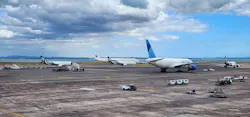
Australia and New Zealand occupy a unique position in the global aviation landscape. Vast distances, dispersed communities and a high dependence on air connectivity define an operating environment that is both demanding and distinctive.
From the ramps of large international airports to the lean, multi-skilled operations of remote regional airports, ground handling providers across the region must balance international safety standards with the practical realities of geography and scale.
This report examines how safety culture, workforce models, GSE logistics and emerging digital technologies are shaping ground operations across Australia and New Zealand.
Ramp safety shifts toward shared responsibility
The Civil Aviation Authority (CAA) of New Zealand says airport and apron safety have received increasing attention over the past decade as understanding of ground handling risks has improved globally. Although the International Civil Aviation Organization (ICAO) has developed Standards and Recommended Practices for ground handling, those standards have not yet been formally adopted in New Zealand. As a result, ramp safety continues to be managed primarily through airport operators’ safety management systems, where it is treated as a shared risk among multiple stakeholders.
In Australia and New Zealand, the growing focus on safety has led to a more proactive and integrated approach to ground handling operations, according to Anthony Filacouridis, CEO for Australia at Swissport.
“Safety is an integral part of operational decision-making, training, equipment deployment, and day-to-day performance management, rather than being considered a standalone compliance function,” Filacouridis says. “This has resulted in more consistent practices and greater coordination between airlines, ground handling operators and airport management.”
He says the industry has also shifted from a simple compliance mindset to a more mature safety culture focused on reporting, shared responsibility and a systemic understanding of risk, particularly at organizational interfaces.
The CAA of New Zealand says ramp safety is increasingly being addressed through airport-level forums where airports, operators and ground handling staff work collectively to identify risks and implement control measures. This reflects a broader move toward integrated safety management, where outcomes depend on coordination between multiple stakeholders rather than the actions of individual organizations alone.
At major hubs, where multiple ground handling organizations operate simultaneously, safety systems have become more structured and formalized due to the complexity of those operating environments. These systems often include comprehensive training programs, competency frameworks and phased communication strategies for change management.
Filacouridis says major airports are also seeing increased adoption of technology-driven safety tools, including telematics for equipment visibility and maintenance monitoring, operational imaging systems used to support incident review and safety analysis, and LiDAR-based collision avoidance systems installed on high-risk powered GSE operating near aircraft.
“These tools are helping teams shift from a reactive incident response to a more preventative and data-driven safety culture,” he says.
At regional airports, the safety evolution continues, although often through more operationally focused approaches centered on procedural discipline, ongoing training and practical risk management.
The CAA of New Zealand says smaller regional airports, which are often served by a single operator, tend to rely on simpler, relationship-based safety frameworks that reflect lower operational complexity. The regulator also points to increased transparency and proactive communication during periods of operational change, including the use of publicly accessible operator briefings during major infrastructure projects at Auckland Airport.
“Overall, the trend in New Zealand has been to view ramp safety as a systemic issue, requiring coordination, shared responsibility and ongoing commitment from all parties operating at the airport,” the spokesperson says.
Regional airports rely on flexible workforce models
Filacouridis says regional and short-haul operations across Australia and New Zealand require a different operating model than major metropolitan airports.
“The primary challenge is size,” he says. “These locations are essential for connectivity, but lack the same ready access to spare parts, backup equipment or specialized technical support available at larger hubs.”
To maintain operational continuity, operators rely on long-term planning, standardized processes and strong network integration. Critical components are typically supplied through metropolitan logistics networks, while specialized expertise is supported through remote assistance, mobile engineering resources and coordination with larger airports when needed.
Rather than duplicating extensive infrastructure at every location, operators focus on applying consistent standards while tailoring support to the operational needs of individual airports.
Billie Moore, chief executive of the NZ Airports Association, says most ground handling services in New Zealand are contracted directly by airlines.
“These are important partnerships in the aviation ecosystem, crucial to facilitating both passenger and cargo transport,” Moore says. “New Zealand’s geography creates operational complexity.”
Moore notes that many of the country’s airports serve smaller communities, making flexibility in staffing and operations essential. She says training initiatives have helped create a pipeline of young workers entering ground handling careers across the country.
The CAA of New Zealand says regional connectivity remains a critical component of the country’s aviation system, particularly given the nation’s geography and reliance on limited-route air service.
At smaller airports, low traffic volumes often make it uneconomical to maintain dedicated ground handling teams, specialized GSE fleets or large inventories of spare parts. In response, operators increasingly rely on multi-skilled employees capable of handling duties such as refueling, baggage handling and marshalling.
GSE availability is typically managed through streamlined and standardized fleets aligned with the primary aircraft types serving the airport, along with careful planning around maintenance and deployment. Some equipment is also provided directly by operators.
The CAA says attracting and retaining qualified personnel at regional airports remains challenging, increasing the importance of cross-training and locally based workforces supported by periodic transfers from larger airports for specialized functions and training.
“Overall, regional airports manage these constraints through adaptability, standardization and a high degree of workforce flexibility,” the spokesperson says. “They remain effective in supporting safe and reliable operations for New Zealand’s remote communities.”
AI and digital tools gain ground in ramp operations
Filacouridis says Australia and New Zealand are steadily adopting digital and intelligent operational tools, with a focus on technologies that deliver immediate operational value.
“In ground operations, the emphasis is on technologies that can immediately improve safety, visibility, utilisation and operational control,” he says.
These technologies include telematics systems that provide insight into equipment usage and maintenance needs, operational imaging systems for incident analysis and safety analytics, and proximity sensing technologies designed to improve safety in high-traffic ramp areas. Larger airports are also increasingly using digital asset tracking for GSE such as carts and unit load devices.
Compared to some larger aviation markets, Filacouridis says adoption across Australia and New Zealand is progressing at a measured pace, particularly regarding trials involving advanced automation and autonomous equipment.
“However, the regional approach is highly targeted, with a strong emphasis on ensuring that new technologies offer clear operational value and can be effectively implemented in different airport contexts,” he says.
He says the region’s pragmatic approach helps ensure digital systems are implemented to support safety, efficiency and reliability rather than being adopted simply for the sake of innovation.
Measured innovation defines the region
Ground handling across Australia and New Zealand continues to evolve through a combination of stronger safety collaboration, workforce flexibility and pragmatic technology adoption. The region’s geographic realities continue to shape operational models, particularly at regional airports that serve as vital lifelines for remote communities.
As electrification advances and AI-driven operational tools become more common, the region’s deliberate approach to change may ultimately prove advantageous by ensuring new technologies are genuinely fit for purpose and operationally sustainable.
About the Author

Mario Pierobon
Dr. Mario Pierobon provides solutions in the areas of documentation, training and consulting to organizations operating in safety-sensitive industries. He has conducted a doctoral research project investigating aircraft ground handling safety. He may be reached at [email protected].