Air Canada, Airbus Plan $13.7 Million SAF Investment Platform
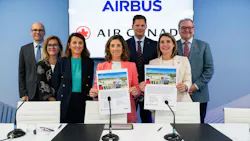
Air Canada and Airbus intend to establish a jointly funded platform aimed at accelerating commercial-scale sustainable aviation fuel production in Canada.
The companies plan to invest up to approximately CAD 13.7 million, or US$10 million, through the Sustainability Co-Investment Platform. The initiative will focus initially on advancing a Canadian SAF project toward a final investment decision.
Air Canada and Airbus said the investment could help stimulate a broader domestic SAF industry, provided supportive federal and provincial policies are established. Both companies also participate in the Canadian Sustainable Aviation Fuel Coalition, which advocates for policies supporting domestic production and improved price competitiveness.
“Through this joint initiative with Airbus, we are taking meaningful steps toward supporting domestic SAF production, helping corporate customers address the emissions associated with business travel, and contributing to a lower-carbon path for the industry,” said Valerie Durand, vice president of airport affairs, corporate real estate and sustainability at Air Canada.
The initiative also includes a corporate travel agreement through Air Canada’s Leave Less Travel Program, which allows participating companies to purchase verified environmental attributes associated with SAF.
Airbus has signed a five-year agreement under the program and will initially purchase environmental attributes associated with more than 60,000 liters of SAF. Air Canada will track greenhouse gas emissions connected with Airbus employee travel and retire the corresponding SAF attributes on the company’s behalf.
Airbus Chief Sustainability Officer Julie Kitcher said the agreement is intended to support both SAF production and demand in Canada.
“Decarbonizing aviation will require deep industry collaboration and decades of investment in new sources of renewable energy,” Kitcher said. “By launching this co-investment platform and making a long-term commitment to Air Canada’s Leave Less Travel Program, we will help stimulate the production of, and demand for, SAF in Canada.”
Air Canada said SAF will complement its fleet modernization efforts, including the introduction of more fuel-efficient aircraft such as the Airbus A321XLR and the Canadian-built Airbus A220.
A study commissioned by Airbus and conducted by consulting firm ICF estimates that producing enough SAF domestically to meet 40% of Canada’s aviation fuel demand by 2040 could contribute $32 billion to the country’s gross domestic product and support 140,000 jobs.
SAF is produced from renewable or non-fossil feedstocks and is designed to reduce life-cycle greenhouse gas emissions compared with conventional jet fuel.