Help Wanted in the Cockpit: Airlines Need to Hire Thousands of Pilots Over the Next Decade
CHICAGO — U.S. airlines have a retirement problem.
When the airline industry struggled after the Sept. 11, 2001 terrorist attacks and during the recession, pilot jobs were scarce. American Airlines went 13 years without hiring a single one, a stretch that David Tatum, the airline's director of pilot recruiting and development, calls "the lost decade."
"There was little career progression, so there was not a lot of motivation to learn to fly," he said.
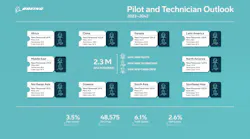
Hiring has resumed in recent years as demand for travel has grown. But a wave of upcoming retirements means airlines will need to replace thousands of current employees. Over the next 20 years, Boeing estimates that airlines will need to recruit about 131,000 commercial pilots in North America and 514,000 more throughout the rest of the world.
That's going to take more than a couple of help wanted ads. Airlines seek to rebuild the pipeline of aspiring pilots before they're left scrambling to fill cockpit seats — so they're getting involved in the hiring process earlier, increasing compensation and providing more coaching to students.
"Back when I was in school, you would leap at whoever offered you a job first," said Ryan Phillips, co-chair of the aviation and transportation department at Lewis University in Romeoville, Ill. "Students definitely have way more options now."
There's more than one way to become a pilot at a major airline, though all require commitment. Some people undertake expensive training at a flight school or university program before rising through the ranks at a smaller carrier, a process that can take years. Others join the military.
United Airlines and American Airlines say they aren't having trouble filling job openings, but want to make sure that remains the case. Airlines say they're hiring fewer pilots from the military, which means they lean more heavily on regional carriers to fill their ranks — but they don't want the regional airlines they work with to experience shortages either.
Some regional airlines had to cut flights between 2011 and 2017 because the carriers didn't have enough pilots to fly all their routes, but members of the Regional Airline Association are now having an easier time hiring, in part because salaries are rising, said Faye Malarkey Black, association president and CEO.
As recently as four years ago, starting salaries at regional carriers were as low as $25,000 a year, Wendy Evans, aviation program manager and recruiter at Parkland College's Institute of Aviation in Champaign, Ill., said in an email. Now, base salaries start around $45,000 to $55,000 annually, and some airlines offer extra signing bonuses, she said. The Regional Airline Association says members' typical entry-level compensation is even higher — around $63,000 including pay and bonuses.
———
©2019 the Akron Beacon Journal (Akron, Ohio)
Visit the Akron Beacon Journal (Akron, Ohio) at www.ohio.com
Distributed by Tribune Content Agency, LLC.