New Terminal One at JFK to Deploy Biometric Processing for U.S. Citizen Arrivals
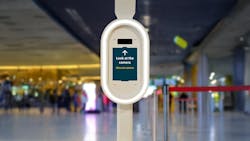
The New Terminal One at John F. Kennedy International Airport, in partnership with U.S. Customs and Border Protection (CBP), has announced the launch of Enhanced Passenger Processing (EPP), a biometric initiative designed to modernize the international arrivals experience for U.S. citizens.
EPP will be integrated into the arrivals process to support faster identity verification through advanced biometric technology. The system is intended to help eligible travelers move through inspections more efficiently while maintaining security requirements.
To support deployment, the terminal has partnered with biometric technology provider iProov. Travelers will not need to enroll in advance or pay to participate and may opt out in favor of the standard CBP inspection process.
“Technology and innovation are central to New Terminal One’s mission to redefine the travel experience,” said Marisa Von Wieding, vice president of operations at The New Terminal One. “This milestone reflects our commitment to delivering a seamless and secure journey for our guests. Our partnership with U.S. Customs and Border Protection has been instrumental in bringing this capability to life and setting a new benchmark for efficiency and facilitation in international travel.”
Francis J. Russo, director of field operations for CBP’s New York Field Office, said the technology supports both operational efficiency and security.
“Through our partnership with The New Terminal One, this technology allows CBP officers to verify identities more efficiently, reduce wait times for U.S. citizens, and better allocate resources—enabling officers to focus more time and attention on higher-risk travelers while maintaining a safe, orderly, and secure arrivals process,” Russo said.
Andrew Bud, founder and CEO of iProov, said the company’s biometric systems are already in use at multiple ports of entry and have processed millions of travelers. He noted the technology can enable faster crossings without requiring passengers to present documentation and allows officers to process families and groups together.
The New Terminal One is part of the Port Authority of New York and New Jersey’s $19 billion redevelopment of JFK Airport, which includes new terminals, expanded facilities, a ground transportation center and redesigned roadway access.
Construction of the all-international terminal is occurring in phases, with the first phase — including new arrivals and departures halls and an initial set of 14 gates — expected to open in 2026. Full completion is planned for 2030, when the 2.6-million-square-foot facility is projected to become the airport’s largest terminal.