Getting Your Money’s Worth

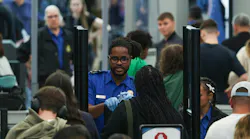
A new factoid I was unaware of: TSA’s average per-passenger screening cost is $6.70. Perhaps more interesting is that in Australia the figure is $3.50; in Copenhagen, Denmark it’s $3.20 . TSA’s web site this week (July 2018) says they currently collect a fee on your ticket of $5.60 per one-way trip, not to exceed $11.20 round trip. So in theory, they lose $1.10 of your tax dollars every time they touch you (no matter how many times and in how many places. But I digress.)
Any theories about the reasons? Why, yes, I do... thanks for asking. TSA is a huge governmental bureaucracy, with a fragmented presence among about 450 US airports, and an enormous administrative structure that has had 13 Administrators (including 7 listed as Acting) and countless reorganizations in its 17 years. Leadership has been inconsistent at best, and management of Federal Civil Service personnel difficult. Conversely, in our examples, in Australia (and much of Europe), airports are responsible for screening, often using private contractors. Further; where Qantas operates its own terminals, they are the dedicated contractor/screener. In Copenhagen, screeners are airport employees. In all such cases, they still operate under national regulations and meet the same certification and training requirements.
Certainly, there are other differences, not the least of which is the big target on the US in general and US carriers in particular, leading to a higher perceived threat level and in some cases more rigorous search protocols. But in Australia, meeters and greeters go through the checkpoint, which means significantly higher throughput and lower collected revenues per unit. In Copenhagen, 97% of passengers enjoyed less than 5 minutes wait time.
So, what’s the answer? One of the complaints heard most often is that TSA is the service provider, the regulator, the testing authority, the equipment buyer and budget provider, and the least likely entity to rat itself out when things go belly up. There are about 20 US airports now using private contract screeners, mostly smaller airports with low throughput, but also some major international ones such as SFO, MKC, and SEA. The foreign model has proven itself quite admirably, and 50% less expensive. Let’s let the airports manage their own local operational environment – faster, more efficiently, and cheaper; let the government stick to governing ... at least until they figure out how do it right.
About the Author
 Art Kosatka
CEO
Art Kosatka is CEO of TranSecure, an aviation consultancy in Virginia. He'll respond to questions or comments at [email protected].