Aether Fuels Produces ASTM-Compliant Synthetic Aviation Fuel in Integrated Demonstration
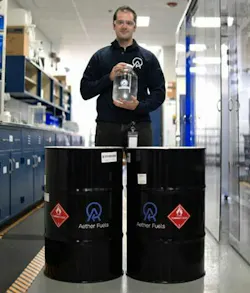
Aether Fuels has successfully operated a fully integrated demonstration line producing synthetic aviation fuel that meets ASTM D7566 specifications, marking a step toward commercial deployment of its Aurora sustainable aviation fuel (SAF) technology.
The demonstration, conducted at RTI International in North Carolina, combined Aether's 2.5-barrel-per-day Aurora Tri-Converter and Upgrader units with RTI's existing Fischer-Tropsch reactor. The system converted renewable natural gas derived from Kentucky landfill gas and captured industrial carbon dioxide into fully upgraded synthetic aviation fuel.
Independent testing by AmSpec confirmed that fuel samples met the applicable ASTM D7566 specifications for Fischer-Tropsch Synthesized Paraffinic Kerosene (FT-SPK). Under the standard, qualifying FT-SPK can be blended with conventional jet fuel at concentrations of up to 50% without modifications to existing aircraft or airport fueling infrastructure.
"This demonstration proves Aether's ability to scale up our integrated Aurora platform, take a feedstock through the complete end-to-end process, and produce on-spec synthetic aviation fuel," said Dhaval Shah, chief technology officer of Aether Fuels.
The demonstration builds on previous testing of Aether's standalone Tri-Converter technology and provides engineering data for the company's planned Project Beacon facility in Singapore.
Project Beacon is designed to produce approximately 2,000 metric tons of SAF annually, equivalent to 50 barrels per day. Aether said the latest demonstration will inform the facility's design and help reduce technical risks ahead of commercial deployment.
The company is also developing additional commercial projects intended to produce ASTM-compliant SAF. Aether projects that fuel from these facilities could achieve lifecycle greenhouse gas emissions reductions exceeding 70% compared with conventional fossil jet fuel.
Aether CEO and co-founder Conor Madigan said the integrated demonstration follows the company's earlier work validating individual components of the Aurora platform and scaling up its technology in standalone demonstration units.