Incheon Becomes World’s Busiest Airport for International Traffic
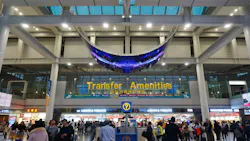
South Korea’s Incheon International Airport became the world’s busiest airport for international passenger traffic during the first half of 2026, as disruption in the Middle East and growing tourism to South Korea reshaped global travel patterns.
Incheon handled 38.39 million international passengers during the first six months of the year, according to preliminary figures compiled by Airports Council International. London Heathrow ranked second with 37.79 million international passengers, followed by Singapore Changi Airport with 34.53 million.
ACI said the preliminary figures remain subject to final validation, with finalized data expected to be released next month.
The ranking marks the first time Incheon has led the world in international passenger traffic since opening in 2001. The airport ranked third in both 2024 and 2025.
Incheon’s international passenger traffic increased 6.3% year over year during the first half of 2026, with the airport benefiting in part from changes in international travel patterns following the conflict involving Iran.
Dubai International Airport, which led the world in international passenger traffic last year, experienced a sharp decline after the conflict began in late February. International passenger traffic at Dubai fell from 7.4 million in February to 2.5 million in March before recovering to about 4.7 million in June, according to ACI data reported by the Financial Times.
The disruption has shifted some traffic that previously connected through Middle Eastern hubs toward direct Europe-Asia flights and connections through Asian airports. The number of passengers traveling from Europe to Incheon for connecting flights increased by about two-thirds during the first half of 2026 compared with the same period last year.
Overall transfer traffic at Incheon increased 18%, according to reports.
South Korea’s growing tourism industry has provided another boost. Foreign travelers accounted for 39.3% of Incheon’s passengers during the first half of the year, up from 35.2% for all of 2025. That share reached a record 44.4% during the second quarter, with increased travel from China and Japan contributing to the growth.
Incheon has also expanded its ability to accommodate growing passenger volumes. A four-phase expansion completed in late 2024 increased the airport’s annual capacity to 106 million passengers.
The airport currently serves 101 airlines connecting passengers to 183 cities, including 158 international passenger destinations.
Atlanta Hartsfield-Jackson International Airport remains the world’s busiest airport by total passenger traffic, a ranking that includes domestic as well as international passengers.