MCI Rebuilds Primary Runway to Improve Flow and Reduce Long-Term Costs
Five Things You'll Learn
- How runway reconstruction can improve both performance and long-term cost efficiency.
- Why optimizing taxiway geometry reduces runway occupancy time and improves flow.
- How aligning airfield projects with terminal development enhances overall operations.
- What role construction phasing plays in maintaining airfield capacity during major work.
- How sustainability strategies can reduce costs and environmental impact in airfield projects.
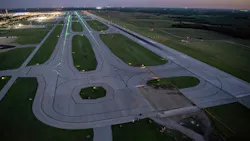
By consolidating high-speed exits after optimizing their placement, the project reduced overall pavement area — lowering upfront construction
costs and long-term maintenance needs for MCI.
At Kansas City International Airport, rebuilding a runway was about more than replacing aging pavement. It was an opportunity to improve how the airfield functions for decades to come.
The Runway 1L-19R and High-Speed Connectors Reconstruction project completed a $99 million, multi-year effort to modernize one of the airport’s primary airfield assets. Finished in December 2025, the project replaced more than 60-year-old pavement with a new concrete runway and reconfigured taxiways to improve efficiency and support operations at the airport’s new terminal.
Winning Category: Runway/Ramp, Medium Size Airport
- Project Name: Runway 1L-19R & High-Speed Connectors Reconstruction
- Airport: Kansas City International Airport
- Cost: $99 million
- Completion Date: December 2025
- Key Players: City of Kansas City Aviation Department; HNTB; Ideker, Inc.
“This project was initiated to replace a runway that had reached the end of its structural service life,” said Matthew Walsh of HNTB Corporation. “The goal was to maintain safe, reliable operations while supporting the airport’s transition to a new single-terminal configuration.”
Improving Airfield Flow Through Strategic Design
Beyond pavement replacement, the project focused on improving how aircraft move across the airfield.
High-speed exit taxiways were realigned and consolidated to meet updated FAA geometry standards and optimize aircraft flow into the airport’s new terminal. The updated configuration reduces runway occupancy time, allowing aircraft to clear the runway more quickly and improving overall efficiency.
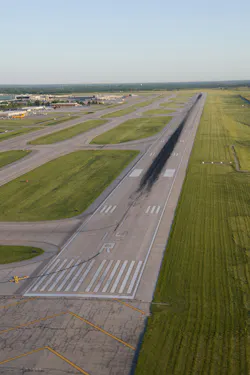
“Strategic realignment of the high-speed taxiways improved aircraft flow and reduced runway occupancy time,” Walsh said. “It also allowed the airport to reduce excess pavement area and lower long-term maintenance costs.”
The project also aligned closely with the opening of the new terminal and upcoming regional milestones, including the 2026 FIFA World Cup. This coordination ensured the airfield would be ready to handle increased demand while maintaining operational reliability.
Delivering Reliability Through Phasing and Coordination
Maintaining operations during construction was a central challenge across the four-year program.
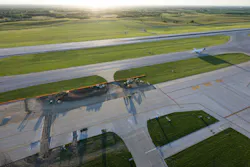
The project was deliberately phased to preserve runway availability during critical winter months, ensuring the airport maintained two operational runways for snow events and airfield maintenance. High-speed taxiway work was sequenced to limit impacts to a single construction season where possible.
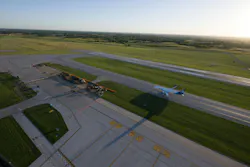
“Construction was carefully phased to align with operational priorities and minimize disruption,” Walsh said. “Early and continuous coordination with airport operations, the FAA and other stakeholders was essential to maintaining safe and reliable service.”
The project also incorporated sustainability measures, including the reuse of recycled crushed concrete as subbase material and improvements to drainage systems using cured-in-place pipe techniques.
Additional upgrades included new lighting, signage and electrical infrastructure, much of which was installed ahead of future program phases to avoid additional pavement disruption.
The result is a more durable and efficient airfield system that strengthens reliability while reducing long-term maintenance needs.
For airport leaders, the takeaway is clear. Strategic runway reconstruction can do more than extend asset life. When paired with operational improvements and careful phasing, it can improve efficiency, reduce costs and better align infrastructure with future demand.
About the Author

Joe Petrie
Editor & Chief
Joe Petrie is the Editorial Director for the Endeavor Aviation Group.
Joe has spent the past 20 years writing about the most cutting-edge topics related to transportation and policy in a variety of sectors with an emphasis on transportation issues for the past 15 years.
Contact: Joe Petrie
Editor & Chief | Airport Business
+1-920-568-8399
>> To download the AviationPros media kits, visit: Marketing Resource Center
>>Check out our aviation magazines: Ground Support Worldwide | Airport Business | Aircraft Maintenance Technology