Treating PFAS at Airports: A Practical, Sustainable Path Forward
Five Things You’ll Learn
- Why airports are under scrutiny for PFAS and how AFFF use and public perception shape the conversation
- How PFAS behaves differently than traditional contaminants, complicating remediation and long-term risk management
- The limits of current treatment options, including the cost and long-term commitment of pump-and-treat systems
- How emerging approaches like in-situ and nature-based solutions are being used to control plume migration
- What airport leaders should prioritize first, from site modeling to evaluating lifecycle costs and regulatory uncertainty
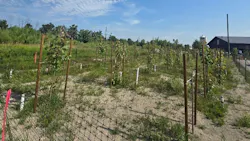 A PEIR Barrier field study. PEIR Barrier does not require large trees near runways or flight lines. Designs can be adapted to airport environments by carefully selecting for “best-fit” species and appropriate locations.
A PEIR Barrier field study. PEIR Barrier does not require large trees near runways or flight lines. Designs can be adapted to airport environments by carefully selecting for “best-fit” species and appropriate locations.
As per- and polyfluoroalkyl substances (PFAS) become a growing environmental and regulatory concern, airports increasingly find themselves at the center of that conversation. Often, when PFAS are detected in groundwater or surface water, airports are among the first facilities examined.
That scrutiny is understandable. For decades, the Federal Aviation Administration (FAA) required airports to use aqueous film-forming foam (AFFF) for firefighting and training, long before PFAS were identified as threats to human health and the environment. At the same time, public perception and regulatory attention do not always reflect the complexity of a local PFAS concern, often assuming the mere presence of an airport in their community is the cause of the PFAS issues they are observing in groundwater and surface water resources.
AFFF use has varied significantly from airport to airport. Firefighting training frequency, emergency response practices, foam storage volumes and even whether an airport relied on its own fire services or external responders all influence whether PFAS have potentially been released and if so, whether those releases have reached groundwater or surface water.
Complicating matters further, PFAS can originate from a wide range of non‑airport sources, including industrial discharges, landfills, biosolids applications, municipal wastewater, atmospheric deposition and residential septic systems. In some cases, airports house or sit adjacent to those same potential source areas. These overlapping features between potential airport sources and those from the surrounding community can complicate efforts to determine where PFAS originated, how it is migrating and which party bears responsibility.
Regardless of source attribution, airports often face heightened pressure to demonstrate that they are eliminating or controlling PFAS source zones and that they are responsibly and proactively managing PFAS in groundwater.
PFAS Is Different for Airports
Airport environmental teams, as well as regulators, are familiar with managing historic contaminants associated with operations such as hydrocarbons and deicing chemicals. PFAS presents a fundamentally different challenge for several reasons. PFAS are highly persistent in the environment, don’t degrade naturally, are mobile in groundwater and surface water, and their chemistry and behavior are more complex than the chemicals airports are used to addressing. These factors contribute to challenges in their management.
Adding to the challenge is that PFAS are only recently regulated, are regulated at very low levels and are poorly understood. There is far more regulatory uncertainty in terms of the desired clean up levels (State vs. Federal), the number of individual PFAS where clean up values have been generated (or may be generated soon) and regulatory acceptable means of treating and disposing of PFAS containing materials.
Where agencies have set standards, such as federal maximum containment levels for drinking water, they are set at levels in the part per trillion range — orders of magnitude lower than other contaminants. Given the understanding of PFAS remediation is in the early stages of development, there are limited cost-effective options for treatment and there is currently no reliable in‑situ technology that destroys them in groundwater.
Even when a PFAS source area is removed or isolated, residual PFAS stored in soil and aquifer materials can continue to migrate for decades.
This persistence changes the risk calculus. Airports are often located in areas adjacent to or near surface water bodies, so they must consider impacts to sensitive ecological receptors in addition to impacts on human receptors. If it is determined that PFAS have exited or will likely exit the airport property, then some form of remedial action will be required.
Limits of Traditional PFAS Treatment
Pump-and‑treat systems remain an important tool for managing contaminated groundwater, and in some cases they are necessary. However, they are expensive to build and operate, are energy intensive and often misaligned with airport sustainability plans. Over time, these systems generate secondary waste streams that must be managed and disposed of properly.
Given low level treatment standards, the decision to commit to a pump and treat approach can, for PFAS, be a commitment that lasts for generations. Currently some airports are exploring a variety of approaches to avoid the need for a pump-and-treat system, focusing mainly on addressing the source and then using in-situ approaches to treat the groundwater.
In situ treatment approaches, such as injecting carbon-based amendments, can immobilize PFAS and slow plume migration. These technologies can be effective, but they are not permanent. PFAS sorb to carbon relatively quickly, but the sorption is impermanent, and some PFAS will be released from the media slowly over time. This means that the remedy performance can decline and additional applications may be required. Short-chain PFAS compounds, which are increasingly part of regulatory discussions, are particularly difficult to capture using conventional sorbents.
For airport decisionmakers, the challenge is not choosing a single “best” technology, but understanding the limitations, lifecycle costs and long-term obligations associated with each option.
A Natural Barrier
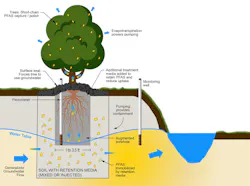
The Phyto-Enhanced In‑Situ Remediation Barrier, or PEIR Barrier™, was developed by WSP as a hybrid, nature-based enhancement to established in‑situ treatment approaches. The concept integrates three elements:
- Carbon-based retention media installed in the subsurface to immobilize PFAS
- A managed hydraulic gradient that encourages groundwater to move through the treatment zone
- Vegetation with high water uptake that enhances groundwater and short chain PFAS capture, and system resilience
PEIR Barrier is not designed to destroy PFAS or replace other remediation technologies. Instead, it is intended to intercept and control PFAS plumes, particularly in shallow groundwater systems where contamination is migrating toward surface water, wetlands or other sensitive receptors.
By improving groundwater contact with treatment media and slowing contaminant migration, the system helps reduce risk while minimizing energy use and mechanical complexity.
Naturally, the use of vegetation immediately raises concerns for airport operators, and rightly so. Airports work diligently to minimize wildlife hazards, and trees are often viewed as potential bird attractants.
PEIR Barrier does not require large trees near runways or flight lines. Designs can be adapted to airport environments by carefully selecting for “best-fit” species and appropriate locations. In many cases, smaller shrubs or high-density plantings with significant water uptake can provide the desired hydraulic benefit without creating wildlife concerns. Where trees are used, they are typically located along downgradient boundaries, perimeter areas or along stormwater features, well away from aircraft operations.
Species selection focuses on water uptake rather than canopy size or habitat value. The goal is not to create a landscaped amenity, but to enhance groundwater movement toward treatment media in a controlled and operationally compatible manner.
Science Behind the Approach
Carbon-based media forms the backbone of the PEIR Barrier system. Long-chain PFAS compounds rapidly sorb to carbon, and while the bond is not permanent, release occurs slowly. This significantly reduces the rate at which PFAS migrates through groundwater.
Vegetation adds an important enhancement. Through evapotranspiration, plants act as nonmechanical pumps, drawing groundwater toward the treatment zone. This improves contact between contaminated groundwater and the carbon media, increases retention time – while adding an element of hydraulic control.
Importantly, the system continues to function even during dormant seasons, as the carbon media remains active year-round.
Field data shows that PFAS uptake in plants follows seasonal nutrient cycling. PFAS concentrations in leaves tend to increase during the growing season, but much of that mass returns to the root zone and soil in the fall rather than being exported via leaf drop. The design intentionally limits PFAS accumulation in plant tissue by incorporating additional sorbent media in the root zone to reduce ecological exposure and eliminate the need for harvesting or managing what might otherwise be contaminated biomass.
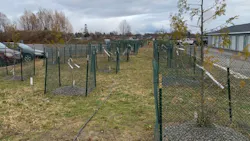
The effectiveness of PEIR Barrier is no longer theoretical. A multi-year field study in Michigan demonstrated substantial reductions in PFAS concentrations within the treatment zone and significant declines in downgradient groundwater concentrations. The system achieved these results without generating secondary waste streams and at a fraction of the lifecycle cost associated with traditional pump-and-treat systems.
Importantly for airports, the system operates with minimal energy demand and limited mechanical infrastructure. When components require attention, maintenance often involves straightforward actions, such as replacing vegetation rather than repairing complex equipment.
What’s Right for Your Airport
For airport leaders, the most important first step is not selecting a technology, but developing a clear conceptual site model. Understanding PFAS sources, migration pathways and potential receptors is essential before committing to any remediation approach.
Not every airport with historical AFFF use is actively impacting groundwater, and some are affected by PFAS originating off site. Risk reduction should come before technology selection. If a drinking-water supply or sensitive surface water is at risk, interim measures may be needed regardless of long-term remediation plans.
From there, airports should evaluate multiple technologies, understand their limitations and avoid one-size-fits-all solutions. Given how rapidly the PFAS regulatory landscape is evolving, airports should be cautious of unproven claims, and where possible, pilot test promising approaches before full-scale deployment.
Where PEIR Barrier Fits Best
PEIR Barrier is best suited for airport sites with shallow groundwater where PFAS are migrating toward surface water bodies, wetlands or downgradient receptors. Perimeter areas, buffer zones and stormwater retention or infiltration features often present opportunities for application without interfering with flight operations.
The technology is less effective for deep drinking-water aquifers or sites requiring immediate, high-volume extraction. In those cases, PEIR Barrier may still play a complementary role, but it is unlikely to be a stand-alone solution.
PEIR Barrier is most effective when used as part of a broader PFAS management strategy. It offers airports a low-energy, adaptable option for controlling plume migration and reducing long-term risk, particularly where sustainability goals and operational constraints make traditional systems challenging.
At WSP, our role is to act as an honest broker — helping airports match solutions to site conditions, regulatory realities and long-term objectives. In the evolving PFAS landscape, thoughtful, integrated approaches will be essential.
PEIR Barrier is one tool in that toolbox, offering a practical path forward when applied in the right context.
About the Author
 Len Mankowski
Len Mankowski
Vice President of Emerging Contaminants Research and Development
Len Mankowski, CPG, is vice president of emerging contaminants research and development at WSP in the U.S.
 Robert Cipolletti
Robert Cipolletti
Senior Vice President and Senior Technical Director of Geology
Robert Cipolletti, CPG, is senior vice president and senior technical director of geology at WSP in the U.S.