Trump Administration Could Have a Big Impact on Aviation
With President-Elect Donald Trump taking office in January, transportation has surfaced as a major area of concern for the incoming administration.
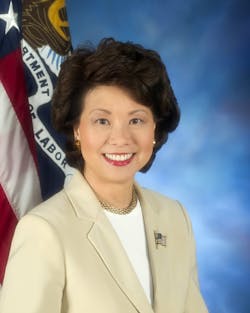
Trump said he wants to spend $1 trillion on U.S. infrastructure needs during the next decade and took his first steps towards creating his vision with the appointment of Elaine Chao as secretary of transportation.
While a lot of rhetoric is heating up on Capitol Hill already, there are still a lot of questions as to how transportation as a whole and the aviation sector will be impacted by the new administration.
“Elaine Chao, I think her focus will be on infrastructure and infrastructure is really going to turn on how much money and how much authority Congress will give the administration to work in that space,” said Katie Thomson, partner and chair of the transportation group for Morrison & Foerster. “And it’s exciting because it sounds like something will be done, but the question is whether it’s going to be enough to be a sustainable, lasting, meaningful investment in infrastructure from airports, aviation and transportation all across the transportation sector.”
Many Unknowns
Thomson said Chao is the consummate Washington insider, but hasn’t spoken or written on transportation issues since she left the U.S. Department of Transportation in the early 1990s, so it’s hard to get a read on her personal policies might be in the sector, tough she’s generally inclined to relieve regulatory burdens wherever possible, but she hasn’t signaled any areas in the past 25 years in regards to aviation or airports.
“That actually could be a good thing because she may be open to creatively thinking about and addressing issues,” Thomson said. “It could be a bad thing if she just decides that what the airports and aviation are sort of on autopilot, so they’re good to go and really don’t require much attention.
Thomson said she doesn’t see any significant regulation changes from Chao in the aviation space because the Federal Aviation Administration (FAA) has been moving to safety management systems (SMS) in a proactive gathering of data and risk assessment, which has been well received and bought into by stakeholders.
Drone regulation needs additional regulation, Thomson said in order to integrate them into the airspace.
“If we stop today, the economic and societal benefits of drones would never be fully recognized, so the FAA has to figure out some way to move forward with that,” she said.
Thomson said she expects Chao to be receptive to FAA’s move away from prescriptive command and control “you got to design it this way in order for it to be safe,” oversight to more performance-based design standards allowing for greater flexibility in the regulated community.
“That’s just a smarter way of doing regulations, so that’s a trend that I expect to see continue,” she said.
Of the $1 trillion Trump has said he will spend on infrastructure, Thomson said the administration hasn’t given any indication of where the money will come from or what it will fund, so there’s no clear answer on how the aviation sector could change.
“It’s all in play and as I said, the president-elect seems very sincere about making those investments, but I think it’s going to be a bit of a free-for-all as people fight over what this infrastructure investment should look like, how it’s going to be paid for, is it going to be private investment, is it going to be public funding, is it going to be some combination of the two and where will it go,” she said.
Buy America requirements also face an unknown future with the new administration. Trump’s rhetoric on the campaign trail suggested a strengthening of Buy America requirements for federally funded projects, Thomson said, but because of the impact they have on a business perspective, it’s also possible the policy will be eroded.
“Think it’s a question of what policies a Trump administration will actually pursue as opposed to what he has said to-date,” Thomson said. “I do think there’s a possibility of strengthening of Buy America. That certainly would be consistent with what the president-elect has said.
While grant allotments for sustainability efforts will be decided by Congress, Thomson said she expects to see an erosion of efforts by DOT to make the transportation system more energy efficient and environmentally friendly. However, she expects local governments already seeing payoffs from these types of projects to continue these efforts despite a lack of federal support.
“It’s always nice to have the support of the federal government, but in this case there’s such a groundswell of momentum that has taken place the last eight to 10 years that you really can’t just rollback,” Thomson said.
Thomson said there the incoming administration has been silent on changes to the Passenger Facilities Charge (PFC), but it depends if Congress sees them as a tax or a user fee. While airport interests characterize the PFC as a user fee, a Republican Congress isn’t likely to increase any form of tax or user fee, she said.
Air Traffic Could See Changes
Rep. Bill Schuster (R-PA), has signaled plans in the media to revive a bill for air traffic control privatization in 2017. Chao hasn’t signaled her position on the issue yet to-date, but Thomson anticipates that she will be supportive of commercialization of the air traffic control system.
“My sense is this has the best chance it has ever had to pass Congress and get signed into law,” Thomson said. “I think it holds tremendous promise, but again, I think the critical issues there are going to be how do you spin it off and what is the source of long-term funding for this new air traffic control system going to look like.”
Trump has been very anti-trade, Thomson said, and this could have a major impact on international agreements for airlines. The federal government has pursued open skies agreements for the past 20 years, but called by the administration to halt trade agreements decimate these agreements and international traffic.
“There seems to be this push to put international aviation in the same bucket with general trade, which could undermine the open skies policies that have served the country so well to-date,” Thomson said. “I think you’ll have to keep a close eye on that to see whether a Trump administration is going to push (this effort).
About the Author
 Joe Petrie
Editor & Chief
Joe Petrie is the Editorial Director for the Endeavor Aviation Group.
Joe has spent the past 20 years writing about the most cutting-edge topics related to transportation and policy in a variety of sectors with an emphasis on transportation issues for the past 15 years.
Contact: Joe Petrie
Editor & Chief | Airport Business
+1-920-568-8399
>> To download the AviationPros media kits, visit: Marketing Resource Center
>>Check out our aviation magazines: Ground Support Worldwide | Airport Business | Aircraft Maintenance Technology