JFK Builds Energy Backbone for $19B Redevelopment
Five Things You'll Learn
- How early infrastructure delivery can accelerate large-scale airport redevelopment programs.
- Why upgrading from 5kV to 15kV systems improves long-term reliability and scalability.
- How a phased energization strategy can reduce schedule risk on complex projects.
- What it takes to build critical infrastructure in a highly constrained airport environment.
- How coordination across multiple projects keeps large redevelopment programs on track.
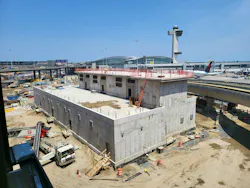
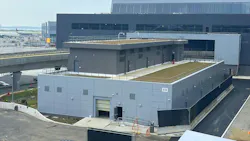 CS2 is in front, New Terminal One is in the background, and AirTrain is on the left. As a 2-story structure with green roof and textured metal panels aligned, the substation blends seamlessly into the airport’s modern landscape.
CS2 is in front, New Terminal One is in the background, and AirTrain is on the left. As a 2-story structure with green roof and textured metal
panels aligned, the substation blends seamlessly into the airport’s modern landscape.
At airports, some of the most critical projects are the ones passengers never see.
At John F. Kennedy International Airport, Central Substation 2 (CS2) provides the power infrastructure needed to support one of the largest airport redevelopment programs in the United States. Completed in September 2025, the facility serves as the energy backbone for the Port Authority of New York and New Jersey’s $19 billion transformation of JFK.
The 40 MVA substation replaces aging electrical infrastructure with a modern 15kV distribution system designed to support new terminals, roadways and supporting facilities. Beyond meeting immediate needs, the system establishes a scalable platform for long-term growth across the airport.
Winning Category: Operations
- Project Name: Central Substation 2
- Airport: John F. Kennedy International Airport
- Cost: Not disclosed
- Completion Date: September 2025
- Key Players: Port Authority of New York and New Jersey; HNTB Corporation
“The project was designed to deliver reliable, resilient power to support the JFK redevelopment program and future expansion,” said Yemi Oso of HNTB Corporation. “It creates a modern energy backbone that allows the airport to grow while meeting strict delivery milestones.”
Delivering Critical Infrastructure in a Constrained Environment
Building that backbone required overcoming significant physical and operational constraints.
The substation site was bordered by the AirTrain, active roadways and major terminal construction, all within strict height limits and high groundwater conditions. These factors required a compact, two-story design and careful coordination to avoid conflicts with adjacent projects.
At the same time, the project was delivered on an aggressive 30-month schedule, well below typical timelines for similar infrastructure. The team used a design-build approach to enable real-time coordination and divided the work into phased packages to allow design and construction to progress in parallel.
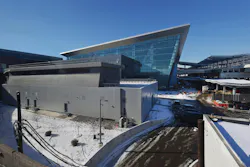
“The challenge was delivering a large-scale substation in a constrained footprint while maintaining operations and coordinating with multiple projects,” Oso said. “Phased delivery, early procurement and continuous coordination made that possible.”
The team also adjusted the substation footprint early in the process, shifting the building more than 30 feet to accommodate utilities for adjacent terminal projects. This proactive coordination helped prevent downstream conflicts and kept the broader redevelopment program on track.
Powering the Program and Accelerating Delivery
One of the most significant innovations came in how the substation was brought online.
To meet critical terminal construction milestones, the team implemented a first-of-its-kind “2-in-1” energization approach in coordination with Con Edison. This allowed portions of the substation to be energized early, providing power to the redevelopment program while remaining systems were still under construction.
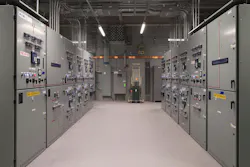
This approach reduced schedule risk and ensured that power availability would not delay other major projects across the airport.
The facility also incorporates advanced monitoring and control systems, along with a compact design using cast-coil transformers to improve safety and reduce space requirements. A green roof and energy-efficient systems support sustainability goals, with the project tracking toward LEED Silver certification.
Throughout construction, the team installed more than 60,000 linear feet of feeders across an active airport environment without disrupting operations. Careful sequencing, maintenance-of-traffic planning and coordination with airport operations ensured continuous service for passengers and airlines.
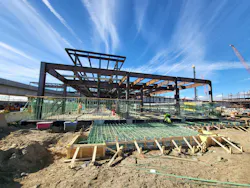
The result is a project that delivers both immediate and long-term value. CS2 enables the timely delivery of new terminals while providing the resilient infrastructure needed to support future growth.
For airport leaders, the takeaway is clear. Foundational infrastructure delivered early in a capital program can create certainty for everything that follows.
About the Author
 Joe Petrie
Joe Petrie
Editor & Chief
Joe Petrie is the Editorial Director for the Endeavor Aviation Group.
Joe has spent the past 20 years writing about the most cutting-edge topics related to transportation and policy in a variety of sectors with an emphasis on transportation issues for the past 15 years.
Contact: Joe Petrie
Editor & Chief | Airport Business
+1-920-568-8399
>> To download the AviationPros media kits, visit: Marketing Resource Center
>>Check out our aviation magazines: Ground Support Worldwide | Airport Business | Aircraft Maintenance Technology