Why Restrooms are Airports' Hidden Revenue Lever this Holiday Season
Five Things You’ll Learn from this Article
-
Why restrooms directly influence non-aeronautical revenue—and how poor hygiene quietly suppresses holiday spending on food, retail, and services.
-
The hidden passenger experience gap between expectations and reality—and why inclusive hygiene is becoming a competitive differentiator for airports.
-
How data-driven cleaning can prevent runouts and complaints by shifting teams from fixed cleaning loops to real-time operational response.
-
What high-capacity, easy-to-refill systems can do for holiday throughput, from reducing queues to freeing staff time for higher-value tasks.
-
Actionable upgrades that turn a cost center into a revenue lever, improving passenger trust, satisfaction scores, and time spent on the concourse.
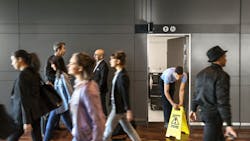 An airport custodial team member prepares a restroom during peak passenger flow, underscoring how real-time hygiene operations support smoother holiday travel and improved non-aeronautical revenue opportunities.
An airport custodial team member prepares a restroom during peak passenger flow, underscoring how real-time hygiene operations support smoother holiday travel and improved non-aeronautical revenue opportunities.
The holidays are the time of year when many airports see their highest volumes of foot traffic. However, for airport operators focused on maximizing non-aeronautical revenue during this period, a surprising barrier is hiding in plain sight: the restroom. Recent research reveals that 23% of people deliberately limit what they eat and drink to avoid using public restrooms at large, and 28% simply spend less time and money in a venue after a poor restroom experience.
The issue stems from a major experience gap – while people have high expectations for restroom cleanliness (74% expect moderate or high levels of hygiene), data shows that fewer than a third (20%) feel those expectations are met. And it goes deeper than cleanliness: with 54% of people contending with some form of physical or cognitive challenge – for example, someone with arthritis who struggles to operate product dispensers, or someone with sensory sensitivities who finds noise from jet air dryers overwhelming – conventional restroom designs often create a stressful experience for many passengers. The result? This key touchpoint turns into a source of anxiety, rather than comfort.
Non-aeronautical revenue can represent a large share of airport income, which means small gains matter, especially during the busiest time of year. As restroom quality majorly impacts passengers’ comfort and willingness to spend on the concourse, it’s critical for airport facility managers to ensure that cleaning practices are up to par. Here are three ways hygiene operations can unlock hidden value for airports this holiday season:
Tip #1: Design for every traveler: Inclusive hygiene as a growth strategy
To ensure airport facilities consistently deliver an excellent experience, it’s important to think about delivering inclusive hygiene in restrooms – this idea of meeting the hygiene needs of as many people as possible. Many barriers to hygiene are invisible – meaning restroom hygiene that “works for most” can still undermine satisfaction for many. The business opportunity for airports is significant: when travelers feel seen and accommodated, they may spend more time on the concourse, make more purchases, and share their positive experiences with friends or online. Inclusive hygiene underscores three principles: keep spaces clean and safe, make them comfortable and private, and demonstrate care through clear communication. Together, these improve the facility’s reputation as an airport of choice.
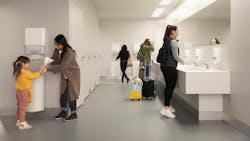
These are a few fixes for airport facilities to help drive inclusive hygiene:
- Offer paper hand towels instead of loud air dryers to deliver a calmer, less triggering environment.
- Implement certified easy-to-use dispensers that require low force to operate, so more travelers can easily wash and dry their hands.
- Standardize dermatologically tested soaps and sanitizers that are gentle on skin to minimize irritation, especially helpful for those with skin conditions.
- Provide family rooms, adult changing tables, stroller-friendly layouts, and varied surface heights to accommodate parents, companions, and mobility devices.
Tip #2: Move from reactive to proactive cleaning
During holiday peaks, the traditional strategy of cleaning restrooms on a fixed schedule is not sufficient to keep up with the increased demand. When cleaning teams walk the same loops regardless of foot traffic, some restrooms are over-serviced while others run out of soap or towels after a few large flights take off or land in the area. Empty dispensers are among the most common complaints, but they can be easily avoided with data-driven cleaning technology. Connected dispensers and people-counters share real-time data with cleaning staff to direct them to the right restroom at the right moment. Alerts allow cleaners to prevent runouts proactively, keeping dispensers consistently stocked and eliminating unnecessary checks.

Instead of rushing through fixed cleaning rounds, cleaners act on targeted interventions and face fewer escalations during peak times. Dynamic redeployment helps teams absorb sudden surges from banked departures, late inbound clusters, or weather delays without slipping into crisis mode. The time savings could add up to hundreds of hours per year that can be reallocated to higher-value tasks like passenger touchpoint disinfection and quick-turn resets of key hygiene products between heavy waves of flights. For airport facility and operations professionals, the lever is straightforward: re-scope shift plans around live data rather than fixed cleaning loops.
Tip #3: Upgrade to high-capacity systems
When restroom traffic spikes, hygiene product dispenser jams, runouts, and slow refills turn into queues at the sinks, rising passenger complaints, and lost minutes every shift. One fix is to standardize high-capacity, easy-to-refill dispensers with one-at-a-time dispensing. These systems cut down on the need for frequent refills, prevent product waste, and keep lines moving – helping passengers get out of the restroom and to their gates, or to concessions or retail stores, more quickly. Consistency matters: one study showed that a 1% increase in customer satisfaction can lead to a 1.5% growth in airport revenue. Bottom line: peak-ready, high-capacity systems turn a chronic bottleneck into a reliable, low-touch experience that supports more efficient cleaning and measurably improves passenger satisfaction during the busiest weeks of the year.
Turning a holiday hygiene liability into a long-term advantage
Restroom hygiene is not just a series of tasks on a checklist; it’s a critical driver of operational efficiency, passenger satisfaction, and revenue growth. Inclusive hygiene, data-driven cleaning technology and high-capacity systems are just a few ways airports can build hygiene protocols that improve traveler trust and help to capture more spending from customers during the holidays. Ultimately, the airports that win this holiday season and beyond will be those that recognize restroom hygiene not as a cost center, but as a strategic revenue driver that keeps passengers comfortable, spending, and coming back.
About the Author
 Katrin Ferge
Katrin Ferge
Regional Manager, Commercial
Katrin “Kat” Ferge is the North American Regional Marketing Manager for Professional Hygiene – Commercial segment at Essity. In her role, she is focused on Essity’s professional hygiene brand Tork and helping businesses including office buildings, recreational facilities, passenger terminals and educational institutions leverage better hygiene for better business performance. She has more than 15 years of experience in brand communications and marketing. Kat received her bachelor’s degree from Ludwigshafen University of Business and Society in Germany and later received her MBA from the Thunderbird School of Global Management at Arizona State University.