Why Airport Dining Is Becoming a Strategic Passenger Experience Tool
Five Things You’ll Learn from this Article
-
Why dining has become a strategic lever for passenger experience and revenue
-
How early concessions input improves terminal design and operations
-
What balance of local and national brands works best in airports
-
How dining programs can better support delays and demand surges
-
Why flexible RFPs and data-driven decisions matter more than ever
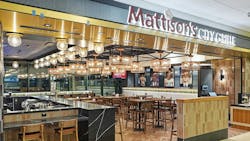 Intentional food and beverage programs are becoming a core part of terminal planning as airports look to enhance the passenger experience and non-aeronautical revenue.
Intentional food and beverage programs are becoming a core part of terminal planning as airports look to enhance the passenger experience and non-aeronautical revenue.
For decades, airport dining was treated as a functional necessity—something to fill empty space and capture a captive audience. Today, that mindset is rapidly changing. Airports are increasingly recognizing food and beverage programs as a strategic component of the passenger experience, one that can influence dwell time, non-aeronautical revenue and even how travelers remember a city.
According to Alice Cheung, senior director of brands and concepts at Paradies Lagardère, the shift reflects a broader evolution in consumer expectations—and in how airports think about their role as gateways to a region.
“Consumers got a lot smarter about food, and airports had to catch up,” Cheung said. “Years ago, airport dining was a snack stand with hot dogs and nachos. Then national brands came in, which was progress. But the real shift happened when people started caring about where food comes from and who’s making it.”
That realization—that airports serve as the first and last taste of a city—sparked the industry’s focus on sense of place. Today, intentional dining is less about novelty and more about experience, authenticity and relevance.
“It’s not just about feeding people anymore,” Cheung said. “It’s about giving travelers a genuine experience of where they are, even if they’re only passing through.”
Dining as Strategy: Planning, Design and Revenue
One of the most significant changes Cheung sees is how early airports are integrating food and beverage considerations into terminal planning, renovations and gate-area design.
“The smartest airports bring concessionaires into the conversation long before the concrete is poured,” she said. “They want to understand how much space is actually needed, where bottlenecks occur and how design can support—not hinder—the dining experience.”
Early collaboration helps prevent strong concepts from being forced into poorly designed spaces later, while allowing dining programs to support passenger flow and operational efficiency. From kitchen layouts to flexible seating, dining is increasingly part of how terminals are designed to function during both peak periods and irregular operations.
What Airport Capital Leaders Should Know About Dining
- Food and beverage programs are increasingly influencing terminal layout, adjacencies and circulation planning
- Early collaboration with concessionaires can reduce costly retrofits and design conflicts
- Flexible dining spaces support both peak demand and irregular operations
- Dining investments can materially impact non-aeronautical revenue performance
- RFP flexibility helps airports future-proof concessions programs over long development timelines
From a commercial perspective, intentional dining programs consistently outperform generic offerings. Cheung said airports that invest in authentic, well-balanced concepts often see meaningful gains in passenger spend and dwell time.
“We’ve seen double-digit sales increases when local and relevant brands replace generic concepts,” she said. “That’s good for concessionaires, good for airports and better for passengers who actually want to eat at the airport.”
When travelers choose to dine after arriving at the terminal—rather than eating beforehand or waiting until they land—food and beverage programs become both a revenue driver and a differentiator.
Balancing Brands, Operations and Passenger Needs
While sense of place remains critical, Cheung emphasized that successful airport dining programs rely on balance. A mix of local, regional and national brands allows airports to serve a wide range of passenger preferences without increasing operational risk.
“Your passenger mix is incredibly diverse,” she said. “Some people want to explore something local. Others find comfort in familiar brands before getting on a flight. The key is being intentional about that balance.”
Local concepts, Cheung noted, succeed in airports when expectations are realistic and partnerships are strong. Airport kitchens are smaller, menus must be streamlined, and security requirements shape everything from equipment to service style.
“We might be working in 2,000 square feet, we can’t have steak knives, and guests need to be in and out in about 30 minutes,” she said. “That doesn’t mean compromising what makes a brand special—it means protecting the core while adapting the execution.”
Dining concepts must also perform during disruptions. Cheung said effective programs are designed for both rushed travelers and those riding out long delays, with flexible seating, grab-and-go options and full-service experiences operating side by side.
Technology—such as mobile ordering and pay-at-the-table—supports throughput, but Cheung said staff remain the most important factor when operations are stressed.
“When people are dealing with delays, a friendly server or bartender makes all the difference,” she said.
Menus are also evolving to reflect changing preferences, from low- and no-alcohol beverages to plant-forward and protein-focused meals. Cheung said responsiveness is critical.
“The trends change, but the principle stays the same,” she said. “We listen to guests and review menus quarterly so we’re not stuck in yesterday’s trends.”
What’s Next: Flexibility, Data and Smarter Partnerships
Cheung sees agility as the defining trait of successful airport dining programs over the next five years. Airports that remain locked into rigid, prescriptive models risk falling behind.
“RFPs have long runways,” she said. “By the time a concept opens, the original requirements can already feel outdated.”
Airports are increasingly shifting toward performance-based RFPs that define experience goals rather than dictating exact concepts. That flexibility allows concessionaires to respond more quickly to passenger feedback and emerging trends.
Data also plays a growing role. Beyond sales, Cheung pointed to guest reviews and social media feedback as critical indicators of success.
“Airport dining has had a bad reputation for a long time,” she said. “Paying attention to what guests are actually saying—about wait times, quality and variety—is actionable data.”
With sustained passenger growth and major global events on the horizon, scalability is another priority. Cheung said planning ahead, flexible layouts and pop-up concepts can help airports manage demand surges without permanent overbuilding.
Her advice to airport leaders is straightforward: treat dining partners as strategic collaborators.
“Bring concessionaires in early, be clear about experience goals and give flexibility in how to achieve them,” she said. “And think about dining as part of the total airport experience—not just a revenue line item.”
When airports get that equation right, stronger passenger satisfaction and commercial performance tend to follow.
About the Author
 Joe Petrie
Joe Petrie
Editor & Chief
Joe Petrie is the Editorial Director for the Endeavor Aviation Group.
Joe has spent the past 20 years writing about the most cutting-edge topics related to transportation and policy in a variety of sectors with an emphasis on transportation issues for the past 15 years.
Contact: Joe Petrie
Editor & Chief | Airport Business
+1-920-568-8399
>> To download the AviationPros media kits, visit: Marketing Resource Center
>>Check out our aviation magazines: Ground Support Worldwide | Airport Business | Aircraft Maintenance Technology