How MTU Maintenance’s Training Program Supports AMT Workforce Development (Plus How to Apply)
Key Highlights
- MTU Maintenance's training program combines classroom instruction with practical hardware application to ensure comprehensive understanding and operational readiness in aviation MRO.
- Participants learn maintenance basics, tools, systems and quality processes, with a focus on engines like CFM56 and LEAP to support industry-leading engine programs.
- Graduates start as Level 2 mechanics, with opportunities to advance into inspector roles, leadership, engineering and specialized high-tech processes.
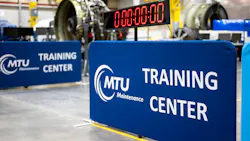
As MROs and repair shops seek out ways to recruit more skilled technicians and ensure they have the foundations to succeed in aviation maintenance, MTU Maintenance is finding success through its dedicated training academy.
MTU Maintenance Fort Worth Director of Operations Phillipp Tessenow discusses what the company’s training program is like and how aspiring AMTs can get involved.
What is the MTU Training Academy?
Outlining the types of training students can receive from MTU Maintenance, Tessenow says, “At MTU Maintenance Fort Worth, our dedicated training academy combines classroom-based theory and hands-on practical training as part of a 14-week program.”
Tessenow continues, “We invest this time in our new recruits to ensure familiarization with MTU standards and processes, real operational readiness when they go onto the shop floor as well as a common and mutual understanding of teamwork at MTU.”
He lists the topics trainees cover during general foundational qualifications, including:
- Maintenance basics
- Tools
- Systems
- Quality processes for MRO and IT operations
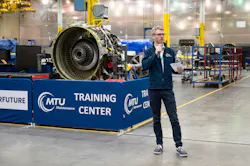
“Participants are currently being trained to perform maintenance on CFM56 and LEAP engines, two of the largest and most exciting engine programs in the world. We are hereby laying the groundwork for our rapid growth,” notes Tessenow.
He adds, “As we are ramping up production and aiming to have 1,200 qualified engine experts by the early 2030s, it is really important to us to ensure high quality and harmonized training as a basis from which employees can develop and grow.
What training methodology does MTU Maintenance use?
Tessenow shares, “Training is built on a blended-learning approach: theory and immediate application on real hardware. The concept is a proven best-practice model used across the global MTU network at our sites in Germany, Zhuhai, Vancouver and more.”
According to Tessenow, MTU Maintenance’s training course involves three phases:
- Foundational general qualification in a classroom setting, including IT basic system training, GenFam courses, measurement training and more
- Hands-on practical training applying theoretical knowledge on training hardware (engine and module level)
- Repetition and consolidating knowledge, revising any topics that were flagged in midterm assessments
In an era where the aviation industry is experiencing a shortage of skilled mechanics, he explains the methodology’s significance, emphasizing, “Having a specialized training methodology ensures consistent global standards across all MTU locations, enabling seamless integration of workforce capabilities.”
Tessenow continues, “Trainees are not just trained on tasks, they develop a full understanding of systems, processes and quality expectations.”
“It is also an iterative process: we encourage participants to ask questions, give feedback and share ideas on how to improve our training. We are committed to creating a scalable training pipeline that serves as a launchpad for our employees and teams,” adds Tessenow.
How has MTU Maintenance’s Fort Worth training academy prepared AMTs for real-world work?
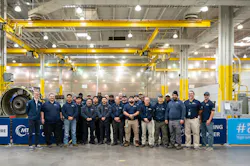
Discussing what MTU Maintenance’s training program is like as a trainee, MTU Maintenance Fort Worth Engine Technician Jordi Torres shares, “The program is challenging, but it has helped me grow technically, professionally and, most importantly, mentally. The supportive environment and mentorship have made the experience even more valuable: teamwork is everything.”
“The academy has prepared me by giving me practical experience that reflects real industry standards and expectations,” says Torres.
Torres adds, “For me, MTU stands out from most because of its focus on advanced engine technology and professional growth opportunities. I would highly recommend this program to anyone wanting to come in and develop themselves in their career.”
Highlighting the successes of the program’s first cohort, Tessenow notes, “The first cohort launched with the training center opening in November 2025 and graduated in Spring.”
He continues, “We have onboarded over 60 employees in this manner. Our initial cohort is already travelling to MTU’s international sites, including to MTU Maintenance Zhuhai in China and MTU Maintenance Hannover in Germany to deepen their skills.”
Having recently expanded MRO capacity at the Fort Worth location, Tessenow discusses how the ramp-up and training program are all interconnected.
He explains, “The MTU Maintenance Fort Worth Training Center serves as the foundation for operational ramp-up and long-term growth. And it enables local workforce development aligned with MTU’s global standards and processes.”
What career paths can you pursue after training with MTU Maintenance?
Outlining career options after completing the training program at MTU Maintenance, Tessenow shares, “Upon graduation, our teams receive a general qualification and are level 2 mechanics.”
He elaborates, “They then transition into mechanic or inspector roles within MTU’s MRO operations (aligned with their training path)—from disassembly, assembly, test and quality functions. From this point, they work under supervision on “live” engines until they are fully qualified in their area of specialty.”

Tessenow continues, “As we are ramping up quickly, all employees have the chance to help shape the company from the beginning. We like to continually develop our staff organically, which means the sky is basically the limit.”
Tessenow lists the opportunities for career development at MTU Maintenance, such as:
- Specializing in high-tech processes
- Taking on first leadership roles as supervisors
- Training to become engineers and certifying staff
“This is a unique opportunity for people to join us and create their own pathway,” says Tessenow.
How do you apply to MTU Maintenance’s training program?
Tessenow explains, “Candidates are typically selected in cohorts of 20-25 students, with classes starting approximately every eight weeks. We like to have a mixed intake, from experienced technicians to talents straight out of school, and from mechanics to inspectors.”
He notes, “We have an online application process, followed by a phone screening as well as an interview to check suitability and ensure a good fit for both parties. At MTU, we aim to “hire to retire,” so ensuring a common DNA is really important to us, and we look for confidence, reliability and strong interest in the subject matter.”
Readers who are interested in training and working with MTU Maintenance can apply on the company's career website.
About the Author
 Emily Gorski